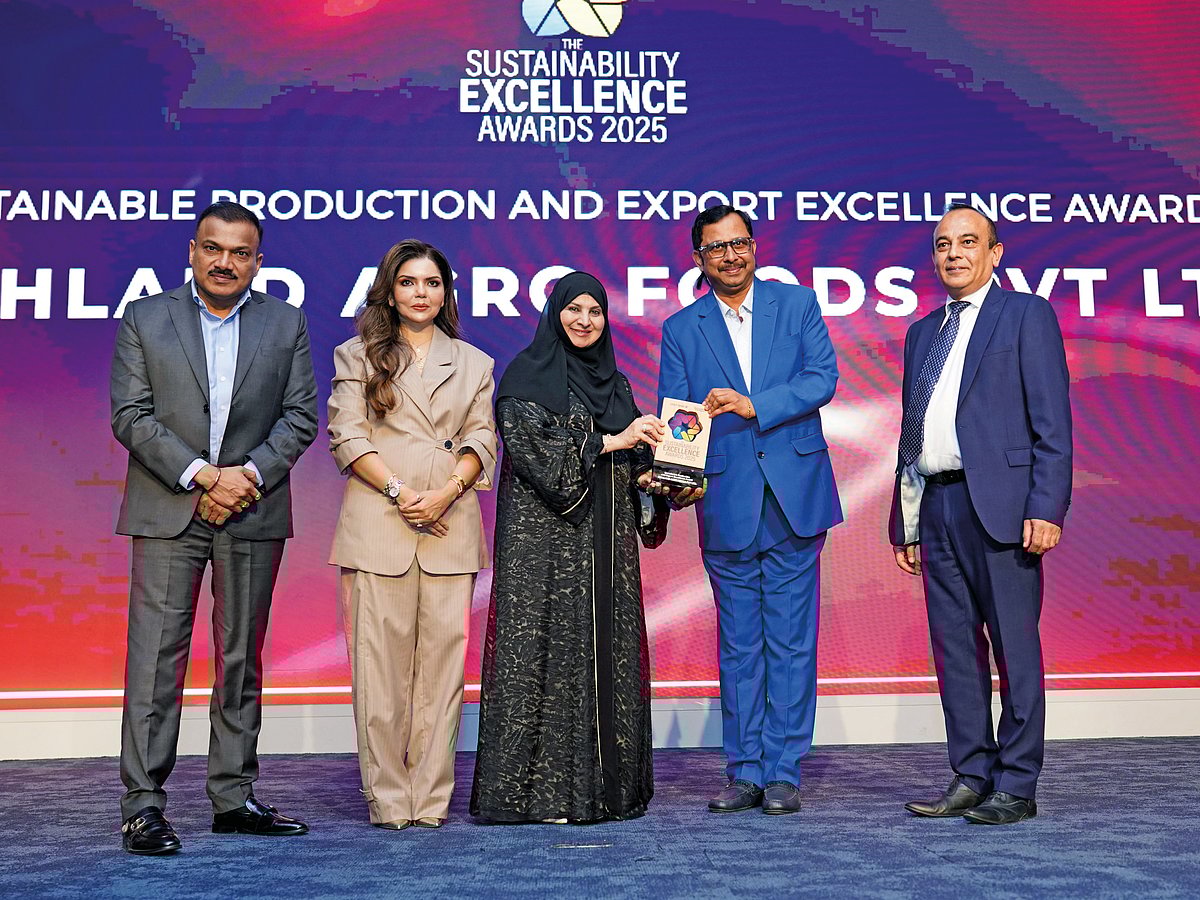
The Sustainability Excellence Awards 2025: Highland Agro Foods Pvt Ltd wins Sustainable Production and Export Excellence Award
Driving responsible aquaculture and resilient growth
What inspired your organisation to focus on sustainability?
Highland Agro Food’s sustainability focus stems from the inherent nature of the seafood industry, which depends directly on environmental health, responsible aquaculture, and long-term resource availability. From the beginning, we recognised that our growth would be meaningful only if it aligned with ecological balance, ethical sourcing, and efficient resource utilisation. Operating in a sector that works closely with farming communities, we also saw an opportunity to positively influence farming practices and supply-chain standards by partnering exclusively with certified farms. Furthermore, as an export-oriented company, we understood that future competitiveness would depend on meeting the evolving sustainability expectations of global markets. Rather than treating sustainability as a compliance requirement, we adopted it as a core business principle to strengthen our resilience, quality standards, and long-term value creation.
Which achievement in your sustainability journey are you most proud of?
One of our most meaningful achievements is the transition toward renewable and circular practices within our processing operations. The integration of solar energy and the commissioning of our biogas plant have significantly reduced our reliance on conventional power sources while enabling responsible waste management. These initiatives have helped us lower emissions, repurpose organic waste, and operate more efficiently without compromising production reliability. We are equally proud of sourcing shrimp only from BAP and ASC-certified farms, which ensures responsible aquaculture, full traceability, and better alignment with global environmental and social standards. Internally, creating opportunities for women, who form nearly 70 per cent of our workforce has strengthened our belief that sustainability extends beyond the environment to people and communities. These achievements demonstrate steady, practical progress rather than isolated initiatives, reinforcing sustainability as a daily discipline in our business.
What was the biggest challenge you faced and how did you overcome it?
Our biggest challenge was balancing rapid operational scaling with the need to integrate sustainability systems from the ground up. Implementing renewable energy, establishing certified sourcing frameworks, and adopting responsible waste-management practices required significant planning, investment, and workforce alignment. Another challenge was ensuring that our supply-chain partners met the same expectations we set for ourselves. To address this, we focused on capacity building, regular audits, and close collaboration with farm operators and vendors. Internally, we invested in training, standardised workflows, and technology upgrades so that sustainability measures became embedded in our daily operations rather than treated as separate projects. Over time, this allowed us to maintain production efficiency while steadily improving our environmental performance and compliance readiness.
How do you measure the impact of your sustainability initiatives?
We evaluate impact through a combination of operational metrics, certification frameworks, and external audit requirements. For environmental performance, we track reductions in energy consumption, the share of renewable power usage, biogas generation, water utilisation, and waste-management efficiency. Traceability and ethical sourcing are measured through compliance with BAP, ASC, BRC, FSSC 22000, and other international standards that require continuous monitoring and annual audits. Workforce-related impact such as women’s participation, safety outcomes, and training hours is also closely measured to ensure that people remain a central focus of our sustainability journey. These metrics help us assess progress, identify gaps, and direct future investments toward areas where measurable improvements can be achieved.
What advice would you give to others striving for sustainability excellence?
Sustainability excellence is best achieved through consistency rather than large one-time initiatives. Companies should begin by focusing on areas they can directly influence such as energy efficiency, responsible sourcing, waste reduction, and workforce development. Adopting recognised international standards helps create structure, discipline, and accountability. Equally important is ensuring that sustainability is integrated into daily operations rather than treated as a separate department or activity. Collaboration with suppliers, employees, and communities strengthens long-term outcomes, as sustainability depends on collective participation. Finally, transparent measurement and gradual improvement create credibility and make the journey both practical and achievable.
Sign up for the Daily Briefing
Get the latest news and updates straight to your inbox
Network Links
GN StoreDownload our app
© Al Nisr Publishing LLC 2026. All rights reserved.