Ahsan Iqbal, Federal Minister for Planning
GN FOCUS
Pakistan's Economic Revival: From inflation control to tech growth
Pakistan’s leading voices highlight untapped investment opportunities in their sectors
Last updated:
5 MIN READ
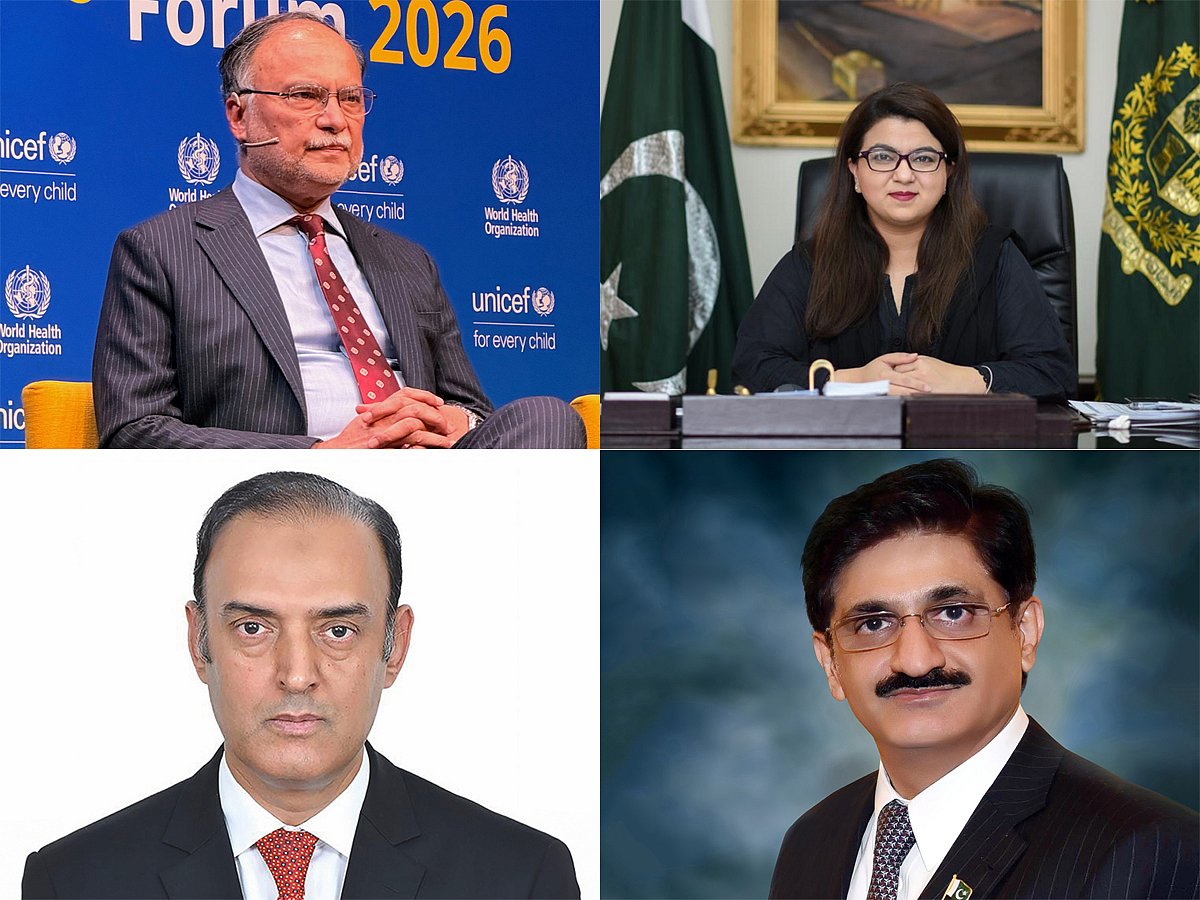
Pakistan advances a reform-led recovery, with planning reforms central to stabilisation and long-term growth.
Federal Minister for Planning Development and Special Initiatives Ahsan Iqbal frames economic stability as his main legacy so far. He credits tough fiscal decisions under Prime Minister Shehbaz Sharif, noting a reduction in inflation from 38 per cent to 4.5 per cent, and a stock market that has been Asia’s fastest growing during their tenure. "Pakistan is now one of the most successful turnaround stories," he says.
Pakistan is now one of the most successful turnaround stories.Ahsan Iqbal, Federal Minister for Planning
To anchor long-term growth, Iqbal’s ministry has launched the Uraan Pakistan Initiative, a transformation strategy built around priorities including exports, technology, climate, social equity and energy and infrastructure. In the latter, Iqbal highlights efficiency reforms and a shift to renewables, with nearly 6,000 MW of solar capacity added in two years. “Energy is oxygen for a modern economy,” he says.
Murad Ali Shah, Chief Minister, Sindh Province.
Pakistan’s Sindh Province is undergoing significant transformation under the government’s reform agenda.
The government of Sindh has set out an agenda to turn the province into a resilient, inclusive and modern economy. “This vision represents a strategic shift from stabilisation to record-breaking acceleration,” says Chief Minister Murad Ali Shah. The administration’s flagship programme, the Sindh People’s Housing for Flood Affectees, is the world’s largest housing rehabilitation project, reconstructing more than 2.1 million homes.
These efforts ensure that the marginalised have a seat at the table.Murad Ali Shah, Chief Minister, Sindh Province
The $1.5 billion programme sits alongside healthcare and social protection initiatives, particularly to improve maternal and child health outcomes, as well as education and sanitation drives. “These efforts ensure that the marginalised have a seat at the table and that social safety nets function as tools for economic inclusion,” says Shah.
Shaza Fatima Khawaja, Federal Minister, Information Technology and Telecommunication.
Federal Minister Shaza Fatima Khawaja identifies digitisation and exports as anchors of Pakistan’s tech agenda.
What have been the priorities of your tenure?
On taking office, we had clear directions and an immediate vision focusing on two key areas: national digitisation and national industry support and export. The Prime Minister set digitisation targets of a $10 billion contribution to the economy and export targets of $15 billion over five years.
How has this agenda progressed so far?
A key milestone was the passage of the Digital Nation Pakistan Act in January 2025. Within this framework, we raised federal government digital adoption from below 10 per cent to 98 per cent. I have not signed a single physical file in the past year; everything is now digital.
Why is Pakistan’s IT sector drawing international interest?
The tech industry is growing steadily at about 20 per cent annually in exports. With a youth population of 150 million, Pakistan offers globally competitive talent in cost and quality. With its skilled workforce and strategic location, Pakistan can serve as a regional delivery hub for the EMEA region, making it a prime destination for UAE investment.
Pakistan offers globally competitive talent in cost and quality.Shaza Fatima Khawaja, Federal Minister, Information Technology and Telecommunication.
Jameel Ahmad, Governor, State Bank of Pakistan.
Governor Ahmad outlines how policy consistency, reform and digital infrastructure are shaping an era of stability and confidence.
What are your key priorities?
Immediately after I was appointed, we began preparing a five-year strategic plan focused on achieving price stability by bringing domestic inflation down to 5 per cent to 7 per cent. We remained consistent in pursuing our targets and implemented regulatory, policy and foreign exchange market reforms that stabilised the exchange rate and helped bring prices down.
Following reforms, we were able to convert a deficit of $17.5 billion into a surplus of $2.1 billion last year. This helped build our foreign exchange reserves to around $14.5 billion, strengthening confidence among our lenders and investors.
What role does digitalisation play?
We recently completed the implementation of our micropayment gateway. Close to seven million transactions are taking place through this system daily. Three years ago, it took us a full year to reach transactions worth PKR 1 trillion; now it takes only nine days.
How are you advancing financial inclusion?
We have a five-year Financial Inclusion Strategy to increase the number of people accessing formal financial services from 64 per cent of the adult population to 75 per cent by 2028. We want more people to complete transactions through formal financial services.
We were able to convert a deficit of $17.5 billion into a surplus of $2.1 billion.Jameel Ahmad, Governor, State Bank of Pakistan.
Pakistan Stock Exchange
Recognised among the best-performing indexes in recent years, the Pakistan Stock Exchange (PSX) is emerging as a benchmark for growth.
The Pakistan Stock Exchange has entered a period of renewed momentum, positioning itself among the world’s strongest-performing equity markets and reflecting a broader recalibration of the country’s economic trajectory. Market capitalisation has expanded strongly and is now approaching $65 billion, according to Chief Executive Officer Farrukh Sabzwari.
Appointed in November 2024, the CEO believes this performance is the result of a deliberate shift towards long-term fundamentals. "Because the strategy is in play, markets have reacted. Markets are forward-looking; they are the barometer of the economy, and they are rejoicing in the fact that you've got a government that has pushed structural growth," he says, citing reform, fiscal discipline and improving corporate profitability as core drivers.
Today, PSX lists more than 530 companies across 38 sectors and is actively broadening market participation. Investor engagement is accelerating through nationwide education initiatives, with 10,000 investors now entering the market. Alongside this, the exchange is rolling out new products, including cash-settled futures and a transition to T+1 settlement, enhancing liquidity and capital efficiency.
For UAE-based investors, Sabzwari frames the opportunity in clear terms. “The market is a sign of what is to come in future,” he says, highlighting capital flows, regional connectivity, sharia finance alignment and long-term partnerships between Abu Dhabi and Islamabad.
Sign up for the Daily Briefing
Get the latest news and updates straight to your inbox
Network Links
GN StoreAbout Gulf NewsTerms & ConditionsReach by GNSitemapContact usPrivacy PolicyGN FocusHave your sayWork with usAdvertise with usGulf News epaperPrinting Services
Download our app
© Al Nisr Publishing LLC 2026. All rights reserved.