LuLu’s launch of exclusive coffee variants with Samira Maatouk
ADVERTISER’S CONTENT
LuLu Group looks beyond price to use private labels as a strategic response to global uncertainty
Exclusive Q&A with Shamim Sainulabdeen, Director – Private Labels at LuLu Retail Holdings,
Last updated:
4 MIN READ
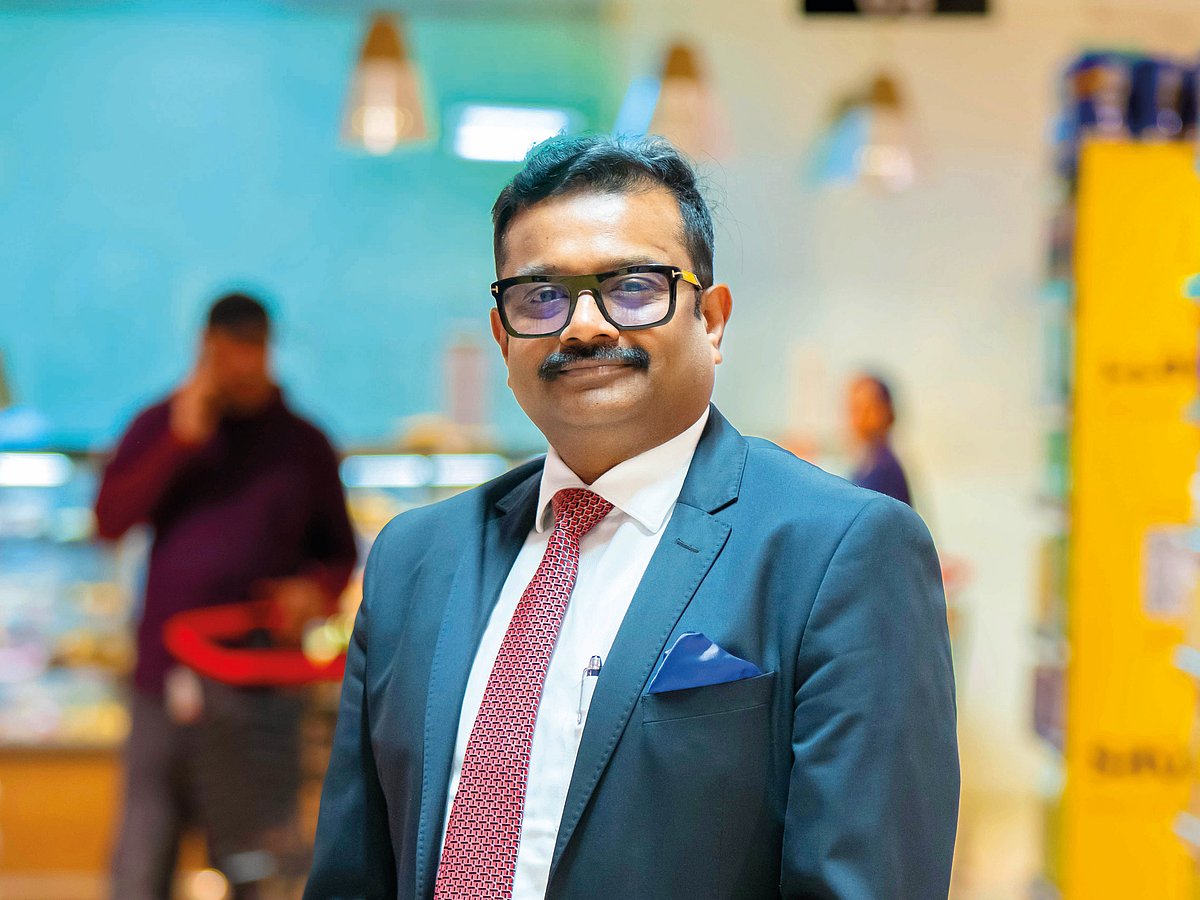
Shamim Sainulabdeen
As global food supply chains come under increasing pressure from geopolitical tensions, trade volatility, and sustainability challenges, private labels are emerging as far more than value-led alternatives. They are increasingly recognised as strategic tools for resilience—helping retailers secure supply, maintain category continuity, and support food security.
Against this backdrop, platforms such as Gulfood have taken on renewed importance, bringing together retailers, manufacturers, and policymakers to collectively address the realities of an increasingly uncertain world.
In this interview, Shamim Sainulabdeen, Director – Private Labels at LuLu Retail Holdings, shares insights into how private labels are evolving beyond price to become a strategic response to global uncertainty, with a strong emphasis on quality, affordability, sourcing control, local production, and long-term resilience.
■ Traditionally, private labels were associated mainly with affordability. How has that perception changed today? And how does LuLu ensure both quality and affordability across its private label range?
Private labels are no longer defined by price alone. While affordability remains important, today they play a much broader strategic role. In an environment shaped by geopolitical instability, tariff volatility, and supply-chain disruption, private labels give retailers greater control over sourcing, production, and category planning — ensuring continuity, reliability, and value for consumers.
At LuLu, quality and affordability are not treated as trade-offs. We achieve this balance through direct sourcing, strong long-term supplier partnerships, scale efficiencies, and rigorous quality assurance. By working closely with manufacturers —both globally and locally — we design products that meet high quality standards while keeping costs under control. This allows us to consistently deliver trusted quality at accessible price points across our private label portfolio.
■ What kind of pressures are global food and FMCG supply chains facing today?
Supply chains are under sustained stress from conflicts, sanctions, trade restrictions, logistics disruptions, and climate-related events. Availability has become unpredictable and costs more volatile.
For retailers, the challenge is no longer just managing cost increases — it is about ensuring category continuity by keeping the right products available, in the right formats, at the right time. This requires a fundamentally different approach to sourcing and planning.
■ How do private labels help address category gaps during periods of disruption?
Disruptions often create gaps at specific price points, pack sizes, or formats. Private labels allow us to respond quickly —either by introducing new alter natives or scaling existing ones — to protect category depth, price accessibility, and shelf availability. This flexibility helps ensure that essential categories continue to function even when branded supply becomes inconsistent, protecting both consumer choice and category stability.
■ How do you balance global sourcing and local sourcing, and how has LuLu benefited from this approach?
The key is balance, not substitution. Global sourcing provides scale, diversity of origin, cost competitiveness, and access to specialised manufacturing capabilities. Local sourcing, on the other hand, delivers speed, flexibility, and resilience.
At LuLu, our private label strategy is deliberately designed to leverage both. We use global sourcing for categories that require scale, seasonality, or specialised production, while strengthening local and regional sourcing for high-velocity, essential, and time-sensitive categories. This balanced approach has helped us reduce risk, respond faster during disruptions, stabilise pricing, and ensure availability, while also supporting local manufacturers and the wider economy.
■ How important is control over sourcing within this strategy?
Control over sourcing is fundamental. Private labels allow us to decide what is produced, where it is produced, and how quickly it can be adapted.
With diversified sourcing, we can shift origins, adjust specifications, and respond faster to disruptions, effectively turning sourcing control into continuity control. This level of agility is critical in today’s uncertain global environment.
■ What role does local sourcing play today, particularly in managing tariffs and trade volatility?
Local sourcing has become a strategic pillar. In markets like the UAE, where manufacturing standards are high and government support is strong, sourcing locally improves responsiveness, reduces exposure to global shocks, and strengthens overall supply resilience.
It also plays a critical role in managing tariffs and trade volatility. Imported products are often the first to be affected by duty changes or border delays. Private labels with a strong local sourcing base are better insulated from these shocks, helping stabilise pricing and protect consumers from sudden cost escalations, while creating a mutually beneficial ecosystem that supports local manufacturers.
■ What is the connection between private labels and food security?
Food security is ultimately about consistent availability on retail shelves. Private labels anchored in diversified global and local sourcing help ensure continuity, affordability, and accessibility — especially during periods of global disruption.
By securing supply across essential categories, private labels play a practical role in translating food security goals into everyday consumer reality.
■ Why is Gulfood particularly relevant in this context?
Gulfood has become a critical platform for strategic dialogue. It brings together retailers, manufacturers, policymakers, and solution providers to address sourcing challenges, sustainability, and supply-chain resilience.
For private labels, Gulfood enables exploration of alternative sourcing options, strengthening of local partnerships, alignment on quality and sustainability standards, and the building of long-term relationships that are essential in an uncertain global environment.
■ Any final thoughts on the outlook for the market?
Private labels today are about preparedness and responsibility. As global uncertainty becomes structural rather than temporary, the ability to balance global scale with local strength is what creates resilience. That is where private labels truly move beyond price — and become a strategic foundation for the future of retail.
Sign up for the Daily Briefing
Get the latest news and updates straight to your inbox
Network Links
GN StoreAbout Gulf NewsTerms & ConditionsReach by GNSitemapContact usPrivacy PolicyGN FocusHave your sayWork with usAdvertise with usGulf News epaperPrinting Services
Download our app
© Al Nisr Publishing LLC 2026. All rights reserved.