Aselle Tasmagambetova, Founder of CAIER
GN FOCUS
Kazakhstan’s Green Vanguard: CAIER’s push to transform Central Asia’s ESG landscape
CAIER drives ESG transformation in Central Asia via research, innovation, and cooperation
Last updated:
4 MIN READ
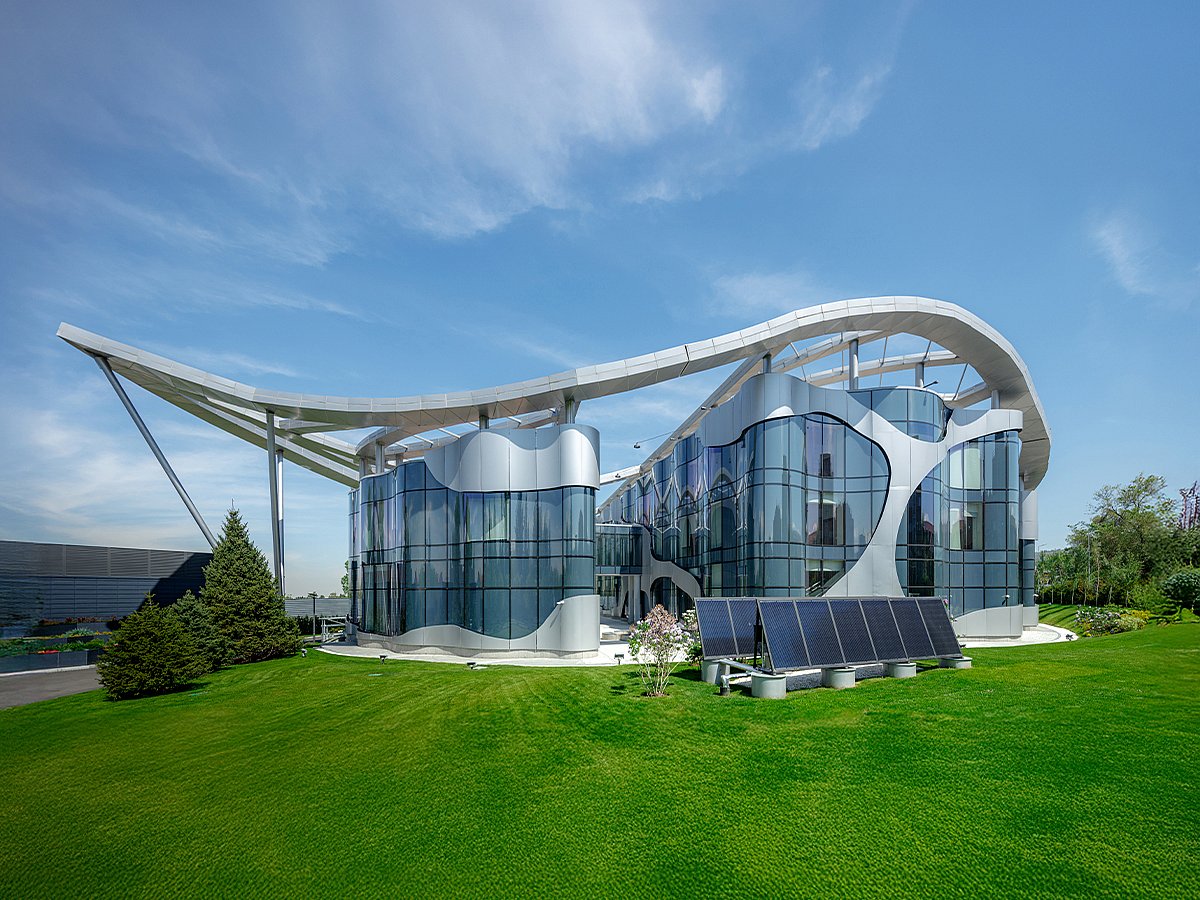
The Central Asian Institute for Environmental Research (CAIER) is the region’s leading independent body focused on high-level ecological and biodiversity research. Headquartered in Almaty, CAIER is advancing the environmental agenda in Kazakhstan through expertise, independence and scientific integrity – all grounded in international quality standards.
Today, CAIER plays a pivotal role in the growing adoption of ESG models by companies in the region – an economy whose wealth and future are heavily dependent on optimal exploration of natural resources. “Our strength lies in combining fundamental science with applied science,” says Founder Aselle Tasmagambetova. “We develop practical solutions that industries can implement, scale and monetise.”
Since its foundation in 2012, CAIER has grown into one of Central Asia’s foremost environmental research institutes, driving the region’s mining and natural resources industries into more environmentally conscious approaches. Investing heavily in modern laboratories equipped with world-class instrumentation, the institute focuses on three areas: industrial waste management, biodiversity and water resource management, and ESG and sustainability consulting. Across all three, independence, credibility and a deep understanding of regional economics are key. “Every dataset we produce is supported by traceable methodologies, certified laboratories and international quality standards,” says Tasmagambetova.
A noted philanthropist, conservationist and entrepreneur, Tasmagambetova has long worked to bring international standards and sustainable development to Central Asia. Armed with a degree in Management of the Environment and Natural Resources from Moscow’s International Independent University of Environmental and Political Sciences, she is one of the best-known entrepreneurs in Kazakhstan and Central Asia, leading the way in manufacturing through Tellis, her organic cosmetics company; the Shoqan Walikhanov School, one of the top pre-university education institutions in Kazakhstan; byb capital, a major startup backer and through the Saby Charitable Foundation, one of the region’s most recognisable philanthropic institutions.
Across these roles, Tasmagambetova is committed to driving meaningful improvement in national development. “Kazakhstan is a young nation, and I feel a deep responsibility to contribute to its next stage of growth,” she says.
Kazakhstan is currently one of the most active countries in Central Asia in implementing ESG principlesAselle Tasmagambetova, Founder of CAIER
That determination is reflected in CAIER’s work, which is honed with a pragmatism shaped by its founder’s experience in business and academia. “We strongly believe that sustainability must be both environmentally and economically viable,” Tasmagambetova says. The institute holds patents for innovative technologies including techniques for transforming oil-contaminated soils into construction materials and industrial wastewater purification. In an economy dominated by extractive industries, this offers an effective way to reduce environmental impact, and CAIER has begun working with major players in the sector.
“These technologies have been well-received by oil and gas companies, and we have successfully commercialised them,” she adds, noting that this commercialisation enables CAIER to remain independent. The institute also provides independent environmental monitoring and sustainability consulting for the mining and financial sectors.
Another focus of CAIER’s scientific programme is conservation of the Caspian seal. This dovetails with the institute’s wider efforts in the region, which include the creation of a robust scientific database and conducting annual expeditions. “If the Caspian seal population is healthy, the Caspian Sea is healthy,” Tasmagambetova explains.
The impact of CAIER’s work is seen in growing private-sector adoption of ESG models. “Kazakhstan is currently one of the most active countries in Central Asia in implementing ESG principles,” Tasmagambetova says. “Companies are beginning to recognise that strong ESG performance attracts better partners and investors.”
With this foundation in place, the institute is increasingly aiming to leverage regional and international collaboration. In 2023, CAIER joined the UN Global Compact – one of the first companies in the region to do so – and in 2025 launched the Central Asian Advisory Board on Environmental and Sustainable Development, bringing together representatives from Kazakhstan, Uzbekistan, Kyrgyzstan, Turkmenistan and Tajikistan.
When Tasmagambetova took over as chairwoman in 2025, the organisation decided to increase its efforts on issues related to water, including scarcity, availability and other social aspects, and the board’s priority is the development of a regional Water Master Plan. “Water scarcity in Central Asia is becoming increasingly severe,” Tasmagambetova says. “These challenges make regional cooperation essential.”
That drive for collaboration extends to UAE-based partners. “We see many areas of synergy with UAE-based companies and investors,” Tasmagambetova says. Citing potential for cooperation in R&D, water reuse, sustainable infrastructure, green industrial clusters and waste-to-value technologies, the goal is to strengthen climate resilience through investment and knowledge exchange. “Kazakhstan is now experiencing steady economic growth and entering a new phase of green industrial transformation,” she adds, highlighting the introduction of supportive regulations for green finance, renewable energy and sustainable construction. “For UAE-based investors, this presents significant opportunity.”
Sign up for the Daily Briefing
Get the latest news and updates straight to your inbox
Network Links
GN StoreAbout Gulf NewsTerms & ConditionsReach by GNSitemapContact usPrivacy PolicyGN FocusHave your sayWork with usAdvertise with usGulf News epaperPrinting Services
Download our app
© Al Nisr Publishing LLC 2026. All rights reserved.