Single-market era fades as Dealing takes UAE investors global
Tajinder Virk, Co-founder and CEO of Finvasia Group and Dealing, shares his thoughts
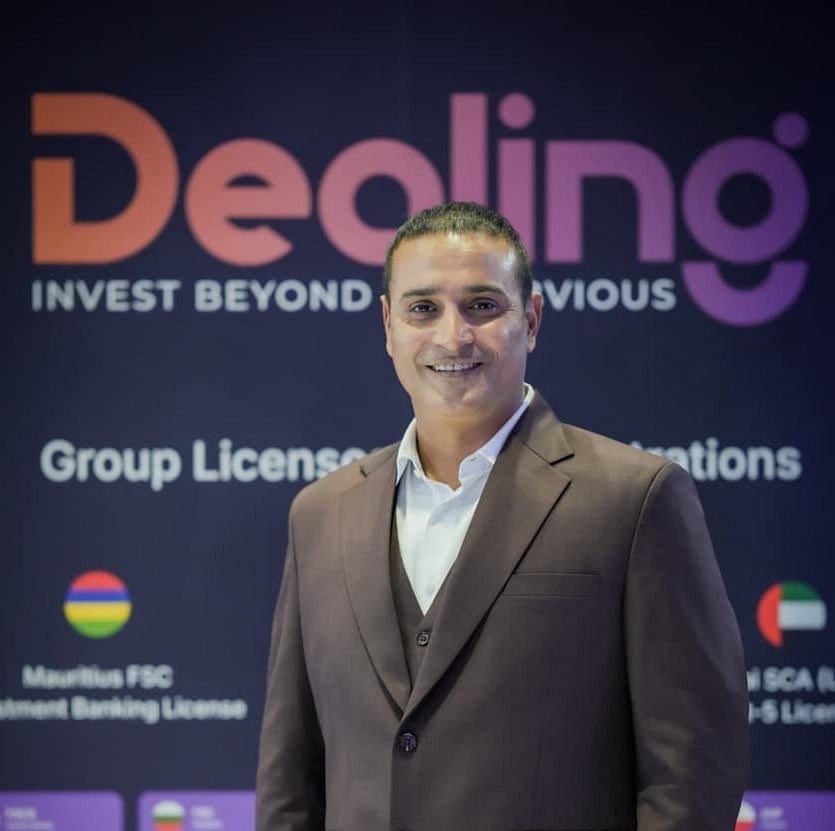
Investors have spent decades building portfolios around the market closest to home, largely because that was the only market within reach. The constraint has now flipped as access to thousands of companies across dozens of exchanges has become ordinary, and the harder question is no longer where to invest but why anyone would confine themselves to a single economy.
Tajinder Virk, Co-founder and CEO of Finvasia Group and Dealing, believes the single-market portfolio is heading toward obsolescence, and that the shift will shape how a new generation of UAE investors builds wealth.
"For decades, investors-built portfolios around their home market because that was where access existed," said Virk. "Access is no longer the problem. The real risk is concentration."
Tying an entire portfolio to one economy and one currency and amounts to a far larger bet than most people recognize, he said. The scale of what gets overlooked is striking.
"There are more than 50,000 listed companies across 78 major exchanges globally, yet most investors only see a fraction of that opportunity set," he said.
The future, in his view, is not a contest between local and global markets but a combination of the two. "The smartest investors are no longer asking which market they should invest in," said Virk. "They are asking why they would limit themselves to only one."
Nowhere is that question landing harder than in the UAE, home to one of the most internationally connected investor populations anywhere.
"People here live globally, work globally, and earn globally," he said. "Naturally, they are starting to think globally about wealth creation as well."
Geopolitical shocks, interest rate cycles, and shifting economic fortunes have reinforced a lesson that no market stays on top forever. Japan's Nikkei took 34 years to recover its 1989 high, and China's Shanghai Composite still trades well below its 2007 peak nearly two decades later, both economies once seen as unstoppable. Diversification, on this reading, is less about defense and more about participation.
"Diversification is no longer just about reducing risk," said Virk. "It is about ensuring you are present wherever growth happens."
One stubborn misconception, he said, is that investing across borders remains the preserve of the wealthy. "That was true years ago. Technology has changed it," he said. "The bigger issue is that global investing still feels fragmented. Different brokers, different accounts, different jurisdictions, and different processes. The opportunity exists and yet the experience hasn't caught up."
Closing that gap between opportunity and experience is where platforms such as Dealing position themselves as a marker of the industry's direction.
"Dealing was built around a simple idea, that investing opportunities should not stop at national borders," said Virk. "Through one account, investors can access more than 30,000 financial instruments across 120+ countries and 10+ global exchanges, including stocks, ETFs and other products. The goal is not simply to offer more markets. It is to make global diversification practical, accessible and transparent."
Pressed on the single message he would leave investors with Virk returned to a redefined idea of risk.
"The biggest risk for many investors is not volatility. It is missing opportunities because their portfolio is looking in only one direction," he said. "The next decade's winners will emerge from multiple countries, sectors and industries. A globally diversified portfolio gives investors a chance to participate wherever that growth happens."
Sign up for the Daily Briefing
Get the latest news and updates straight to your inbox
Network Links
GN StoreDownload our app
© Al Nisr Publishing LLC 2026. All rights reserved.