The other side of Britain
Going off the beaten track to discover monuments that belong to the northern frontier of the Roman Empire
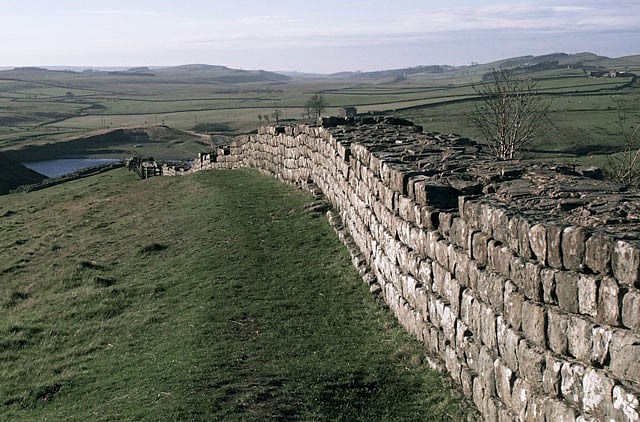
Hadrian's Wall may seem a bit of a shoe-in when it comes to Britain's best views, but the monument is much more than the often — and understandably — repeated views of Cuddy's Crags and Sewingshields on the crest of that wonderful escarpment, the Whin Sill.
It is hard to beat the romantic, lonely grandeur of this famous stretch above Housesteads fort (www.english-heritage.org.uk/housesteads and www.nationaltrust.org.uk). But the lesser-known parts of the 74-mile frontier, built as the northern frontier of the Roman Empire at the height of its power, are a treat to discover and enjoy.
They can be linked in a day or two's exploration between Wallsend and the Solway Firth, using the Military Road part of the way — more mundanely known today as the B6318. This conveniently follows the legions' original highway between their lookout turrets, milecastles and major forts such as Housesteads. Inconveniently, its ruthless 18th-century builder General Wade used a lot of wall stone to make it.
Lost in quiet beauty
The monument's quieter options include fragments, which survive in the surreal setting of everyday suburban Newcastle and a symbol on Chollerford bridge abutment, which blesses Wall walkers with good luck. There's also Limestone Corner, the empire's actual furthest north, where Hadrian's men got fed up with huge boulders and abandoned them in the middle of splitting the rock into neat stones. You can see their unfinished chisel holes.
The Wall's urban stretches are best on Tyneside, which offers the partially reconstructed fort of Arbeia in South Shields. The name means "the place of the Arabs" and comes from legionaires recruited in Iraq. Tests on DNA at the other end of the wall suggest genetic links between modern residents and Roman soldiers originally from North Africa.
Much has been made of these southerners shivering in the Geordie chill — W.H. Auden's Roman Wall Blues is an example, and good for children to learn and chant. More of them were based at Segedunum in the middle of Wallsend, which was a Cinderella until Millennium Lottery money paid for one of the Wall's biggest excavations and an excellent viewing tower.
This doesn't strictly give one of Britain's best views but the panorama across town and Tyne is great. Segedunum's reconstructed bath house rivals Housesteads' communal lavatories for an insight in Hadrianic hygiene and signs at Wallsend's Metro train station have been translated into Latin.
Just for atmosphere, I like Denton Hall Turret and its 65-metre (213-foot) wall, which lies between a housing estate and a dual carriageway just east of the West Road/A1 roundabout on the edge of Newcastle. Gone are the imposing fortifications shown on English Heritage's website but you can potter round the few courses remaining and chat to shoppers getting off the many buses. There's another, smaller fragment, just down the hill behind the filling station. Heading west, the short but lovely stretch of wall at Brunton Turret, the bridge remains and major excavations at Chesters fort.
The big George Hotel by the river is comfy or you can have the satisfactory experience of visiting the Hadrian hotel in Wall, the next village south.
For quiet beauty, Birdoswald fort is a good bet, with walks to the east beside the longest unbroken stretch of the entire wall.
A little further west is another English Heritage property, Lanercost Priory, whose monks pioneered the General Wade policy of stone-pillaging but made something beautiful rather than useful.
Lots to see
There is much, much more. But my final recommendation lies way to the west at Ravenglass on the Cumbrian coast, where a naval base protected the Solway frontier from pirates.
The remains of the bath house are among the tallest surviving from Roman Britain at nearly four metres (13 feet) and the village has masses more to see and do, from Muncaster Castle to Little Ratty, the narrow-gauge trains of the Ravenglass and Eskdale Railway.
Staying is no problem near the wall, although it is better to book ahead in summer.
And if you get the time for a week or ten days' visit, hike the Hadrian's Wall national trail, an additional ten miles long but by far the best way of seeing the monument. Don't cheat with Google. It's worth going there to find out.
Sign up for the Daily Briefing
Get the latest news and updates straight to your inbox
Network Links
GN StoreDownload our app
© Al Nisr Publishing LLC 2026. All rights reserved.