Hospitality boom
PW talks to major hospitality operators and developers to find out the reasons for the renewed enthusiasm in hotel development across the UAE
Developers and operators of three- and four-star hotels are taking advantage of a new programme introduced by the Dubai Government to move ahead with their own growth plans. The programme incentivises mid-range hotel projects that are completed sooner, while eligible hotels are also given a concession on the 10 per cent municipality fee levied on the standard room rate.
It is not only mid-range hotels that are scrambling for a piece of the booming market. Many other hotels are now focusing on refurbishing existing properties or expanding across the UAE.
The extent of the expansion plans becomes clearer when snippets of announcements of redevelopments and new projects made over the past two months are collectively taken into account. An example of this move was last week’s announcement that the long-delayed Rosewood hotel project in Dubai will be back on track within three months, to be completed by late 2015.
Radha Arora, President of Rosewood Hotels and Resorts, made the announcement at the official opening of the Rosewood Abu Dhabi, the chain’s first hotel in the UAE.
Al Habtoor Group
In early October, Al Habtoor Group unveiled Al Habtoor City, an Dh11-billion entertainment and hospitality development on Shaikh Zayed Road. The project occupies a 10-million-sq-ft plot and will include three luxury residential towers and three Starwood hotels (W, Westin and St Regis) with around 3,000 rooms.
Al Habtoor City is set to be the first project along the Dubai Water Canal, the multibillion-dirham project connecting Business Bay with the Arabian Gulf. The mixed-use complex will also include the Middle East’s first dedicated theatre, a tennis academy and other entertainment facilities. The project is due in 2016.
Dubai Properties Group
Dubai Properties Group (DPG) will develop a 160-room beachfront hotel at The Walk in Jumeirah Beach Residence. The project includes an amphitheatre and major landscaping upgrades.
“With more than 13 million visitors to The Walk last year, these new projects and upgrades will serve the growing demand from the tourism industry in Dubai, and will add to the charm of one of the region’s most popular destinations,” said Khalid Al Malik, CEO of DPG.
InterContinental Hotels
InterContinental Hotels Group (IHG) announced in late September it will open the Crowne Plaza Dubai Marina in 2016. IHG signed an agreement with TAJ RP International, part of RP Group of Companies, to build the project.
The 3,037-sq-m hotel will be located next to Dubai Marina Mall and will offer three large meeting rooms, a boardroom, a ballroom, a spa and health club, a lobby lounge, a bar and three restaurants, including one that offers all-day dining.
The 280-room property marks the fourth Crowne Plaza hotel in Dubai and the ninth in the UAE. The first Crowne Plaza Resort in the UAE is also scheduled to open in Ras Al Khaimah in 2015.
Rotana Hotels
Last year Rotana Hotel Management Corporation launched last year two hotels in the heart of Deira, one of Dubai’s busiest tourism and commercial districts. The new projects took the company’s number of properties in Dubai to 15 hotels — the most by any operator in the city — and brought its total room inventory in the emirate to 3,795.
“The trends are focusing on the budget-conscious traveller, which is an increasingly important market in the Middle East, but remains grossly underserved in Dubai,” Omer Kaddouri, Executive Vice-President and COO of Rotana, tells Property Weekly.
“Rotana currently operates one hotel in Dubai under the Centro brand and there are more in the pipeline, to be announced soon.”
R Hotels
R Hotels, a subsidiary of Dubai-based R Holding, announced in early October its intention to invest Dh1.5 billion in an acquisition and development plan. The company is on track to double its hotel portfolio to six by the end of 2015.
R Hotels owns, manages and operates three hotels in Dubai and Ajman under the Ramada brand — Ramada Downtown Dubai, Ramada Hotel and Suites Ajman and Ramada Beach Hotel Ajman. The company has already committed to invest Dh500 million this year, according to Managing Director Sumair Tariq.
Mövenpick
This year marks the 40th anniversary of Mövenpick Hotels and Resorts. By 2015, Mövenpick aims to increase its portfolio of 79 properties to 100.
“We have always believed in growth, but at a sustainable pace,” Toufic Tamim, Vice-President Sales and Marketing — Middle East, tells Property Weekly.
“In every region, from Europe and Africa to the Middle East and Asia, we have carefully consolidated our developments to maintain a balanced portfolio distribution that ensures decision-making is effective, resources are efficiently utilised and development is sustainable.”
Of the company’s 30-odd projects that are under development worldwide, ten are set to open within the next year in the UAE, Saudi Arabia, Egypt, Morocco, Thailand, the Philippines and China.
“In terms of opportunities in the Middle East, the robust economy of Saudi Arabia and the UAE’s status as a world hub make these two countries strong candidates for continued growth,” says Tamim. “We are also keen to explore opportunities in Oman.”
Mövenpick Hotels and Resorts has a total of 1,342 room keys from its five hotels in Dubai — Mövenpick Hotel Jumeirah Beach, Mövenpick Hotel Ibn Battuta Gate, Mövenpick Hotel Deira, Mövenpick Hotel and Apartments Bur Dubai and Mövenpick Hotel Apartments The Square, its most recent property.
“Each hotel is located in a different part of the city, making it easy to tailor the experience to our guests’ requirements,” says Tamim. “These properties are expected to grow around 10 per cent this year versus last year in terms of total revenue, due in part to the country’s political stability and high demand for Dubai.”
The hotel chain will also soon inaugurate The Mövenpick Hotel Jumeirah Lakes Towers, the hotel operator’s sixth property in Dubai, although a date has not been set. Mövenpick Hotel and Spa Oceana will be its seventh in Dubai when it opens on The Palm Jumeirah.
“Saudi Arabia is already an important destination for Mövenpick Hotels and Resorts,” says Tamim. “The country is making important investment in infrastructure and we have noticed a significant increase in Saudi nationals travelling within the country for leisure and relaxation.
“We also anticipate a significant growth in religious tourism over the coming five years, as hospitality projects develop in Makkah and Madinah. Mövenpick currently operates nine hotels in Saudi Arabia, with our tenth hotel set to open in Riyadh early next year. Our development strategy includes plans to double this number in the country over the coming ten years.”
Le Méridien
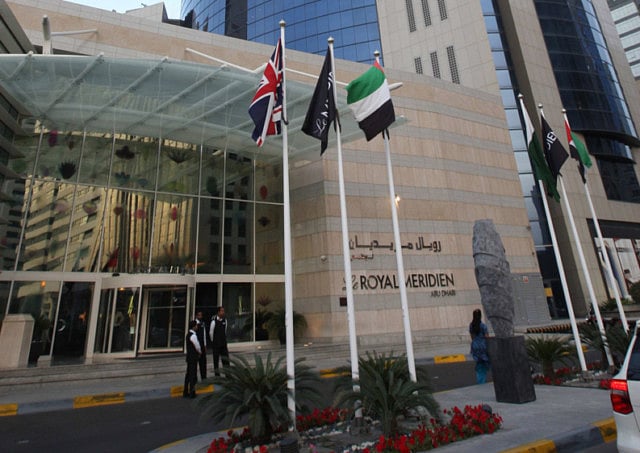
Le Royal Méridien Abu Dhabi has unveiled a new reinterpreted lobby in Le Méridien Hub, with refurbished rooms and two restaurants, Café Palmier and Wheat, as part of phase one of the large-scale redevelopment. The hotel’s extensive renovation also includes a complete redesign of all deluxe rooms and suites to reflect the contemporary outlook of the brand.
Phase two of the redevelopment project, scheduled to be launched in the first quarter next year, will see various coffee bistros, restaurants and beverage outlets.
“We fully understand the importance of outstanding food and beverage to our business, especially in the Middle East,” explains Shaun Parsons, General Manager, Le Royal Méridien Abu Dhabi. “We are therefore introducing new culinary offerings at the hotel, while at the same time revamping our existing restaurants to engage guests and residents with exciting and diverse dining experiences.”
Reasons for expansion
“Dubai continues to become a true tourism hub and a healthy hospitality industry feeds directly from this,” says Christopher Seymour, Partner and Head of Property UAE at EC Harris, an asset consultancy firm. “While this is in no small measure due to the expansion and development of the aviation facilities in Dubai, making it easier to fly from an increased number of destinations around the world, it is also due to the increased length of stay of visitors when they travel here.
“Previously often seen as a transit hub, where the average length of stay of travellers is under two days, Dubai has now developed into a destination in itself, more than doubling the time visitors spend here.”
Seymour points out this creates a huge change in demand for hotel rooms, since the available stock is occupied for longer.
“Hotel chains have thus been eager to absorb the available hotel assets in Dubai, creating an ever greater demand for new build,” he says. “This in turn creates pressure on existing hotels to refurbish older facilities to maintain a competitive edge.
“Dubai is now well catered for in terms of five-star offering. Hence we are now seeing new brands appear in the mid-scale sector to deal with the demand there. We are also seeing the appearance of new six- and seven-star offerings for the super-luxury sector.”
At your fingertips
The logic of expansion also lies in the numbers. “Dubai posted double-digit demand growth for the fourth month this year,” said Elizabeth Winkle, Managing Director of hotel market forecast expert STR Global, in September. “Demand after Ramadan and Eid has been exceptionally strong, cementing Dubai’s position as an attractive destination for both business and leisure.”
In September, hotels saw a 6.8 per cent increase in supply and 16.3 per cent in demand, according to STR Global. There was also an 8.8 per cent jump in occupancy to 75.3 per cent, a 6.1 per cent increase in average daily rate to Dh733.36 and a 15.5 per cent rise in revenue per available room to Dh552.50.
Last year, Dubai received 10 million visitors. In the first half of this year, the emirate saw a record 5.5 million visitors, an 11.1 per cent increase year-on-year. These visitors pushed the revenue of hoteliers and hotel apartments by 18.6 per cent to Dh11.6 billion, as reported by ME Newswire earlier this year.
The visitor figures released by the Dubai Department of Tourism and Commerce Marketing showed healthy increases across all key indicators (hotel guests, hotel and hotel apartment revenues, room occupancy and average length of stay).
Reputation matters
Dubai has emerged as the most reputable city in the Gulf in a new survey conducted by the New York-based Reputation Institute. The results are based on levels of trust, esteem, admiration and respect, as well as perceptions regarding the city’s economy, environment and government.
The global advisory firm placed Dubai (41st position) ahead of Abu Dhabi (63rd) and Makkah (86th) in the list of top 100 cities around the world. Dubai is also ahead of Los Angeles, Brisbane, Cape Town and Hong Kong.
Other factors
“Over the years, an extraordinary amount of infrastructure and business development has helped Dubai grow into an important international business and leisure destination,” says Tamim. “Impressive tourist attractions such as the tallest building in the world and the largest mall in the world have also placed the city firmly on the map as one of the most sought-after locations to visit in the Middle East.”
Furthermore, Dubai allows hotel companies to have multiple properties within the city, as each district is a destination on its own and has its own niche, explains Tamim. For instance, Jumeirah Beach Residence is well known for leisure and relaxation, while Deira caters for travellers looking to explore the vibrant souks and historical sights of Dubai.
Over the past two years, occupancy figures have been steadily increasing in Dubai, with demand always on par with the increase in room supply. The city has also been and continues to be a preferred short-haul destination for visitors from other GCC countries.
“These positive market trends are indicative of continued growth for Dubai’s hotel industry,” says Tamim. “This year has been positive for us, as our five existing hotels in Dubai have achieved an average occupancy of 83 per cent year-to-date and we are expecting similar positive numbers for the remainder of the year.”
Dubai, as a destination, will have to focus more on mid-scale and budget accommodation in order to support the tourism vision, says Kaddouri. “In mature hotel markets, mid-scale and budget accommodation comprise more than half of the market’s room inventory,” he says.
“In Dubai, however, the five-star hotels dominate. They have a market share exceeding 60 per cent and about 50 per cent of the pipeline supply as mentioned in previous studies and reports.”
Sign up for the Daily Briefing
Get the latest news and updates straight to your inbox
Network Links
GN StoreDownload our app
© Al Nisr Publishing LLC 2026. All rights reserved.