Fertilizer that smells like biryani
Ajman hotel turns leftover food into high-grade fertiliser as part of unique green drive
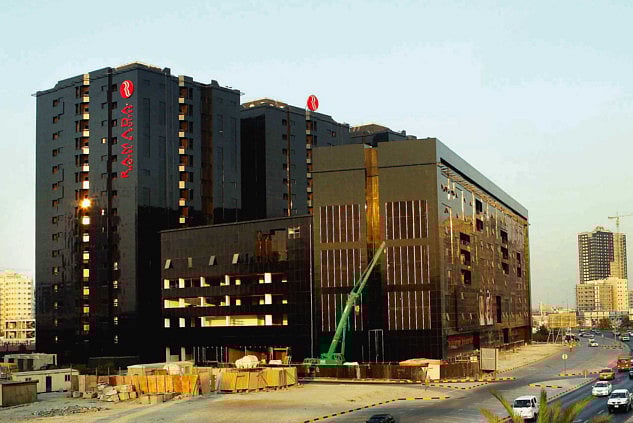
AJMAN The three-tower Ramada Ajman Hotel has gained renown not only for its unusual all-black façade but also for turning 500kg of organic trash into cash everyday.
Discarded salad, hummus, peelings — and biryani — are turned into high-grade fertilisers through an on-site composting system.
Pakistani Fazel Wahab, the hotel’s 27-year-old gardener, said: “The compost does smell a bit like biryani, but it’s just black in colour … good food for my plants.”
Since January, the Ramada Ajman has involved staff and guests in room-level waste segregation. Recently, they started feeding waste into a Dh200,000 composting machine.
Inorganic waste –- plastic, paper, cardboards, crates and bottles -- are given to recyclers, allowing the hotel to divert 800 kg of trash from Ajman’s landfills daily.
“The challenge was to clearly communicate to our staff of 16 nationalities and guests from every part of the world,” said Iftikhar Hamdani, the hotel’s general manager.
The 384-room property used to generate 1,000 kg of trash daily. A staff-driven waste reduction drive brought it down to 800kg daily, despite posting a 96-per cent occupancy rate since the start of the year.
“We’ll be happy to help other hotels do their own composting,” said Hamdani.
An independent landscaping expert supports the idea, saying he prefers organic fertiliser from local sources, if available.
“Actually, kitchen waste is a valuable resource when turned into compost,” said Paul Toscana of Dubai-based Toscana Landscaping. “They are great natural fertilisers. More hotels and homes should do it. I’d love to use organic compost if it is available.”
The composting gear, sponsored by Dubai-based Green Mountain Waste Management Co., is the first such waste-to-composting gear in use in the Middle East.
The “zero-landfill” project has practical implications too. It saves Dh120,000 in annual garbage skip fees.
The hotel produces about 50 kg of compost -- from 500 kg of organic waste – enough to keep its surroundings green.
“Every small step makes a big impact if you take everybody along with you,” said Hamdani.
Two years ago, the hotel targeted power savings -- its monthly power bill hovered around Dh595,000 in 2010 (it purifies its own water through an in-house reverse osmosis plant).
Now its bills are down to about Dh385,000 per month by involving staff and converting 70 per cent of its lights to energy-saving bulbs.
Where the hotel, however, made a big difference is in involving guests. Upon check-in, guests are encouraged not to give room linen for daily washing. They are also asked to segregate waste using colour-coded bins in each room.
The “zero-landfill” initiative is the result of a staff brain-storming session early this year.
The company spent Dh50,000 for the 40-square-metre waste conversion room for the composting gear.
“If all hotels did this, greening the desert would be much more organic and easier, said Executive Chef Rami Al Joubrail said, who has spearheaded the project.
“This solution came organically from the staff. So carrying it out from the front desk who informed guests about our initiative to the people in the kitchen came naturally.”
The hotel does not intend to sell its compost at the moment, instead using it for its gardens and giving away the extra to some homes in Ajman.
“It’s not much, even if we sell the fertilisers at Dh15 per kg,” said Hamdani. Our core business is hospitality, not fertiliser manufacturing. So we’re happy to give the compost we generate to the community. It’s our way of giving back to society.”
Sign up for the Daily Briefing
Get the latest news and updates straight to your inbox
Network Links
GN StoreDownload our app
© Al Nisr Publishing LLC 2026. All rights reserved.