Despite the constant demands of celebdom, Ronit Roy's life revolves around family. Seen here with his actor brother Rohit, their mother and family members.
FRIDAY
The Long Game: Four decades of reinvention, discipline and fatherhood
After four decades on screen, Ronit Roy says fatherhood remains his defining role
Last updated:
8 MIN READ
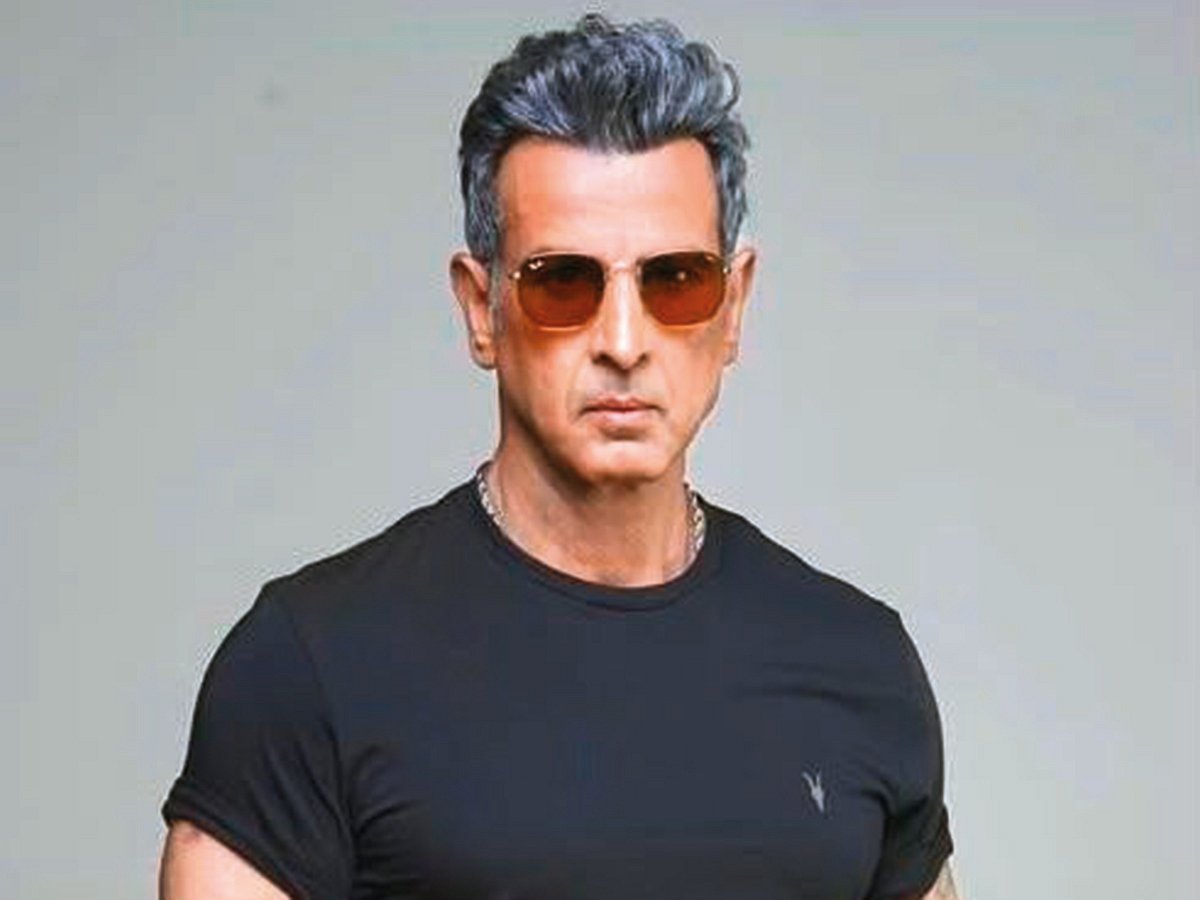
For nearly four decades, Ronit Roy has occupied a rare position in Indian entertainment. He has been a film hero, a television phenomenon, a character actor, an antagonist, a courtroom icon, a streaming-era performer and, through every reinvention, an actor who has managed to avoid becoming trapped by any one version of himself. In an industry obsessed with novelty, Roy’s career has unfolded with remarkable durability. He remains busy, sought after and creatively engaged at an age when many actors begin looking back. Roy seems more interested in looking ahead.
That outlook becomes apparent almost immediately when he is asked about longevity. Most actors have a theory about survival, but Roy does not. “I do not know. I do not have the answer to that question,” he says. “I have never consciously tried to stay relevant. I have simply kept learning about my craft.”
It is a disarmingly simple answer from a man whose career has spanned the rise of satellite television, the dominance of daily soaps, the resurgence of character-driven cinema and the streaming revolution. Roy’s explanation has little to do with strategy and everything to do with curiosity. He speaks about learning from theories written decades ago and absorbing influences from younger actors around him.
“Maybe watching younger actors perform has a subconscious effect on you,” he says. “I never really had a fixed style of acting, so when I work with the current generation of directors, producers and actors, I tend to go with the flow.”
The statement offers a useful clue to understanding Roy’s career. Flexibility has always been one of his strengths. From his early film appearances in the 1990s to the television success that transformed him into a household name and the acclaimed performances that followed in films such as Udaan, Roy has consistently avoided creative rigidity. His characters may differ dramatically, yet there is a sense of complete commitment in each performance.
Today, as audiences discover him across multiple platforms, Roy remains grateful for the simple fact of being able to work. “It has been nearly 40 years, and the future still looks very promising,” he says. “There is great work coming up, and I am thankful to God for that.”
If there is one theme that repeatedly surfaces in Roy’s reflections on acting, it is complexity. He is no longer interested in straightforward heroes or easily defined personalities. The roles that attract him are those that reveal themselves gradually. “The roles that excite me most are the ones where there is more to discover,” he says. “What excites me is finding the conflict and complexity within that person.”
He points to father figures as an example. Roy has played fathers countless times across films and television, yet he rejects the idea that these roles are interchangeable. “I have played a father in many films, yet every father has been different,” he says. “Every character on screen is a living character.”
The challenge lies in uncovering the contradictions that make people feel real. For Roy, difficulty is more of an attraction than an obstacle. “When a character is extremely complex, it becomes difficult to play, and that difficulty is what excites me.”
Work and the people
That search for complexity has found a natural home in the streaming era. Roy is currently immersed in OTT projects and speaks enthusiastically about the opportunities they provide. Yet his criteria for choosing work are not what one might expect. He spends less time evaluating the platform and more time assessing the people involved. “I am mainly doing OTT work these days,” he says. “More than the project itself, I look at the people behind it.”
He places enormous value on vision, competence and creative integrity. “The right people can elevate a substandard project,” Roy says. “I prefer to place my faith in people who know what they are doing, who are clear about their vision and who genuinely want to make good cinema and tell meaningful stories that entertain audiences.”
The emphasis on people appears repeatedly throughout the conversation. Roy speaks about collaborators with genuine affection. When asked whether he prefers films, television or digital content, he dismisses the premise entirely. “It is never about the medium,” he says. “It is about the work you are doing within that medium.”
He describes the pleasure of sharing scenes with talented actors, working with directors who encourage exploration and finding producers who create a supportive environment on set. “If you have good actors opposite you, it becomes even more enjoyable,” he says. “If you are working with a director who allows you to explore, regardless of the medium, it becomes even more exciting.”
The philosophy reflects a career shaped less by hierarchy and more by collaboration. Roy does not appear interested in ranking formats. He is more interested in the quality of the experience. Away from the camera, Roy’s life is built around a structure that sounds almost old-fashioned in an age of constant visibility. He speaks openly about discipline and sees it as a natural extension of the life he has chosen. “Yes, I am very disciplined,” he says. “Maintaining discipline is not difficult for me because I lead a very simple life.”
A still from Ugly, which showcased Ronit Roy at his intense and uncompromising best.
His priorities are clear. “I do not have too many friends and I rarely go out,” he says. “My life revolves around my fitness, my prayers, my work and my family, my wife and my children.”
There is no performative quality in the way he describes his routine. He speaks about balance as something practical rather than aspirational. Fitness, faith, family and work form the framework around which everything else is organised.
That grounding has proved valuable during periods of both success and disappointment. Roy’s perspective on fame carries the weight of experience. He has witnessed extraordinary popularity and difficult professional phases. The fluctuations no longer surprise him. “There is a saying: This too shall pass,” he says. “The highs of life pass, and so do the lows. Change is the only constant.”
His approach to success is strikingly modest. “I do not take success too seriously,” he says. “Success is not solely because of me. Many people contribute towards it, and I am only a small part of that process.”
The same philosophy applies when things go wrong. Roy believes in addressing problems when solutions exist and moving on when they do not. “If I can solve a problem, I do,” he says. “If there is no solution, I let it be, close that chapter and move forward.”
The next chapter
This year promises to be another busy one. Roy has already completed several projects and is enthusiastic about what audiences will see next. “I recently shot a show for Amazon,” he says. “It is directed by Priyanka Ghose and produced by Siddharth Roy Kapur Films.”
The actor recalls enjoying the experience immensely and expects the series to arrive later this year. He is also shooting a Netflix project and preparing for another collaboration with Amazon. “God has been kind,” Roy says. “There is a lot of exciting work happening, and I am looking forward to audiences seeing it soon.”
Roy brings authority and gravitas to Farrey in his role as the school principal.
For a Father’s Day issue, however, the most revealing part of the conversation arrives when the discussion turns to family. Roy has played fathers on screen for years. Becoming a father himself transformed those performances in ways that only lived experience can.
“An actor always draws from personal experiences,” he says. “You can play a father before becoming one yourself, but until you have actually lived that experience, it remains an act of imagination.”
Fatherhood gave those emotions a personal reference point. “Once you become a father, you carry those emotions within you,” he says. “You understand what it means to have a child.”
The impact extends beyond acting. “Being a father has helped me not only in my roles but also as a person,” Roy says. “Becoming a father, and trying to be a good father every day, contributes immensely to your growth as a human being.”
When asked about the most rewarding aspect of parenthood, Roy’s answer centres on watching his children become themselves. “My two children are my two biggest projects,” he says.
The phrase carries warmth and pride in equal measure. He speaks about values, ethics, discipline and character. He never wanted his children to fit a predetermined mould. He wanted them to grow into good human beings. “The greatest reward is seeing them grow into good human beings,” he says. “I want my children to do better than I ever did.”
Not child's play
Guiding children, he believes, is an ongoing responsibility. There is no master lesson delivered at a single moment. “Educating, advising and guiding your children is not a once-a-week exercise,” Roy says. “It is an everyday process.”
He believes parenting requires constant attention and understanding. Every stage of a child’s life presents new challenges, new questions and new opportunities for guidance. Sometimes children seek advice directly. Sometimes they do not. The role of a parent remains unchanged. “Every day they will encounter situations that you may have experienced before,” he says. “They may or may not come to you for answers, but your guidance is always there whenever they need it.”
Ronit Roy with wife Neelam
Parenthood has also altered his understanding of happiness. As life becomes centred around children, priorities shift in subtle ways. “I realised that material things bring me more happiness when I buy them for my children than when I buy them for myself,” he says. The observation is delivered without sentimentality. It feels like a conclusion reached through years of experience. “That is what fatherhood has taught me,” Roy says. “It is often more fulfilling to do something for your children than for yourself.”
Learning a lifelong process
Perhaps that sentiment also explains something about Roy’s remarkable longevity. Careers in entertainment are often measured through awards, ratings, box-office figures and social media metrics. Roy’s perspective feels rooted elsewhere. His focus remains on the work, the people he works with, the family he returns home to and the discipline that structures his days. The industry around him continues to evolve. Platforms change, audiences shift and new generations arrive.
Ronit Roy keeps learning, keeps working and keeps moving forward. Four decades into a career that has already exceeded most expectations, he still sounds like a man who believes the most interesting chapters may be waiting just ahead.
Sign up for the Daily Briefing
Get the latest news and updates straight to your inbox
Network Links
GN StoreAbout Gulf NewsTerms & ConditionsReach by GNSitemapContact usPrivacy PolicyGN FocusHave your sayWork with usAdvertise with usGulf News epaperPrinting Services
Download our app
© Al Nisr Publishing LLC 2026. All rights reserved.