From DJ Booth to Therapy Couch: Julie Potash Slavin's musical path to personal change
DJ-turned clinical psychologist is remixing the rules on therapy, using music
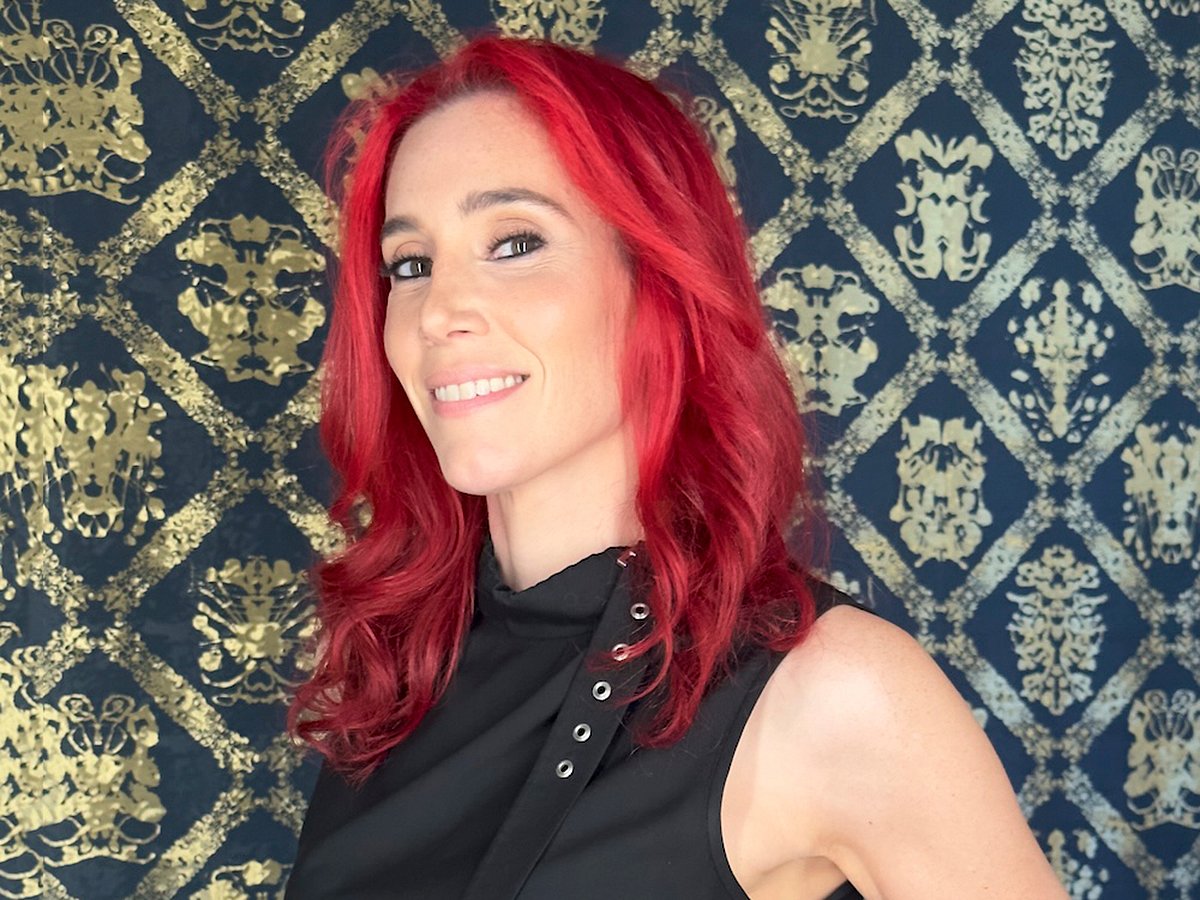
After a long day of meetings, panel discussions and networking, I’m more energised than when I began my day. That’s because I’ve just finished a 39-minute group therapy session – there’s no other way to put it – with Julie Potash Slavin, DJ turned licensed clinical psychologist. We’re at a Barcelona trade fair, where she’s led me and 70 others through her proprietary Music Connection Therapy, linking songs with goals, affirmations and targeted actions.
“I teach people how to use the songs they already love, the ones that shaped them, to change how they live,” she tells me later over a Zoom interview.
This is where Slavin – whom you may know by her artist’s name, DJ Hesta Prynn – crosses over from what sounds like woo into neuroscience. Research suggests we can teach our brain to pursue our goals, even creating new pathways (called neuroplasticity). She adds another proven intervention: play.
For adults, she’s discovered, play is music or movement. As a low-stress state, play speeds how our brain adapts and makes it easier to chase down goals.
Music Connection Therapy is her innovative modality, combining neuroscience, emotional regulation and behaviour change, with music as the gateway.
Habits, neurobiology and music
Three quarters of us want to change our lives in some way, according to 2020 Ipsos research for the World Economic Forum (though Covid likely affected the results). Forming a new habit takes between 59 and 154 days, Australian researchers found last year. “But with play, you only need between 10 and 20 repetitions,” Slavin says, quoting child development expert Dr Karyn Purvis.
Music engages multiple brain areas, sparking emotional and intellectual responses. A 2023 meta-review shows how music therapy now supports pain relief, stroke recovery and mental health. Music Connection Therapy takes it one step further.
“Lyrics are software for your subconscious. Music doesn’t magically change your life. It changes your state so you can,” she says. “When music is paired with intentional prompts, people feel clearer, more energised, and more like themselves, in real time.”
She offers a simple formula: Vision + Action + Song = Change.
Simply wishing for something to happen isn’t enough – whatever you learnt from The Secret. Pair your intention with action instead, and visualise it while playing a song, composition or even a prayer you like. You’ll find yourself acting towards your goal.
Moments like Ramadan – or a new year – add a temporal landmark, giving us psychological permission to reset and reimagine a different version of ourselves. “Music solves the willpower problem by bypassing motivation fatigue. When you hear a song you love, your nervous system responds automatically.”
Real-life impact
In her therapy sessions, the New Yorker begins with simple questions: What song healed you? Which ones remind you of home, a breakup, a big win?
These tracks help us drop negative self-talk and reconnect with our core identity and emotions, leading to positive change. “There’s no forcing. No overthinking. That’s why this works. It’s experiential. People feel the shift first, not ten sessions later.”
All of this is available in an online course at Mct.hestaprynn.com. Or tune into her new podcast, Music is Therapy. Launched last month with iHeart Podcasts, it explores how music shapes our identity, decisions and actions. She interviews guests such as her multi-hyphenate mentor Questlove, relationship expert Dan Savage and financial entrepreneur Kate Northrup, pairing each with a playlist to help listeners “rewire their brains”.
For larger groups at companies like Google, she runs Inner Mix, a science-based music wellness session combining DJ sets and neuroscience prompts to help leaders reset and refocus. “Music creates a shared emotional language that cuts through hierarchy and overthinking. When people feel connected to themselves and to each other everything works better,” she says. As I experienced in Barcelona, it gets people moving, sharing and working towards goals. She has taken the programme around the world, including to Davos, and is currently finalising dates for Doha and elsewhere in the region.
For each audience, she syncs her playlist with local touchpoints. “That’s how I signal my respect to the group,” she says. As she learnt from Questlove, DJing is a musical conversation with her audience.
DJ to clinician
Perhaps that’s a natural bridge to psychology. Slavin knew she wanted to become a therapist, having benefited from counselling herself. In her early 40s, she began taking courses, juggling them with her busy DJ career.
Until the pandemic. “In March 2020, my career vanished in three days. I lost 15 months of bookings,” she tells the conference, candid about its hard-hitting impact. “I did not rise to the occasion. I was depressed and I thought I was irrelevant.”
She and her husband moved into her in-laws’ basement on Long Island. Other musical artists were doing live online concerts, and her husband nagged her to DJ on Instagram. After months of refusing, she promised she’d do 30 minutes during homeschooling hours.
“The first day, not one person watched me,” she says. The next day, she danced and spoke about her song choices. In time, people showed up and connected with her emotionally: “10, then 100, then 1,000 people… then a newspaper feature, television, then sponsors came in,” she remembers. “Eventually, when the world opened up, it’s what motivated me to get through graduate school and become a clinician.
“One promise can change everything,” she tells the audience. She incorporates the experience into her practice with an exercise called Promise Karaoke that uses the same formula, teaming target, tune and tactic to create change.
The soundtrack to our promise kicks in: ’Cause you’re a sky, you’re a sky full of stars. Ever since, every time I’ve heard the Chris Martin track on my playlist, I remember my goal and take one action towards it. n
Sign up for the Daily Briefing
Get the latest news and updates straight to your inbox
Network Links
GN StoreDownload our app
© Al Nisr Publishing LLC 2026. All rights reserved.