Decoding dyslexia
A few parents in the UAE open up about their journeys finding the right care and approach for their dyslexic children
Dori Gantt’s nine-year-old son Gunnar was exceptionally witty, had the memory of an elephant, loved maths and history – and yet hated going to school. Most school mornings were unpleasant as Gunnar had frequent emotional outbreaks, and this perplexed Dori. Spelling tests were his biggest nightmare. ‘He would get most of them wrong and come home saying that he was stupid and all the other kids were smarter. And I would say aloud, “but we did those just yesterday”,’ recalls Dori.
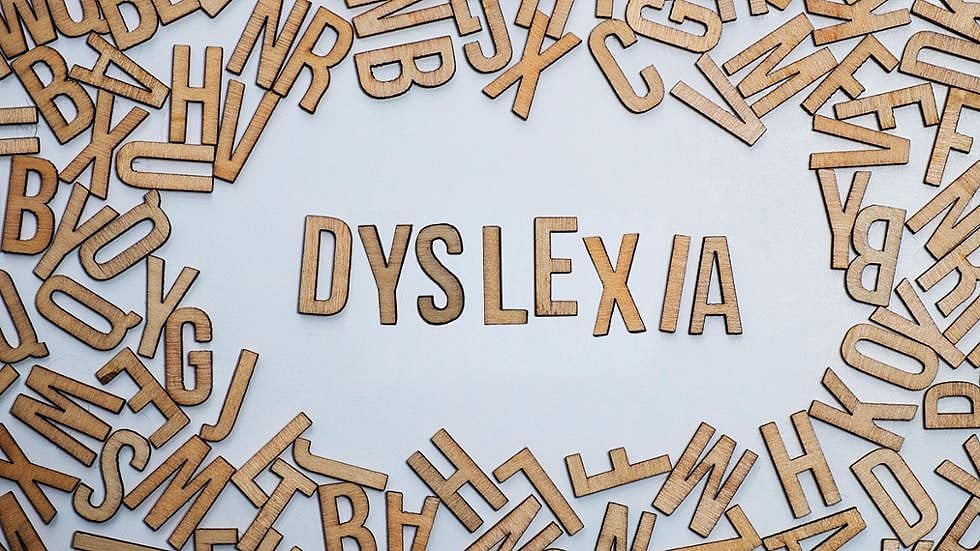
She knew something was grossly amiss with Gunnar’s grasp of spellings, as he was otherwise a bright child. So Dori did a Google search, typing in these contradictions, and there appeared the word dyslexia. She soon discovered what dyslexia was – a specific language-based learning disorder that involved difficulty in reading due to problems identifying individual speech sounds and learning how they relate to letters and words.
[Nurtured in the UAE: 3 heart-warming stories of mothers raising children with special needs]
‘It was a relief that there was a name to the problems he was facing. We immediately searched for experts in Dubai. He took several psycho-educational tests and specialist dyslexia learning assessments at the Lexicon Reading Center,’ says Dori. The tests confirmed what she suspected, that Gunnar was indeed moderately dyslexic. Unfortunately, the school he was studying in was neither able to detect his disability nor willing to help him cope with it. Gunnar’s parents took a tough decision. They pulled him out of conventional schooling and enrolled him into the Lexicon Reading Center, which follows the Calvert curriculum licensed by the state of Maryland, US. Along with specific dyslexia-related educational methodologies Gunnar could also choose subjects he enjoyed studying, including maths, history, science, journalism and photography.
From then onwards it was a steep learning curve for Gunnar, now 13 years old. ‘The difference in him was like day and night,’ says Dori. ‘From a child who did not want to go to school and was reluctant to write, today he looks forward to attending his classes every morning. He is passionate about gaming and writes reviews of online games, loves crunching numbers and reading the Horrible Histories series. Now we tell everyone he has the gift of dyslexia and not the disability.’
According to Dyslexia International, dyslexia occurs in at least one in 10 people, which equates to around 700 million people worldwide. But in spite of such significant numbers, most often dyslexia is undiagnosed. This is largely due to lack of awareness about this common learning disorder, which if undetected, could lead life-long illiteracy and social exclusion. Add to this the fact that it is tricky to spot dyslexia because the student, much like Gunnar, appears bright and intelligent but could still be struggling with reading and writing.
‘The interesting thing is that dyslexic children have no issue with intelligence, in fact, they have high IQ levels,’ says Dr Alka Kalra, a Dubai-based educational psychologist and Director of Eduscan Group, which conducts specific dyslexia-based educational programmes. ‘They are visual thinkers, are highly creative and see the world in a three-dimensional imagery.’ Kids with dyslexia find reading difficult because their brain has a hard time connecting letters to the sounds they make. So, to someone with dyslexia, the word “cat” might read as “tac.” Because of these muddle-ups, reading can be a slow and difficult process.
No two people with dyslexia are alike but parents and educators are often the first people to notice its early signs. Sharjah-based Meeta Ritchie, mother of six-year-old Muskan, spotted reading difficulties in her daughter as early as when she was three years old. ‘I have been a very observant mum, closely involved with both my kids. I noted that Muskan was not picking up the alphabets even after frequent repetitions. She would avoid reading and writing,’ recalls Meeta. A brief assessment at a local dyslexia centre confirmed that Muskan was dyslexic. With corrective measures Meeta was able to see a marked difference in Muskan’s academic performance within a few months. Thanks to her mother’s alertness and early intervention, today as a grade one student Muskan is able to cope well with her classmates.
Warning signs of possible dyslexia can be identified as early as at preschool age, long before they are confronted with letters, says Rudolf Stockling, clinical director, Lexicon Reading Center in Dubai. ‘Some of these signs are a disinterest in nursery rhymes, struggle in identifying rhymes, recollecting first and last sounds in words.’ Other hints to watch out for include counting syllables, difficulty distinguishing different sounds in words, and fine motor skills, including pencil grip, reversing the order of letters while reading, making many spelling mistakes and struggling with written language. ‘Parents are often best placed to see the signs in their child because they listen to their child read and can see if they are actually guessing rather than reading. It is also very important not to take a “wait-and-watch attitude” as early intervention is the best way of preventing problems once the child advances in primary school,’ adds Rudolf.
Besides a full psycho-educational assessment conducted by an educational psychologist, there are other standardised assessment tests to detect dyslexia, such as the Dyslexia Screening Test for Juniors (DST-J), the Wechsler Individual Assessment Test (WIAT III) and the Wechsler Intelligence Scale for Children (WISC V). Once professionally diagnosed, children need expert tutoring using a structured multisensory language approach to overcome their phonological difficulties by learning the rules of spelling and language in a systematic manner.
At home parents can provide them with a language-rich environment reading aloud together, re-reading their favourite books, playing word games, rhyming games, creating memory aids for troublesome words, using visual cards and different senses such as touch to help them write.
Experts say that schools and parents also need to realise that dyslexia has nothing to do with intelligence. In spite of many famous dyslexics proving that their learning disabilities were not an impediment to their success, there is still a social stigma attached to the disorder. Parents are often reluctant to admit that their child is dyslexic. ‘I meet a lot of parents who are in denial. They just do not want to accept that their child is dyslexic. This slows down the remedial process. In some cases children even develop behavioural issues; they could either feel withdrawn or become aggressive and get labelled as troublemakers in school,” points out Dr Alka.
Children with dyslexia are very intelligent and cope well in a mainstream school when they get the right educational support. Unfortunately, many schools either don’t identify the problem or don’t have the requisite knowledge or the skilled personnel to provide evidence-based interventions, says Rudolf. As a result sometimes dyslexic children are forced to drop out of traditional schools.
Two years ago Shahnaz (name changed) a Dubai-based mum, went through some trying times when her elder daughter, a dyslexic, was advised by her school to look out for alternative options as the school felt the child would not be able to cope with grade 10 studies. ‘We had no choice but to enrol her in grade 10 in the National Institute of Open Schooling (NIOS), one of the largest open schooling systems based in India. She could take her exams here in Dubai through an affiliated centre. The best reward was when she topped in her centre with 68 per cent marks, thanks to the individualised intervention she received,’ says Shahnaz.
With the right support dyslexic students eventually are able to showcase their abilities and regain their lost confidence. ‘I have seen children develop from being very poor readers to lovers of books and literature and win prizes in creative writing,’ says Rudolf. It is important is to follow an evidence-based intervention programme, he says, until the child has developed appropriate skills.
At Eduscan, Dr Alka offers a lifelong dyslexia correction programme. An individualised course, it is primarily inspired by the Ron Davis teaching methodology with inputs from a few other international courses. This methodology, created by Ronald Dell Davis, believes that dyslexics think with images and tend to develop very strong imaginations, so they need to use a picture or feeling-based reasoning process to solve problems rather than a verbal one.
Along with specialised studies dyslexic students can excel to the best of their abilities with a positive emotional environment at home. Parents can encourage their children by acknowledging their struggles, praising hard work and by helping them develop their strengths.
When Arva Rizwan Tinwala, a mum of two based in Dubai, discovered that her nine-year-old son Quresh was dyslexic, she enrolled herself in a special education course to help and understand her child’s learning difficulty. ‘Instead of branding him as lazy and moody I started to observe and act as per his needs. The course also helped me to educate him with special techniques at home. Today I believe that every student can learn, just not on the same day or in the same way,’ she says.
Rather than terming the condition as a flaw we need to understand that dyslexics just possess a unique way of expressing their thoughts and require a different way of learning. For billionaire Richard Branson his dyslexia made him successful. Branson said one of the strengths people with dyslexia often have is a vivid imagination, noting that Thomas Edison, Henry Ford and Steve Jobs were all dyslexic. ‘I will try things that are seemingly impossible and then try to make that impossibility possible. That may come from my dyslexia,’ he has said.
Sign up for the Daily Briefing
Get the latest news and updates straight to your inbox
Network Links
GN StoreDownload our app
© Al Nisr Publishing LLC 2026. All rights reserved.