Grilling your way to taste
Why barbecuing is not a big deal; remember the basics so you're good to go
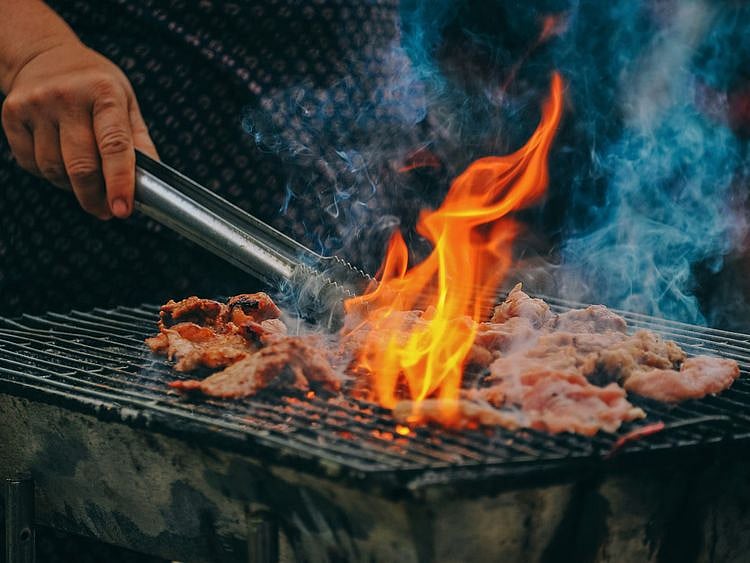
They seem to be everywhere these days. Every time I turn around, there's another gleaming, stainless-steel gas grill. It seems like you can't call yourself a cook unless you've got a grill.
Every time I see one, I have an impulse to buy a bag of charcoal. Then I light a little fire in my old kettle grill and I'm ready to cook something delicious: a butterflied leg of lamb marinated in yoghurt and Indian spices, a whole chicken flattened and cooked under a brick so it's crisp and juicy or hickory-smoked spice-rubbed meat so good they don't need sauce.
Adding convenience
Grilling is a simple art and the only thing the fancy equipment does is add convenience. I'm a back-to-basics guy, especially when the basics are so simple to master. Buy a grill. Add a charcoal chimney and with a couple of other things, you're ready to go.
But there are a few things you have to think about when cooking with fire. The first, of course, is the fire. The tendency is to fill the grill with coals. This works well if you're starting a blacksmith shop but cooking requires a more deft touch.
The coal factor
You'll have to use only a chimney full of coals if you're grilling vegetables, flank steak or fish. Slope the coals against one side of the grill.
This gives you two temperatures to work with — very hot directly over the fire and somewhat cooler away from the flame.
Use the very hot side to sear meat and then move it away to cook through. Even better, this also discourages those raging flare-ups that are the bane of every grill cook.
Grill the chicken under the direct flame and you'll wind up with charred skin and raw flesh. Let it cook more gently over indirect heat and the skin turns golden and crisp while the meat stays moist and juicy.
Which coals to use: hardwood or briquette? Hardwood charcoal is better for grilling because it burns cleaner and leaves little ash.
But for meat, you will need the fire to cook low and slow for a few hours, so using longer-lasting briquettes will spare you the need to refuel.
Dealing with marinades
Marinades are another area of controversy. They're a point of pride for some cooks, who think there is nothing like a long soak in an herb-scented tub to improve a piece of meat. In most cases, you're better off with a short dip.
The fact is that many marinades never penetrate much beyond the surface of the meat. And that's enough. Much of the meat we grill is fairly thin anyway, so you're likely to have a flavoured surface in every bite.
The problem with long soaks is that if the marinade contains any acid — lemon juice, vinegar, even the lactic acid in yoghurt — it will break down the structure of the meat, resulting in a mealy texture.
When I cooked the leg of lamb in yoghurt and spices, marinating the meat overnight, the outside of the lamb seemed pasty in texture.
When I cooked it a second time, amping up the seasoning but marinating for only an hour, the flavour was just as good and the texture firm and meaty.
One exception to this marinade rule is brining. Brines (salt-water solutions) keep the meat moist during cooking and because they contain either very little acidity or none at all, they don't break down the meat.
Seasoning mixes
That's also true for dry, salt-based seasoning mixes, which operate in much the same way as brine: The salt pulls moisture from the meat and the meat reabsorbs the seasoned moisture, giving it a deep flavour.
Rubs are fun to play with. Start with roughly equal measures of salt and red pepper — paprika or powdered chilli — and complement them with dried herbs and spices. Keep tasting until the mixture hits the right note for you.
This rub is so good I prefer to serve ribs without any barbecue sauce.
And if you want to serve the dish with a sauce, brush it on for the last five minutes of cooking.
Time to start
Build a fire and let it calm a little. Add soaked hickory chips to cool it more and get the smoke going. Then put in the meat.
If you're doing more than one slab, you can buy a metal rack to hold them upright.
You'll know when it is ready because the meat will be so tender that when you wiggle the bone in the centre, it will almost pull free.
That can take two hours or more. If the meat gets a little overdone, you'll have burnt ends so crisp they'll shatter when you bite into them. Maybe you'll even prefer it that way.
ACCESSORIES
Tools to help you with the grill
- Brushing daily gives you a clean grill that helps prevent food from sticking.
- Silicon grill mitts are flexible and keep your hands cool for the occasional flare-up.
- A charcoal chimney quickly lights just the number of coals you'll need for a good fire.
- A short garden hoe is perfect for arranging coals.
- Hardwood charcoal burns hot and clean but for
meats you may want to use longer-lasting briquettes for low, slow cooking. - A sturdy set of tongs lets you turn the food without breaking the skin.
- A grill basket will keep smaller foods, such as tuna steaks and vegetables, from slipping through the grate. And you can flip the foods all at once for more even cooking.
Indian-spiced grilled lamb
Servings: 6 to 8.
- 1 cup yoghurt
- 1/4 cup vinegar
- 4 cloves garlic
- 1 tsp black pepper, coarsely ground
- 1 (2-inch) piece ginger, grated
- 1 serrano chilli, sliced
- 1/2 tsp cumin, ground
- 1-1/2 tsp salt
- 1 boneless lamb leg, 4-5-pound
Mix the yoghurt, vinegar, minced garlic, black pepper, ginger, serrano chilli, cumin and salt.
Place the lamb in a resealable plastic bag and pour in the mixture. Press out the air, seal tightly and massage to distribute the marinade evenly. Leave it at room temperature for one or two hours.
Start the coals in a chimney and when they are lightly coated with grey ash, empty them into the grill, arranging them in a gentle slope against one side.
Brush the grill rack with oil and replace it. Place the lamb skin-side down directly over the flame and sear for two to four minutes. Turn and sear the other side.
Move the lamb away from direct heat and cook until it is brown and crusty on the outside and has reached an interior temperature of 130°C.
Transfer the lamb to a carving board and let it rest five to ten minutes to allow the juices to redistribute before carving in thick slices.
Serve immediately.
Nutrition per serving:
333 calories; 47g protein; 1g carbohydrate; 0g fibre; 14g fat; 6g saturated fat; 154mg cholesterol; 246mg sodium.
RECIPE
Tuscan grilled chicken
Servings: 4-6
- 2 cloves garlic
- 1-1/2 tbs fresh rosemary, minced
- 1 tsp salt
- 1/2 tsp fennel seed
- 1/4 cup olive oil
- 1 chicken, 4 or 41/2 pounds
- Oil for brushing
Grind the garlic, rosemary, salt and fennel seeds in a blender. Add olive oil to make a coarse paste.
Using a chef's knife, cut the chicken along the backbone from both sides to remove it from the carcase.
Place the chicken skin-side up on the cutting board. Firmly press down on the centre of the breast to flatten the chicken.
Spoon in the herb mixture and place the chicken in a resealable plastic bag.
Seal tightly and let the marinade distribute evenly. Refrigerate overnight or leave at room temperature for an hour.
Wrap a 1-foot-square paving stone or brick in aluminium foil. Start the coals in a chimney and when they are lightly coated with grey ash, after about 20 minutes, place them in the grill, arranging in a gentle slope against one side.
Replace the grill rack and brush it with oil.
Place the chicken skin-side down on the grill rack, away from direct heat. Brush one side of the foil-covered brick with oil and place it on top of the chicken.
Grill until the skin is well-browned, for about 20 minutes. Remove the brick and turn the chicken over, placing it skin-side up directly over the fire.
Cook until the juices at the hip and knee joints run clear when pierced with a knife, time required is about five minutes.
Remove to a carving board and let it be there for five minutes to distribute the juices evenly before carving. Serve immediately.
Nutrition per serving: 389 calories; 42g protein; 0g carbohydrate; 0g fibre; 23g fat; 6g saturated fat; 168mg cholesterol; 171mg sodium.
Sign up for the Daily Briefing
Get the latest news and updates straight to your inbox
Network Links
GN StoreDownload our app
© Al Nisr Publishing LLC 2026. All rights reserved.