The Early Spring: So wrong, so right, a Chinese drama somehow full of the ‘best red flags’ — the fan verdict
A messy, maddening C-drama that turns every red flag into must-watch TV
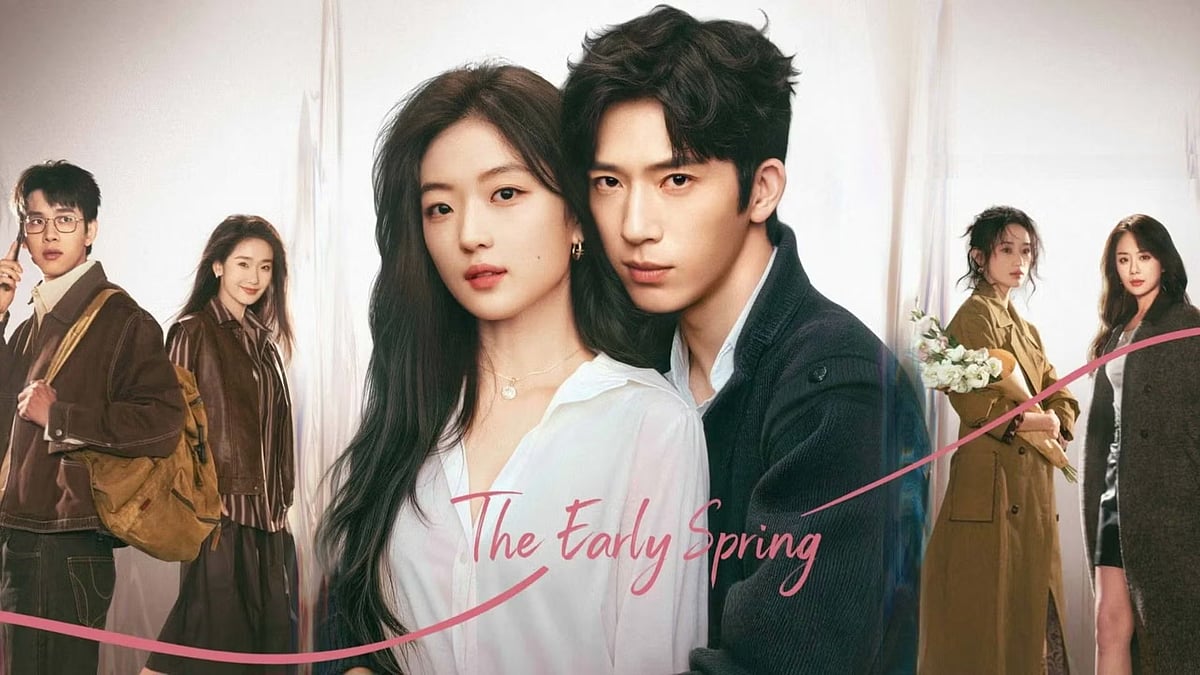
Throw your remote at the wall. Pick it up immediately and press the next episode, and curse yourself for doing so, but also message your friends that they must get into this mess with you.
Hello, The Early Spring. You would have seen it all over your reels, questioned whether you deserve this emotional commitment, and then maybe said...alright, why not?
The Early Spring is the 2026 C-drama starring Jing Bo Ran and Sun Qian, has a clear premise: It has a brutal boss, a rookie who refuses to quit, a six-year secret relationship, and enough miscommunication to fuel a therapist's entire career. It is, by most reasonable metrics, a mess. It is also, according to the 8.6-rated consensus of over 8,000 viewers, and well, a masterpiece. Here's why both things are true.
The premise in brief
Shang Zhi Tao is an ordinary graduate who lands a job at a top-tier Beijing advertising agency, only to be told by her new boss, brilliant, ruthless creative director Luan Nian, to resign on day one. She doesn't. What starts as workplace hazing curdles into a secret relationship. It's built on career ambition, pride, and a truly heroic amount of things left unsaid.
Exhibit A: Why It's So Wrong
The usual signs of trouble: A boss-employee power dynamic. An age gap. A "cold male lead" who, per one reviewer, would be generously described as an arrogant soul, the character who in any other drama gets dumped by episode 14. A relationship kept so deeply hidden that after years, the male lead is still just a boyfriend confined to a very specific corner of his partner's life: no cohabitation, no introductions to friends, no room made for him at all.
And it's not one-sided toxicity, either. Viewers have pointed out that Shang Zhi Tao is just as complicit, she hides a serious personal crisis from the man who could have helped her, keeps her ex in the dark about her relationship status, and springs the idea of marriage on her boyfriend not because she wants it, but because a friend's wedding put the idea in her head. One widely upvoted review put it bluntly: This is a story about two flawed people slowly bringing out the worst in each other.
Exhibit B: Why It's right
And yet. The writing is precise enough that none of this reads as lazy melodrama. Fans have highlighted the show's visual storytelling, like a repeated shot of the leads passing each other in opposite directions, first as strangers, later as two people whose dynamic has completely inverted, without a word of dialogue needed to explain it.
Then there's the typewriter. Early on, Shang Zhi Tao accidentally shatters an antique typewriter that sits, precariously, on the edge of Luan Nian's desk, a none-too-subtle metaphor for a controlled, orderly life that is closer to falling apart than its owner realises. He rebuilds it missing one key; she finds a replacement that doesn't quite fit. When he finally uses it, the machine, however imperfectly repaired, spells out the show's actual thesis: you don't have to be perfect to be worthy of love.
That's really the engine of the whole drama. It's not a clean romance, but a case study in two insecure people, learning to let each other in.
What viewers say
The reviews split into two camps that somehow agree with each other. One camp is furious in the best way. As one reviewer on MyDramaList, summed it up, the effort in this relationship was almost entirely one-sided, and no, "the bare minimum" doesn't excuse it. That same review rated the show 8.5 overall, docking half a point for the male lead's behavior and awarding the other 8 points to everyone involved for making the mess so compelling to watch.
The other camp is fully swept up in the romance of it all, treating the leads' dynamic as a genuine slow-burn epic, six years of a hidden relationship reframed as two people circling each other, resisting, and finally choosing each other as equals. Between "he's a walking red flag but somehow the best one out there" and "everything about this is wrong and I'm still hooked," the comment section reads less like a debate and more like a support group.
Even the trivia has fans invested: several commenters have pointed to a rumor that the actor playing Luan Nian, said to be trained in calligraphy, personally handwrote the episode titles — a detail fans claim to have verified by comparing his handwriting to the on-screen titles.
The Early Spring works precisely because it refuses to give you a clean hero and a clean villain. It hands you two people who love each other and still manage to hurt each other constantly, and it trusts you to sit in that discomfort instead of resolving it for you. It is messy, occasionally maddening, and, per the numbers and the near-obsessive discussion boards, deeply, stubbornly watchable.
So, go ahead, be invested, curse and thank us later.
Sign up for the Daily Briefing
Get the latest news and updates straight to your inbox
Network Links
GN StoreDownload our app
© Al Nisr Publishing LLC 2026. All rights reserved.