Ranveer Singh in Dhurandhar
Shashi Tharoor calls Ranveer Singh's 'Dhurandhar' India vs Pakistan propaganda, slams gruesome violence
Shashi Tharoor calls out excessive brutality in Ranveer Singh's spy thriller saga
Last updated:
4 MIN READ
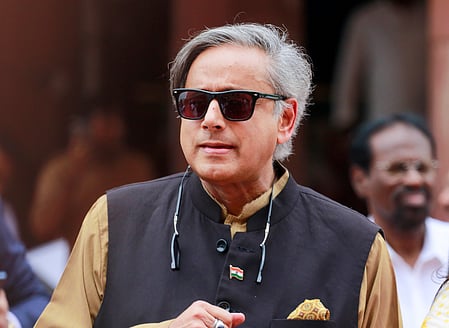
Shashi Tharoor backs India-China talks, calls for balanced diplomacy (File Photo)
Dubai: Indian politician Shashi Tharoor has finally watched both instalments of Ranveer Singh's blockbuster spy thriller Dhurandhar, and his verdict is anything but black and white. Agreed he's late to the party, but he isn't mincing words as he gives it a mixed verdict.
While the Congress MP and former diplomat was impressed by the ambitious filmmaking, elaborate plot twists and powerful performances in director Aditya Dhar's two-part action panned the gruesome violent shots in the movie. He called it a major cinematic spectacle, but slammed the not-so-subtle India vs Pakistan propaganda.
In a nearly seven-minute video shared on his official YouTube channel, Tharoor said: "There is a lot of propaganda stuff built into it obviously." He also acknowledged the controversy surrounding the films' depiction of Pakistan and cross-border terrorism.
He also addressed reports that the franchise had been banned in Pakistan and several Gulf countries over concerns that its content could inflame tensions between Indians and Pakistanis. While both chapters did not enjoy a theatrical release in the Gulf, they are available to watch on Netflix in this region.
"I can understand those feelings," he said, referring to the reported concerns about the films creating bad blood between the two communities.
Too much blood, too little restraint?
While Dhurandhar has been celebrated for its high-octane action sequences, Tharoor was clearly unimpressed by the relentless brutality.
"There was no need to show so much violence, blood, mayhem, cruelty and some of the most disgusting scenes ever seen in Indian cinema," he said.
He described the graphic violence as "totally excessive and over the top", suggesting that the filmmakers could have delivered an equally gripping story without pushing the brutality quite so far.
His observations add another voice to the debate surrounding the franchise, which has divided audiences over whether its nationalistic storytelling is compelling entertainment or politically loaded cinema.
But the sequel gets his vote
Interestingly, Tharoor had plenty of praise for Dhurandhar: The Revenge, which he found considerably more satisfying than the first instalment.
"As a work of fiction, as a work of entertainment, there is no doubt that the second part is superb," he said.
He was particularly impressed by the storytelling, the unexpected twists and the way the second film tied together narrative threads left unresolved in the original.
The performances also earned his approval, especially those of Akshaye Khanna and Arjun Rampal, who play the formidable antagonists Rehman Dakait and Major Iqbal.
Ranveer Singh in Dhurandhar
Tharoor singled out both actors for their convincing portrayals, describing their performances as superb.
And despite his ideological reservations, he had little criticism of the technical craftsmanship.
From the elaborate sets and production design to the direction and performances, Tharoor acknowledged the sheer ambition of Dhar's cinematic universe.
"At the end of 8 hours, you feel you have been through a major cinematic experience," he said.
When Bollywood meets national security
Tharoor, who served as a United Nations diplomat before entering Indian politics, also questioned the franchise's portrayal of intelligence operations.
The films follow Ranveer Singh's character Jaskirat Singh Rangi, an Indian undercover operative who assumes the identity of Hamza Ali Mazari in Pakistan.
But Tharoor said his own dealings with intelligence officials had been considerably less dramatic than the cloak-and-dagger world presented on screen.
His professional interactions, he explained, largely involved analysis, conversations and information exchanges rather than covert operations culminating in spectacular explosions.
"That's not the world I have ever lived in," he remarked.
He also questioned the timeline surrounding R Madhavan's character Ajay Sanyal, widely regarded as loosely inspired by India's National Security Advisor Ajit Doval.
For Tharoor, the idea of a single bureaucratic figure occupying essentially the same position across decades was another reminder that audiences should approach the films as fiction rather than a faithful account of India's intelligence establishment.
Patriotism beyond the big screen
Tharoor also appeared unconvinced by the suggestion that spectacular covert operations represent the ultimate expression of national service.
The second instalment links India's 2016 demonetisation exercise to an elaborate intelligence operation targeting counterfeit currency and terror financing networks.
Aditya Dhar shows Arjun Rampal’s intense look in ‘Dhurandhar’ on his birthday
But Tharoor argued that national security and foreign policy cannot be reduced to cinematic acts of retaliation.
"National service is about far, far bigger things, far bigger objectives… the larger well-being of 1.4 billion people," he said.
His assessment ultimately struck an interesting balance: admiration for the artistry, scepticism about the messaging.
For Tharoor, Dhurandhar may be a spectacular cinematic achievement, but its entertainment value does not place its politics, violence or version of patriotism beyond scrutiny.
And perhaps that is the most interesting takeaway from his review: you can applaud a film's craftsmanship without necessarily buying into everything it is trying to sell.
Network Links
GN StoreAbout Gulf NewsTerms & ConditionsReach by GNSitemapContact usPrivacy PolicyGN FocusHave your sayWork with usAdvertise with usGulf News epaperPrinting Services
Download our app
© Al Nisr Publishing LLC 2026. All rights reserved.