Sharib Hashmi in a still from the film 'It's Only 47°C'.
Sharib Hashmi recalls 700 failed auditions until his wife's words changed his life: 'Your dreams aren't yours alone'
The Family Man star opens up about rejection, debt and the family that never gave up
Last updated:
4 MIN READ
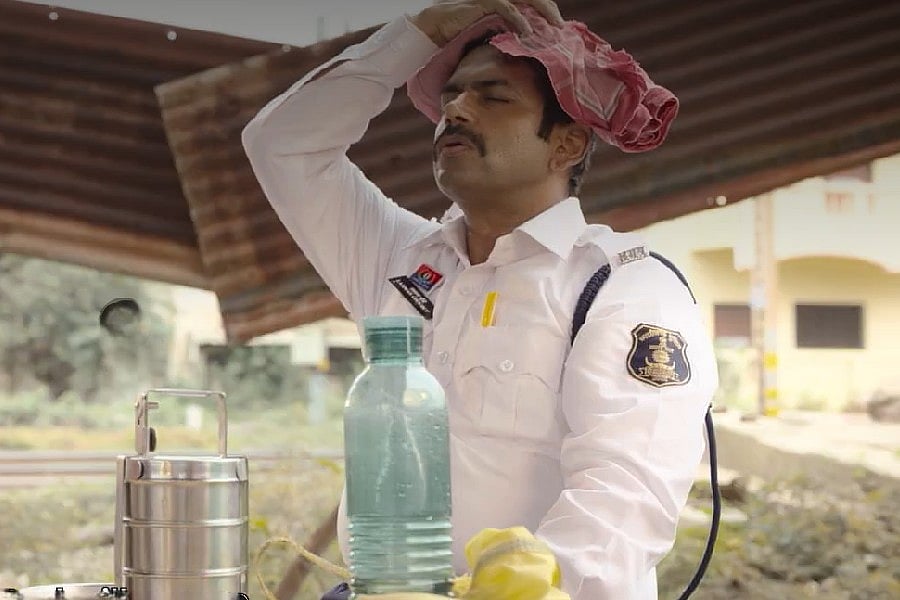
Sharib Hashmi in a still from the film 'It's Only 47°C'.
Youtube
Dubai: There's a version of Sharib Hashmi's story where he never becomes an actor at all. It ends somewhere around his 700th failed audition, buried under debt, telling his wife he'd made a terrible mistake.
That version didn't happen, and by his own account, it's because of her.
Speaking about the toughest stretch of his career, the years before Filmistaan, Hashmi recalls a point where the rejections and the money worries had genuinely shaken his faith. His son wanted to learn martial arts, and Hashmi couldn't afford the classes. "I did all of this for nothing. I shouldn't have chosen this path," he remembers telling his wife, he shared in an interview with Screen.
Her response is the line he still carries with him. "Never say that again. Your dreams are not yours alone, they belong to all of us," she told him. "If you say all our sacrifices were for nothing, it will break my heart. You should be content that you're at least trying."
Leaving a job for an uncertain dream
That dilemma, chasing a creative dream while a family depends on you, isn't abstract for Hashmi. He left a steady job to pursue acting, and he's open about the toll it took. "Sometimes you get overwhelmed by the two roles you're expected to play: running your household while also staying committed to your art," he says. "My family had to go through a lot during that phase."
It's a tension he later poured into his writing. The 2020 film Ram Singh Charlie, which he co-wrote and produced, follows a circus performer whose world collapses when the circus shuts down. Hashmi calls it his tribute, alongside director Nitin Kakkar, to their own fathers, men the world might not have called successful.
"If someone isn't seen as successful, their story often goes untold," he says. "But very few people realise that simply participating in life is equally important." He and Kakkar, he admits, often cried while writing it.
The breakthrough that didn't quite break through
When Filmistaan finally arrived in 2014, the India-Pakistan dramedy earned strong reviews and a solid theatrical run, and put Hashmi firmly on the industry's radar. What it didn't do was open the floodgates.
He speaks candidly about the films that slipped away, a project with Nikkhil Advani that was shelved, another backed by Anees Bazmee that never got made, independent films left unfinished for lack of budget. Even the ones that reached audiences, like Darbaan, went largely unseen. Recognition, it turned out, wasn't the same as opportunity.
Sharib Hashmi in the movie Filmistaan
Even now, with The Family Man having made him a household name, Hashmi feels audiences have seen only a sliver of what he can do. "I know I have a lot more to offer, but I haven't got those opportunities yet. So I'm just waiting for that moment," he says. There's no bitterness in it, though. He lists Filmistaan and The Family Man among the projects he's genuinely grateful for, and he's quick to note how many actors more talented than him, in his words, never got this far at all.
Directing real traffic in 47-degree heat
His latest project, the short film It's Only 47°C, drew him in on two counts. One was the phone call from Naseeruddin Shah, who is producing it. "He could have asked me to do anything, and I would have happily said yes," Hashmi says. The other was the story's angle on climate change, told through ordinary people who contribute least to the problem yet suffer most.
"The poor have no role in global warming, yet they are the ones most affected by it," he says. "That, for me, was the most nuanced aspect of the script."
Sharib Hashmi in a still from the film 'It's Only 47°C'.
Shot in just three days, the film had Hashmi directing actual traffic in guerrilla-style scenes, something he prepared for by training with real traffic police two days early.
It wasn't easy, but it left a mark on passers-by, several of whom recognised him mid-scene. "Some were waving at me while I was managing the traffic," he laughs. "The next day, a few of my friends even sent me pictures of me standing there and directing traffic."
Network Links
GN StoreAbout Gulf NewsTerms & ConditionsReach by GNSitemapContact usPrivacy PolicyGN FocusHave your sayWork with usAdvertise with usGulf News epaperPrinting Services
Download our app
© Al Nisr Publishing LLC 2026. All rights reserved.