Schumacher '94 review: Love, the tragedy of Imola and Michael Schumacher's rise to F1 legend
Schumacher's rise amid heartbreak and the seismic shifts in Formula One history.
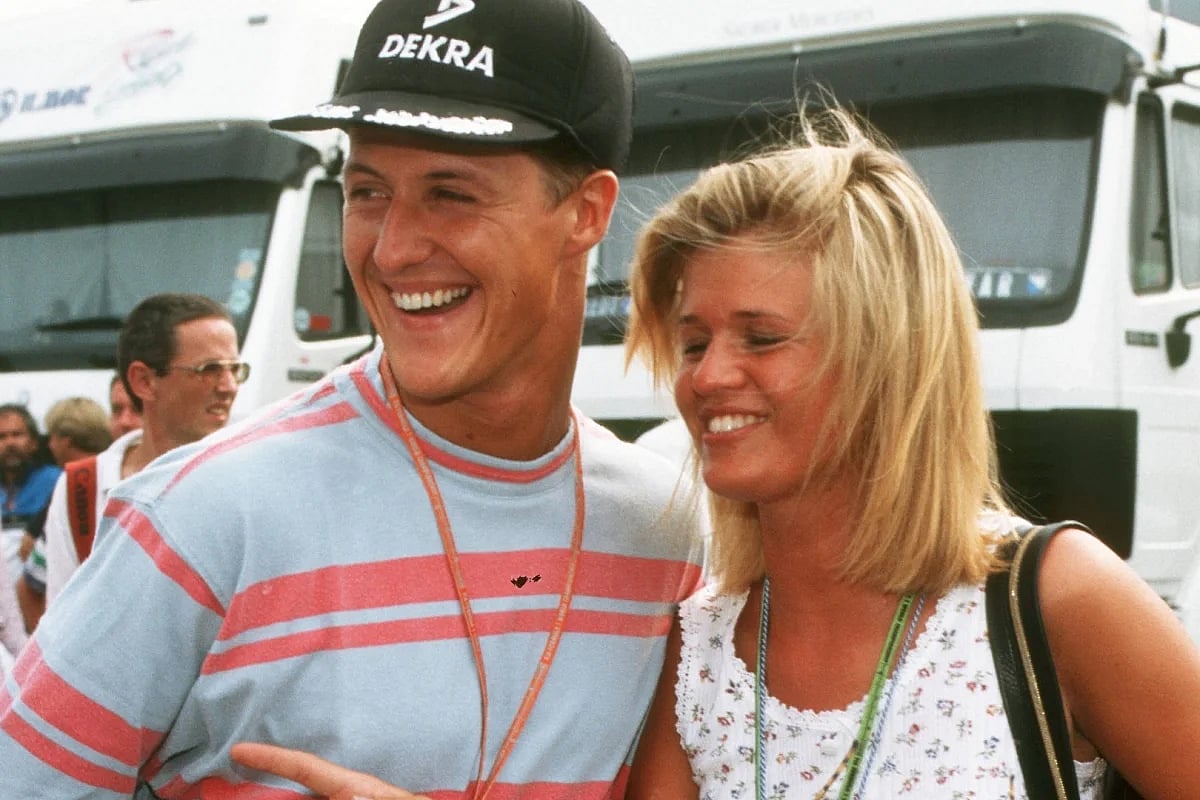
The '94 Formula One season. You didn't have to be a fan to know about the weekend that rocked the sport. Scratch that: you could have been born years later and still feel the aftershocks of Imola, the turbulent San Marino Grand Prix weekend at the turn of May that cost two lives and left others scarred. It was also the season of Michael Schumacher's many falls, and his even greater rise.
Schumacher '94 – The Birth of a Legend takes us back to a time of raw power, when the cars spoke louder than the drivers, the rivalries were incendiary, and the game could turn deadly without warning. The archive footage reinforces the gap: grainy, close, unpolished, a world away from the glossy, drone-shot storytelling of Drive to Survive. Mechanics stand in the pit lane in T-shirts. Drivers talk to reporters without a press officer in sight. Rivalries were fought in open press-conference sniping. What a far cry from today.
Directed by Christin Freitag, the Netflix documentary is driven by Corinna Schumacher, his girlfriend then and his wife since 1995, who recalls with visible emotion the days burned into her memory.
Michael has not been seen in public since his skiing accident in Méribel in December 2013, so he lives here through the archive: old interviews, paddock footage and photographs of the young couple as he fought his way towards a first world title. "My heart was always with Michael, when he won, and when he lost," Corinna says. "It's always with him."
That line reverberates through the film. Corinna is the fixed point in the stands through the victories, the defeats and that dreaded weekend at Imola. Freitag builds towards it so painstakingly that the gooseflesh comes on its own. On Friday, Rubens Barrichello's Jordan was launched into the barriers at the Variante Bassa; he woke in the medical centre with a broken nose.
On Saturday, Roland Ratzenberger, a 33-year-old Austrian rookie on only his third Grand Prix weekend with the tiny Simtek team, lost his front wing at nearly 315km/h and hit the wall at the Villeneuve curve. It was the first fatality at a Grand Prix weekend in twelve years. The film shows the hush that fell over the crowds, and on the thorny question that followed: should they just cancel the race?
They didn't. The show must go on, as Bernie Ecclestone had said. Later in the documentary, he admits, "It was a strange weekend."
Hardly anyone wanted the show to go on, and the discomfort is plain on Ayrton Senna's face as he settles into his Williams on Sunday.
The three-time champion had taken a medical car to the scene of Ratzenberger's crash, and, it later emerged, carried a furled Austrian flag in his cockpit, meaning to raise it for his fallen colleague. The start brought yet another accident, when Pedro Lamy's Lotus ploughed into JJ Lehto's stalled Benetton and debris flew into the crowd. Soon after the safety car pulled in, Senna, leading Schumacher, went straight on at Tamburello at around 310km/h.
He died that evening, aged 34.
Schumacher won the restarted race, and he knew, there was nothing to celebrate.
There was just a photo of the winner standing motionless, unsure what to do with his hands, and that, is one of the film's most profound photos.
And here, is where the documentary does something different: After laying out the uneasy rivalry between the two, it lets that rivalry curdle into something closer to grief. The fear travelled with him. Archive interviews show Schumacher admitting it was no longer easy to drive at circuits he had lapped countless times; all the way to Silverstone, death felt as though it might be waiting on any corner. Grief and fear existed in the conversations and fights that he would have with Corinna, as she would remember. There's an image of a swing, where they would have their arguments, of what lay ahead.
Grief also lies in weighted pause as he once weighed the question of getting back in the car, and the film is wise enough to hold on it. That silence undoes the caricature that would follow him for years: The cold, clinical German, the machine in red. What we see instead is a 25-year-old learning, in public, that talent offers no protection, and that the job now demanded he switch the fear off every Sunday and drive flat out regardless.
Viewers who know what came later will see the thread run on beyond the frame. Six years on, at Monza in 2000, when a press-conference question about matching Senna's tally of 41 wins finally reached him, Schumacher broke down in tears. Schumacher '94 doesn't need to show that moment. It shows where it began.
Yet, what made 1994 so searing is that triumph and tragedy never came apart. The season kept unravelling: Schumacher was disqualified at Silverstone for ignoring a black flag and banned for two races, then stripped of victory at Spa over a worn skid plank, while Benetton fought off whispers of hidden traction control and a refuelling fire engulfed Jos Verstappen at Hockenheim.
Even so, he reached the Adelaide finale a point clear of Senna's former team-mate Damon Hill, and their notorious collision settled the title by that same single point.
That collision would shadow his reputation as surely as seven titles would define it. The sport changed, too: Imola forced the FIA into urgent safety reform, slower cars, stronger cockpits, redesigned circuits, and no driver would die at a Grand Prix for another two decades.
Schumacher '94 reminds us of the price paid for that legacy, and of the young man who learned, in one brutal spring, exactly what it cost.
Network Links
GN StoreDownload our app
© Al Nisr Publishing LLC 2026. All rights reserved.