“I have never performed such an intense character like this and I went into depression while playing this role," says Meera.
Pakistani actress Meera says she wants Salman Khan to watch her Eid film Psycho, praises Dhurandhar and Bollywood
For Meera, her new role became more than performance. It consumed her.
Last updated:
5 MIN READ
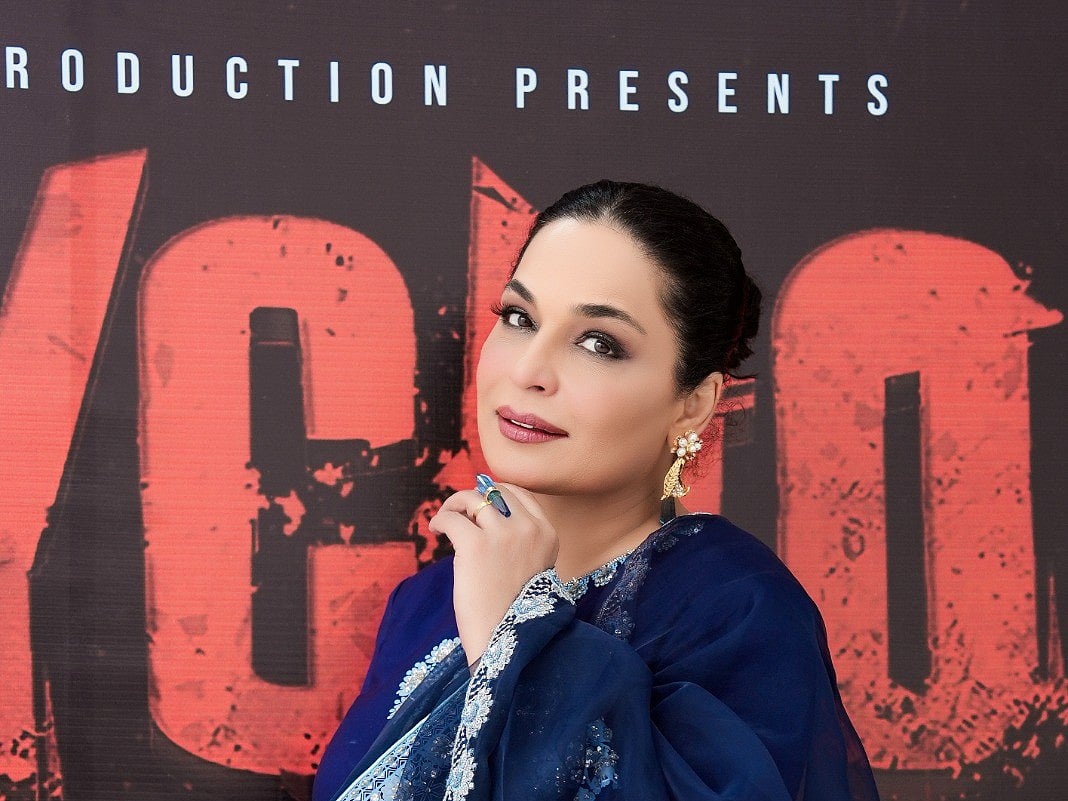
When Psycho releases this Eid-ul-Adha, Meera won’t just be returning to the big screen. She’ll be returning in full Meera mode: emotional, theatrical, vulnerable and entirely unfiltered.
Pakistani actress Meera has never believed in subtlety. For decades, she has remained one of Pakistan’s most talked-about stars, gloriously dramatic, unapologetically loud, wildly unpredictable, and permanently controversial. She can pivot from discussing hair appointments to mental health breakdowns in under 30 seconds, shower Bollywood with love while demanding Salman Khan watch her film, and casually declare that “there is a psycho in every individual” — all without missing a beat.
Get updated faster and for FREE: Download the Gulf News app now - simply click here.
And honestly? That chaotic sincerity is exactly why audiences remain obsessed with her.
When Psycho releases this Eid-ul-Adha, Meera won’t just be returning to the big screen. She’ll be returning in full Meera mode: emotional, theatrical, vulnerable and entirely unfiltered. The veteran actress calls the psychological thriller her “Eidi” to fans in Pakistan and India alike, and insists the film will reveal a side of her audiences have never seen before.
“In Psycho the audience will see a very powerful and intense and an unexpected side of the character I played,” says Meera. “Every scene in this movie carries a lot of emotions, mystery and depth. It is a very emotional and a very good movie.”
The film revolves around mental health and emotional instability, with the haunting tagline: “The real enemy stays in the mind.” It’s a subject Meera discusses with startling honesty throughout the interview.
“There is a psycho in every individual and human, just on different levels and effects, but it is definitely among all of us,” she says bluntly.
For Meera, the role became more than performance. It consumed her.
“I have never performed such an intense character like this and I went into depression while playing this role,” she reveals. “I have played beautiful and good-looking girls’ roles, with glamorous makeup, dresses and images, so this was very difficult for me.”
The actress clarifies that her emotional spiral stemmed entirely from the demands of the character.
“I was in depression because of my role in the movie, as it was very intense and difficult for me to perform at my best,” she says. “I had to really live the character and that affected my mental health a lot also.”
Then, almost poetically, she adds: “It was good depression to live and understand the character and come back to normal.”
Much of the credit, she insists repeatedly, belongs to director Shaan Shahid, whom she speaks about with immense admiration.
“As Shaan Shahid is an actor-turned-director, he had full concentration on the character he wanted to see on the screen,” she says. “It was not me performing, it was Shaan Shahid’s vision performing in front of the camera.”
But this being Meera, the interview refuses to stay in one lane. It swings wildly between cinema, vulnerability, celebrity fandom and philosophical musings about toxic love.
At one point, she passionately professes her love for India and Bollywood.
“I love India. It is my favourite. I love the people. I miss it a lot,” she says warmly. “I’m the biggest fan of Bollywood films and definitely I don’t miss any good films that are released in Bollywood.”
Then comes the pitch.
“If a good movie is made in India or Pakistan, we should support it and celebrate it like a festival,” she says. “Movies connect everyone together.”
She even directly appeals to Indian stars to watch Psycho.
“I would personally request Mr Salman Khan and Akshay Kumar to watch Psycho as well,” she says excitedly. “Pakistani people love them.”
And yes, she has heard about Dhurandhar — the blockbuster spy thriller set partly in Pakistan starring Ranveer Singh and Akshaye Khanna — even if she hasn’t watched it yet.
“I heard Akshay Khanna has done a brilliant job in Dhurandhar and I would love to watch his character,” she says.
As the conversation deepens, Meera becomes unexpectedly introspective while discussing emotional toxicity and obsessive love.
“We have negative thinking with us all the time,” she says thoughtfully. “There are many dreams that don’t come true.”
Then comes a startlingly self-aware confession.
“I think my negative trait is I am just not giving up on chasing my dreams nonstop and I am not able to come into reality soon until it is too late,” she admits.
Her hope, she says, is that audiences will walk away from Psycho recognising harmful emotional patterns within themselves.
“The audience will get a chance to see this psycho character and learn and fix any negative emotions that are affecting them,” she says.
She even wants fans to send her “30-second videos” about their own “psycho moments” after watching the film.
Interestingly, Meera is deeply aware of how casually society weaponises words associated with mental illness.
“People are using this word in everyday sentences and taking it lightly,” she says. “They should not do that.”
“If you see someone around you like that you should address it or bring it to notice, but it’s not good to say to anyone, ‘Oh be careful this girl is psycho or that boy.’ Please do not label them.”
Then comes the moment where Meera briefly addresses the podcast episode that recently went viral — an uncomfortable interaction that sparked widespread debate online and unexpectedly turned her into a symbol of grace under pressure. While she never directly names what upset her, or fully unpacks the incident, her carefully chosen words say enough.
“I am very, very humbled and thankful to everyone from the bottom of my heart that they showed me so much support,” she says emotionally. “That moment was right and it proved that with the right moment and support anything is possible.”
Then, in classic Meera style, she sidesteps confrontation while still subtly acknowledging the discomfort of being publicly cornered.
“A lot of people face this,” she says quietly. “It is very sad sometimes we are put in a spot and we have to bear it.”
Instead of anger, she pivots toward gratitude — particularly for the women who rallied behind her online.
“Especially women and girls who came forward and stood with me,” she says. “We all want to try and fix something together and make the world a better place.”
It is perhaps the most fascinating contradiction about Meera. For someone known for chaos, controversy and meme-worthy unpredictability, she also possesses an almost old-school resilience — the ability to absorb humiliation publicly, smile through discomfort and continue moving forward without fully breaking character.
And just before ending the interview, she slips effortlessly back into superstar mode, plugging not just Psycho but an entire lineup of upcoming projects including Psycho 2, The Warriors of Maula, Umrao Jaan Ada and Winglish.
Then comes the final flourish only Meera could deliver.
“Please do watch my movie Psycho and show us some love,” she says. “Watch my movie, then I would like to do another interview with you again.”
Network Links
GN StoreAbout Gulf NewsTerms & ConditionsReach by GNSitemapContact usPrivacy PolicyGN FocusHave your sayWork with usAdvertise with usGulf News epaperPrinting Services
Download our app
© Al Nisr Publishing LLC 2026. All rights reserved.