Mattel launches its first-ever Autism-inclusive doll
A Barbie for everyone: Autism representation comes to the Fashionistas Line
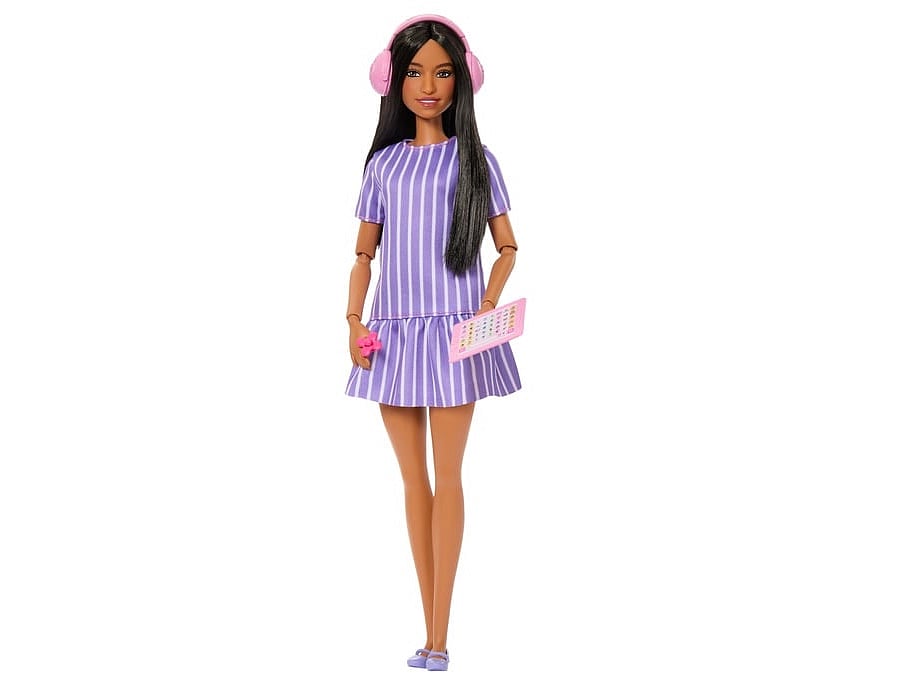
Dubai: Mattel has unveiled its first-ever autistic Barbie, a move autism advocates say marks an important step toward meaningful representation in children’s toys.
The doll was developed over more than 18 months in partnership with the Autistic Self Advocacy Network (ASAN), according to a Mattel news release published on CNN, with design decisions guided by autistic voices.
The new Barbie includes features meant to reflect certain autistic experiences. Her eyes are angled slightly to the side, acknowledging that some autistic people avoid direct eye contact.
Articulated elbows and wrists allow for stimming movements like hand-flapping, while accessories such as a pink finger-clip fidget spinner, noise-canceling headphones, and a pink tablet reflect tools used by many autistic children for sensory support and communication. Clothing choices were also carefully considered: a loose A-line dress and flat shoes were selected to reduce sensory discomfort, ASAN said in an interview with CBC News.
Noor Pervez, ASAN’s community engagement manager, told CBC that the goal was not only to help autistic children see themselves represented in Barbie but also to normalize autism for non-autistic kids at an early age. “We want children to see that autistic people are a normal and valuable part of their communities,” she said.
The doll is designed as a woman of color, reflecting the underrepresented segment of autistic girls and women who are often misdiagnosed. Mattel also plans to donate over 1,000 dolls to leading pediatric hospitals, bringing the new Barbie into wider communities.
Online reactions have been mixed. Some users questioned the representation:
“How does one know a Barbie doll is autistic if it doesn't speak or show acts of autism,” one X user wrote.
“Tbh this portrays autism as more of a gimmick than an actual mental disorder. Having noise-canceling headphones and a fidget toy doesn’t make something autistic. Autism shows up differently in everyone who has it. Any of the Barbies could be autistic,” another added.
Supporters, however, highlighted the collaboration behind the doll:
“Missing context: this is a collaboration between Barbie and ASAN (the Autistic Self-Advocacy Network) so it was not made based purely on stereotypes. The official Instagram post about the doll perfectly details how she's representative of some members of the autistic community,” a X user noted.
This release expands Mattel’s Fashionistas line, which now offers more than 175 dolls representing a wide variety of skin tones, hair textures, body types, and disabilities. Previous inclusive models include dolls with Down syndrome, Type 1 diabetes, prosthetic legs, and hearing aids.
Pervez told CBC that the doll was never intended to represent all autistic people. “Autism doesn’t look any one way,” she said. “But we can try to show some of the ways that autism expresses itself.”
For Mattel, the autistic Barbie is part of a broader effort to diversify the Barbie line, offering children dolls they can see themselves in while promoting understanding of different experiences.
Article contributed by Saarangi Aji
Sign up for the Daily Briefing
Get the latest news and updates straight to your inbox
Network Links
GN StoreDownload our app
© Al Nisr Publishing LLC 2026. All rights reserved.