Father and daughter sold fake Warhols and Banksys in $2 million art scam
Counterfeit paintings duped major auction houses in New York City
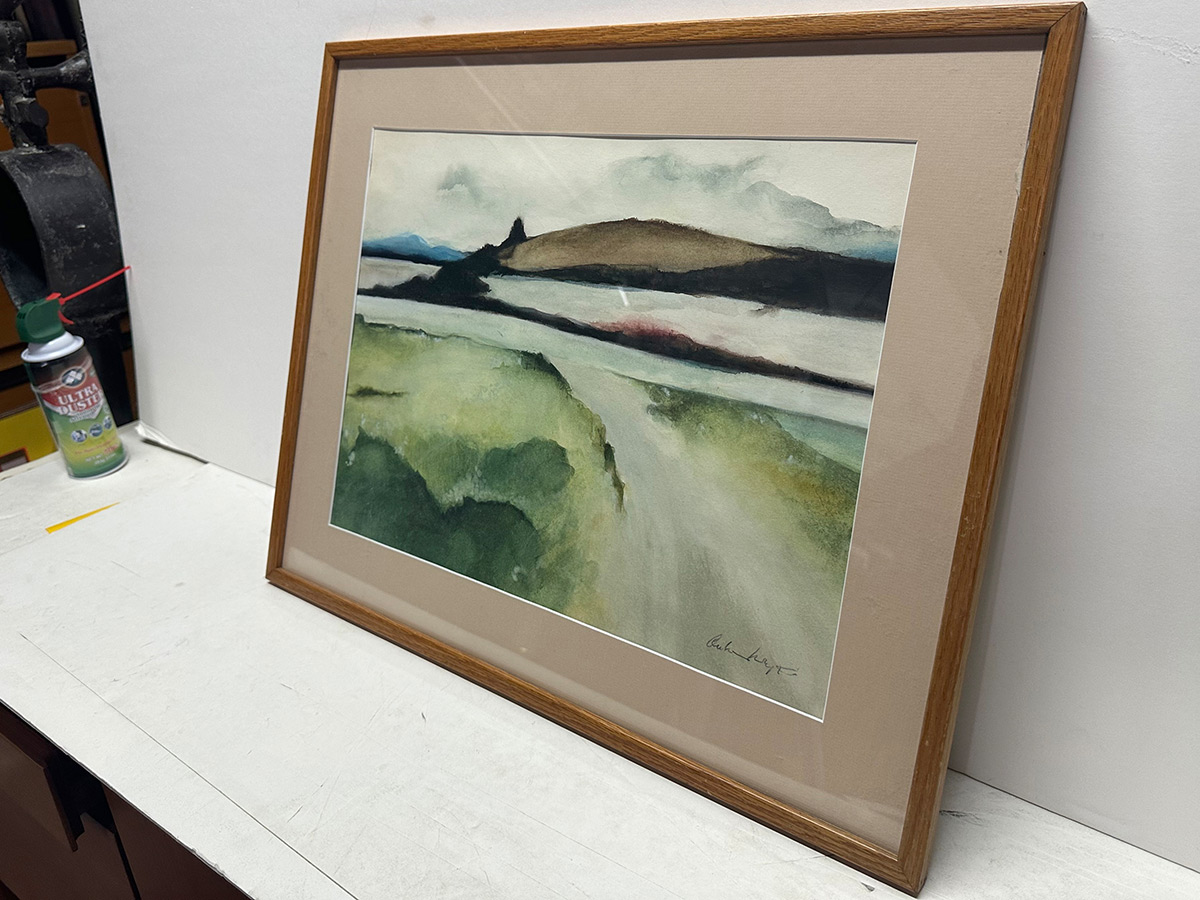
New York: It began with what seemed like a routine visit to a Manhattan art dealer — a young woman, a framed painting, and a story about a family heirloom that needed selling.
When Robert Rogal, a private art dealer in New York City, met Karolina Bankowska, she appeared convincing. She carried what looked like an original painting signed by celebrated American artist Andrew Wyeth — a delicate landscape in the style of the artist’s early watercolours.
The artwork looked authentic enough to raise interest.
Get updated faster and for FREE: Download the Gulf News app now - simply click here.
Rogal accepted it on consignment, believing it could fetch between $20,000 and $30,000 at auction.
“The provenance was a little fuzzy, but she seemed credible,” Rogal later recalled. “It wasn’t an obvious fake.”
It was, prosecutors say, exactly that.
More than a year later, federal authorities allege the Wyeth painting was one of at least 200 forged artworks created as part of a sophisticated counterfeit operation run by Bankowska, 26, and her father, Erwin Bankowski, 50 — a scheme that prosecutors say defrauded buyers and major auction houses of at least $2 million.
On Tuesday, the father and daughter, Polish nationals living in New Jersey, pleaded guilty in federal court to fraud charges tied to the fake art sales.
Forged in Poland, sold in New York
According to prosecutors, the counterfeit paintings were created in Poland by an unnamed accomplice and carefully designed to mimic works by well-known artists including Banksy, Andy Warhol, Andrew Wyeth and Richard Mayhew.
Many were based on lesser-known works — a tactic that made authentication harder and suspicion less likely.
Their most lucrative fake, prosecutors said, was a painting falsely attributed to acclaimed artist Richard Mayhew, which sold at auction last October for $160,000.
Several prominent auction houses were drawn into the scheme, including Bonhams, Phillips, Freeman’s, Antique Arena, and DuMouchelles, where the Mayhew forgery was sold. Representatives for DuMouchelles said they cooperated with investigators.
A sophisticated deception
Investigators say the operation went beyond painting replicas.
The pair allegedly used antique paper, forged authentication stamps, and created fictional ownership histories to make the artworks appear legitimate. In some cases, they used the names of long-closed galleries to give paintings a believable exhibition trail.
But cracks eventually appeared.
One forged painting — “Triple Boats,” falsely attributed to artist Raimonds Staprans — drew scrutiny in 2023 after representatives for the artist flagged it as suspicious. Despite the warning, the painting was sold at auction for $60,000, according to prosecutors.
Art crime experts say the case exposes a larger issue in the global art market.
“The only unusual thing here is that the forgers got caught,” said Erin Thompson, a professor of art crime at the City University of New York, noting that art forgery is far more common than many in the industry publicly acknowledge.
A fake with clues hiding in plain sight
For Rogal, suspicion came late — and from an unexpected detail.
The stamp on the back of the supposed Wyeth looked pristine — too pristine. Closer inspection revealed inconsistencies, including a gallery address format that historians say had been discontinued years before the date printed on the label.
The forged stamp also carried the name of M. Knoedler & Co., one of New York’s oldest galleries, which shut down in 2011 after its own high-profile forgery scandal involving fake works attributed to Jackson Pollock and Mark Rothko.
Rogal never listed the painting for sale.
He asked Bankowska to collect it. She never returned.
Standing in his Queens warehouse this week, surrounded by genuine works of art, Rogal looked again at the counterfeit Wyeth — a convincing fake that nearly made it to market.
“You try to do things properly,” he said. “But can we be fooled? Absolutely.”
Network Links
GN StoreDownload our app
© Al Nisr Publishing LLC 2026. All rights reserved.