US consumers defer spending despite decline in fuel prices
Weaker sales reflect temporary slowdown of further gains Manufacturing remains resilient as new orders and shipments rise
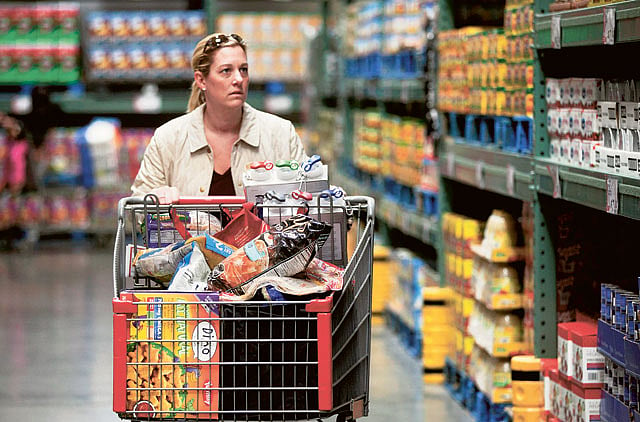
Washington: Lower gas prices in April weren't enough to embolden US consumers to spend much more elsewhere.
The Commerce Department said retail sales rose only 0.1 per cent last month. After excluding gasoline station sales, consumers increased their spending on retail goods by just 0.2 per cent. That followed two stronger months in February and March. Some economists say a mild winter led consumers to make purchases earlier in the year, effectively stealing sales from April.
Still, there were positive signs suggesting that tepid spending in April might prove to be a temporary lull. Americans spent more on autos, furniture and electronics, big purchases that help drive growth.
They also spent more at restaurants and bars — generally a sign of confidence in the economy.
Excluding autos, gas station sales and spending on building materials, so-called core retail sales increased 0.4 per cent.
One reason for the weakness was gasoline prices have fallen sharply in the past month. The national average dropped to roughly $3.73 (Dh13.70) per gallon on Monday, roughly 17 cents cheaper than a month ago. That pulled sales at service stations down 0.3 per cent.
But consumers cut spending sharply at department stores and clothing stores. And sales dropped 1.8 per cent at hardware stores.
The retail sales report represents the government's first look at consumer spending for the April-June quarter. Consumer spending is closely watched since it accounts for 70 per cent of economic activity.
Dan Greenhaus, an analyst at BTIG in New York, said that weaker April figures likely reflect a temporary slowdown in further solid gains. He expects cheaper gas prices to lift consumer confidence.
The University of Michigan said its Consumer Sentiment index for May rose to its highest level since January 2008. Greenhaus predicted that consumer spending in the April-June quarter would likely grow at an annual rate of roughly 2.6 per cent. That would be down only slightly from the 2.9 per cent spending growth in the first quarter, the best since late 2010.
In the January-March quarter, overall economic growth slowed to an annual pace of 2.2 per cent. That's down from the 3 per cent increase in the October-December period, but faster than last year's 1.7 percent pace.
Sign up for the Daily Briefing
Get the latest news and updates straight to your inbox
Network Links
GN StoreDownload our app
© Al Nisr Publishing LLC 2026. All rights reserved.