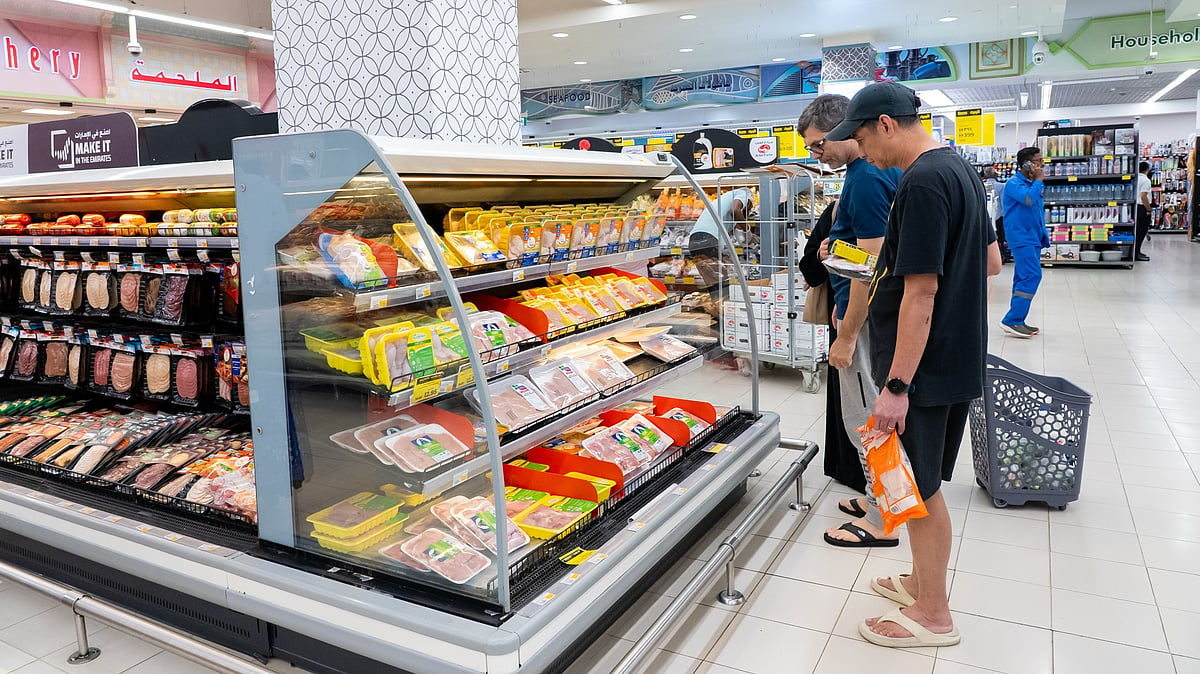
Dubai: For UAE residents worried about global inflation and rising prices worldwide, the country’s latest economic outlook points to something increasingly valuable: stability.
Get updated faster and for FREE: Download the Gulf News app now - simply click here.
The UAE is projected to maintain one of the world’s lower inflation rates in 2026, helping support household spending even as many global economies continue battling elevated costs.
That matters because inflation affects almost every part of daily life. It shapes grocery and supermarket bills, fuel and transport spending, school and household shopping, dining and entertainment costs, and savings and monthly budgeting.
Slower rate of inflation
When inflation stays relatively low, prices still rise, but usually at a slower and more manageable pace. Razan Hilal, CMT Certified Market Analyst at FOREX.com, said the UAE’s economic position continues to stand out internationally.
“The UAE continues to demonstrate relative macroeconomic stability amid global inflation, with the Central Bank of the UAE projecting inflation around 1.8% in 2026, compared to 3.8% for the US,” Hilal said. “This is due to the UAE’s extensive support policies such as controlled energy pricing and government subsidies.”
In practical terms, lower inflation can help residents experience fewer sharp increases in essential living costs compared to many other countries. Hilal said the UAE’s outlook also remains supported by long-term economic planning and infrastructure investments.
“With structural energy developments like the UAE’s pipeline expansion already in the works, the outlook for the region remains positive,” she said.
UAE’s inflation affects all
The latest Quarterly Economic Review released by the Central Bank of the UAE in March 2026 reinforced that outlook. The report said inflation in the UAE averaged 1.3 per cent in 2025 and is projected to remain moderate in the coming years.
“The inflation outlook is expected to be contained in its moderate track, in the short to medium term, with the headline inflation projected at 1.8% in 2026 and 2.0% in 2027,” the Central Bank said.
The regulator attributed last year’s low inflation partly to “declines in transport costs and textile prices and favourable developments in food prices.” Those categories directly affect residents’ day-to-day expenses.
Transport costs influence commuting, deliveries and fuel-related spending, while food and textile prices shape supermarket and retail bills. For households, stable inflation also creates greater predictability around monthly spending and budgeting decisions.
UAE fares better than others
The UAE’s inflation forecast compares strongly with broader global projections. According to the Central Bank report, the IMF expects global headline inflation to fall from 4.1 per cent in 2025 to 3.8 per cent in 2026 before easing to 3.4 per cent in 2027.
“Global inflation continues to ease, supported by softer demand, lower energy prices, and improving supply conditions, although the pace of disinflation varies across regions,” the Central Bank said. In the US, inflation remains higher than in the UAE despite recent easing.
The report noted that US headline CPI inflation slowed to 2.4 per cent in January 2026, but added that “food and shelter inflation remain sticky, and disinflation in services is likely to be gradual.”
That difference matters because residents in many advanced economies are still experiencing persistent pressure on housing, food and service costs. By comparison, the UAE’s lower inflation environment could help preserve consumer purchasing power more effectively.
US interest rates still matter
Because the UAE dirham is pegged to the US dollar, American monetary policy continues influencing regional financial conditions. Hilal said the impact may not necessarily be negative for the UAE economy.
“Because of the dollar peg, US monetary conditions could still influence economies in the region, but the outcomes may be favorable,” she said. “For instance, the increase in US bond yields and the Fed considering prolonged rate holds may contribute to a gradual moderation in regional credit growth.”
That could help avoid excessive borrowing-driven inflation pressures from building up domestically. The Central Bank noted that the US Federal Reserve held rates steady at its January 2026 meeting, maintaining the federal funds target range at 3.50 per cent to 3.75 per cent.
It added that the Fed had “emphasized a patient, data-dependent approach to the timing of any further adjustments amid firmer growth and labour-market data.”
Global risks not disappeared
The Central Bank cautioned that global economic risks have not disappeared. It warned of “renewed trade tensions, geopolitical disruptions, and associated swings in commodity prices and risk premia that could delay the return to durable price stability.”
The report also highlighted concerns surrounding “mounting pressures from wider fiscal deficits and elevated public debt that could push up long-term interest rates and tighten financial conditions.”
Another emerging risk mentioned was “a potential repricing of expectations for AI-led productivity gains.” Despite those uncertainties, the broader global growth outlook remains stable.
“The global economy is projected to expand by 3.3% in 2026,” the Central Bank said. Against that backdrop, the UAE’s combination of lower inflation, policy support and infrastructure investment continues positioning the country among the more stable economies globally.
For residents, that stability could become one of the UAE’s strongest economic advantages in 2026.

Sign up for the Daily Briefing
Get the latest news and updates straight to your inbox
Network Links
GN StoreDownload our app
© Al Nisr Publishing LLC 2026. All rights reserved.