“For FMCG companies, you have to be ultra fast moving consumer goods, rather than just fast moving consumer goods," said Puri.
Unilever CEO: ‘Ultra-fast’ retail is the new normal in UAE, Middle East
Premium beauty, social commerce and, demand are reshaping Unilever’s Gulf strategy
Last updated:
3 MIN READ
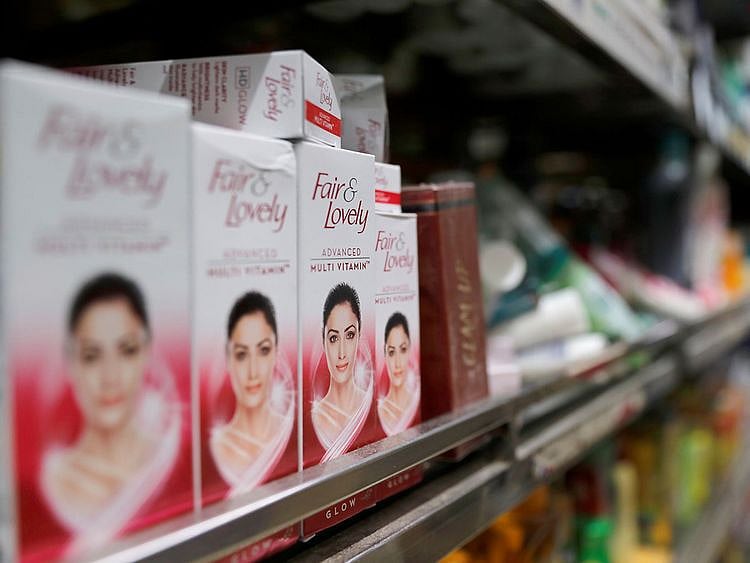
Anything from food items to vacuum cleaners can be ordered online. The expectation: Delivery in 15 minutes. Fair and Lovely, one of Unilever’s most popular and controversial products on display in a supermarket aisle.
Agency
Dubai: Ultra-fast retail — where groceries, household essentials, and almost everything else you may need for day-to-day life are delivered to your doorstep in as little as 10 minutes — has moved from novelty to necessity in the UAE, Saudi Arabia, and the wider Middle East.
Aseem Puri, Chief Executive Officer of Unilever International — the group’s export-focused division — said the rapid rise of quick-commerce platforms across the UAE and Saudi Arabia is fundamentally reshaping how brands operate in the region.
“Speed is no longer a competitive advantage — it’s a baseline expectation,” Puri told Gulf News. “Consumers in this region expect instant availability, seamless delivery and convenience, whether they’re ordering food, skincare or household essentials.”
Ultra-fast delivery services have grown rapidly across the UAE, Saudi Arabia, and several other Middle Eastern countries, dramatically changing shopping behaviour. Instead of large weekly supermarket trips, consumers are making multiple small, need-based purchases to brick and mortar stores.
“For companies like ours, this means rethinking everything — from pack sizes and pricing to how products are displayed on apps,” Puri said.
Unilever now works closely with delivery platforms and retailers to ensure its products are optimised for fast-moving digital shelves rather than traditional store aisles.
'Premiumisation' accelerates in the Gulf
Alongside speed, Puri said the retail giant is seeing strong demand for premium products — defined not as luxury, but as items that offer better performance, added benefits, or time-saving features.
In the Gulf, this includes skincare, sun care and home care products designed for hot climates, water efficiency and convenience — all key factors for consumers in the UAE and Saudi Arabia.
“Middle Eastern consumers are value-conscious but not price-obsessed,” Puri said. “If the benefit is clear, people are willing to trade up.”
This trend is particularly visible in personal care and beauty, where consumers are more experimental and influenced by online trends.
Social media drives instant demand
Ultra-fast retail is closely linked to social commerce — shopping driven by platforms such as TikTok and Instagram.
Products increasingly go viral online before consumers even know the brand behind them. When interest spikes, shoppers expect the item to be available instantly through delivery apps or nearby stores.
“Trends that once took months to reach the Middle East now arrive in days,” Puri said. “That forces companies to react in real time.”
K-beauty and faster launches
One category benefiting from this shift is K-beauty (Korean beauty products), which has gained traction in the region through social media-led discovery.
Unilever has expanded its portfolio to include Korean-developed lip care and skincare products, launching them across multiple markets — including the Middle East — at speed.
By developing products centrally and scaling them globally, the company can shorten launch cycles and respond quickly to regional demand.
Diaspora influence shapes shelves
The UAE and Saudi Arabia’s large expatriate populations continue to shape retail demand, particularly for heritage brands.
Unilever has been actively expanding its product portfolio in the UAE and wider Middle East, aligning new launches with global consumer trends and local preferences. The company identified a growing lip care segment and “developed in Korea a range of fast, clean lip” products that were rolled out globally and have since become top sellers in more than 30 markets, including the Gulf.
Recognising demand from expatriate communities, Unilever introduced Pears soap from India — a famous, iconic brand — which has become one of the top three soaps in many markets including the UAE.
“As migration patterns diversify, diaspora-led demand will continue to influence what retailers stock,” Puri said.
Use of AI in retail
To keep pace with ultra-fast retail, Puri said the company is now using artificial intelligence (AI) (data-driven automation) to improve demand forecasting, supply chain planning and digital content creation for e-commerce platforms.
While final decisions remain human-led, AI enables faster responses to shifting consumer behaviour across markets.
Physical retail will remain important in the Middle East, but it will increasingly blend with digital platforms, instant delivery and data-driven personalisation.
“Retail here is evolving faster than almost anywhere else,” Puri said. “The brands that win will be those that move quickly, stay relevant and meet consumers exactly where — and when — they want.”

Dhanusha is a Chief Reporter at Gulf News in Dubai, with her finger firmly on the pulse of UAE, regional, and global aviation. She dives deep into how airlines and airports operate, expand, and embrace the latest tech. Known for her sharp eye for detail, Dhanusha makes complex topics like new aircraft, evolving travel trends, and aviation regulations easy to grasp. Lately, she's especially fascinated by the world of eVTOLs and flying cars. With nearly two decades in journalism, Dhanusha's covered a wide range, from health and education to the pandemic, local transport, and technology. When she's not tracking what's happening in the skies, she enjoys exploring social media trends, tech innovations, and anything that sparks reader curiosity. Outside of work, you'll find her immersed in electronic dance music, pop culture, movies, and video games.
Sign up for the Daily Briefing
Get the latest news and updates straight to your inbox
Network Links
GN StoreAbout Gulf NewsTerms & ConditionsReach by GNSitemapContact usPrivacy PolicyGN FocusHave your sayWork with usAdvertise with usGulf News epaperPrinting Services
Download our app
© Al Nisr Publishing LLC 2026. All rights reserved.