Dubai: The global gold market is now valued at around $31 trillion, built on nearly 220,000 tonnes of above-ground stock accumulated over centuries, making it one of the largest and most enduring asset classes in the financial system.
Despite its size, gold remains a relatively small part of global portfolios. According to the World Gold Council's Gold Market Primer: Market size and structure report, bullion held by investors accounts for roughly 3% of the estimated $320 trillion in financial assets worldwide, highlighting a gap between market scale and allocation.
This combination of scale and under-allocation continues to shape gold’s role across investment portfolios, central bank reserves and consumer markets.
Get updated faster and for FREE: Download the Gulf News app now - simply click here.
Depth across investors and institutions
The investable gold market, largely in bullion form, is estimated at more than $15 trillion. This includes about $9 trillion held in physical bars, coins, ETFs and over-the-counter investments, alongside $5 trillion held by central banks and nearly $1.5 trillion in derivatives.
Participation spans individuals, institutions and governments, giving gold a broad and diversified ownership base that supports stability even during periods of market stress.
Central banks remain key players. Official institutions collectively hold close to 39,000 tonnes of gold, worth around $5 trillion, accounting for about 26% of global allocated reserves.
Developed markets typically hold a larger share of gold in reserves, averaging about 30%, while emerging markets continue to increase allocations, though still below that level.
Liquidity rivals major asset classes
Gold’s liquidity remains one of its defining features. Average daily trading volumes reached about $361 billion in 2025, with activity spread across over-the-counter markets and exchanges.
London continues to anchor the OTC market, accounting for more than $160 billion in daily volumes, while futures trading is led by COMEX and supported by growing activity in Asia.
The ability to trade gold at scale across multiple venues allows investors to enter and exit positions without significantly affecting prices, placing it alongside major government bond markets in terms of liquidity.
Market shaped by stock, not just supply
Unlike most commodities, gold’s market is driven as much by its existing stock as by new production. Nearly all the gold ever mined still exists in some form, whether held as jewellery, bars, coins or reserves.
Annual supply grows slowly, increasing by about 1.8% each year, reinforcing scarcity while allowing the market to respond to shifts in demand through recycling and reallocation of existing holdings.
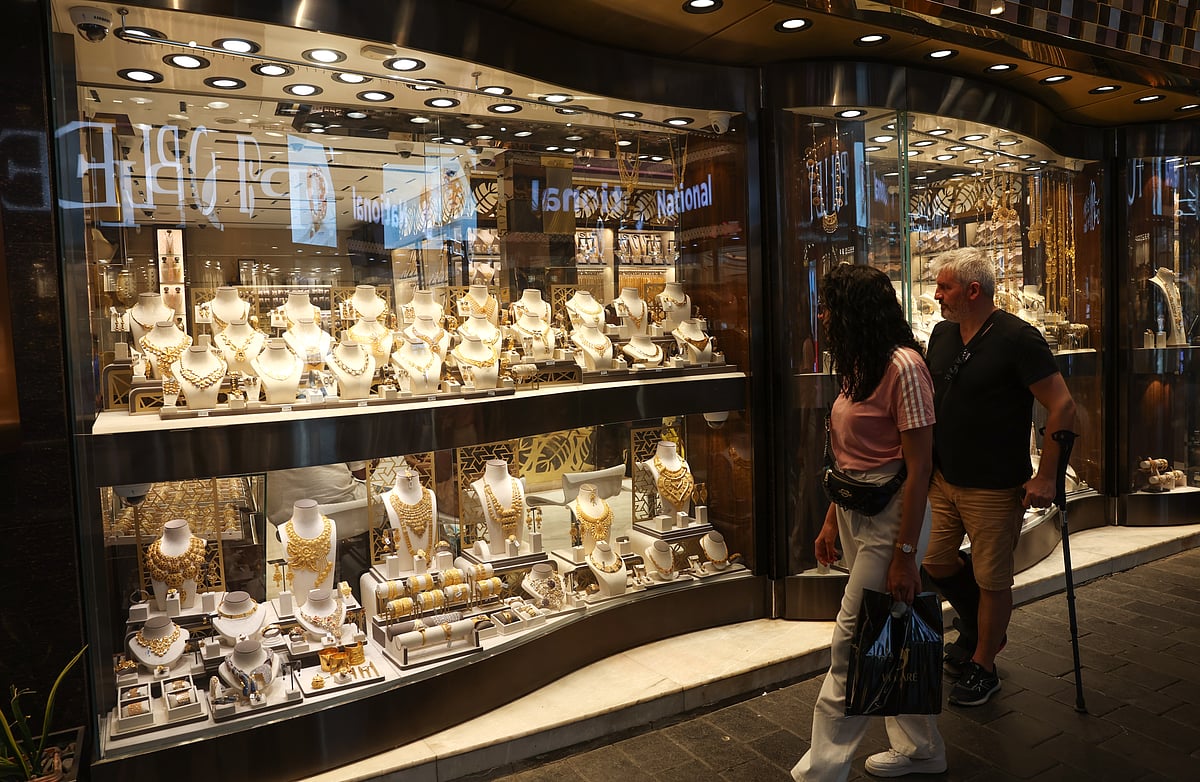
Jewellery accounts for the largest share of above-ground gold at 44%, followed by bars and coins at 21% and central bank holdings at 18%. Smaller portions are held in ETFs, industrial uses and other applications.
Dual demand supports stability
Gold’s structure reflects a balance between consumer and investment demand. Jewellery and technology uses account for a significant share of demand, while investment flows and central bank purchases respond more directly to economic and financial conditions.
This dual nature helps stabilise the market. Consumer demand tends to support prices during periods of economic growth, while investment demand often rises during uncertainty, providing a counterbalance.
Under-allocation remains a key theme
One of the more notable findings is how little gold features in global portfolios despite its size and liquidity. Many investors still hold limited exposure, with some having no allocation at all.
Research suggests that a strategic allocation of between 2% and 10% can improve risk-adjusted returns, though actual holdings vary widely across regions and investor types.
A core reserve asset
Gold continues to play a central role in global reserves, valued for its liquidity, diversification and performance during periods of crisis.
Central bank demand has strengthened in recent years, with many institutions increasing holdings to reduce reliance on major currencies and enhance long-term stability.
Survey data indicates that reserve managers expect gold’s share of global reserves to rise further, alongside a gradual diversification away from the US dollar.
Gold’s ability to function both as a consumer good and a financial asset allows it to adapt across economic cycles, maintaining relevance for investors, policymakers and consumers alike.

Sign up for the Daily Briefing
Get the latest news and updates straight to your inbox
Network Links
GN StoreDownload our app
© Al Nisr Publishing LLC 2026. All rights reserved.