Expat businessmen in UAE view India Budget 2026 with guarded optimism
Expat business leaders back stability, NRI reforms and capex push, flag sectoral gaps
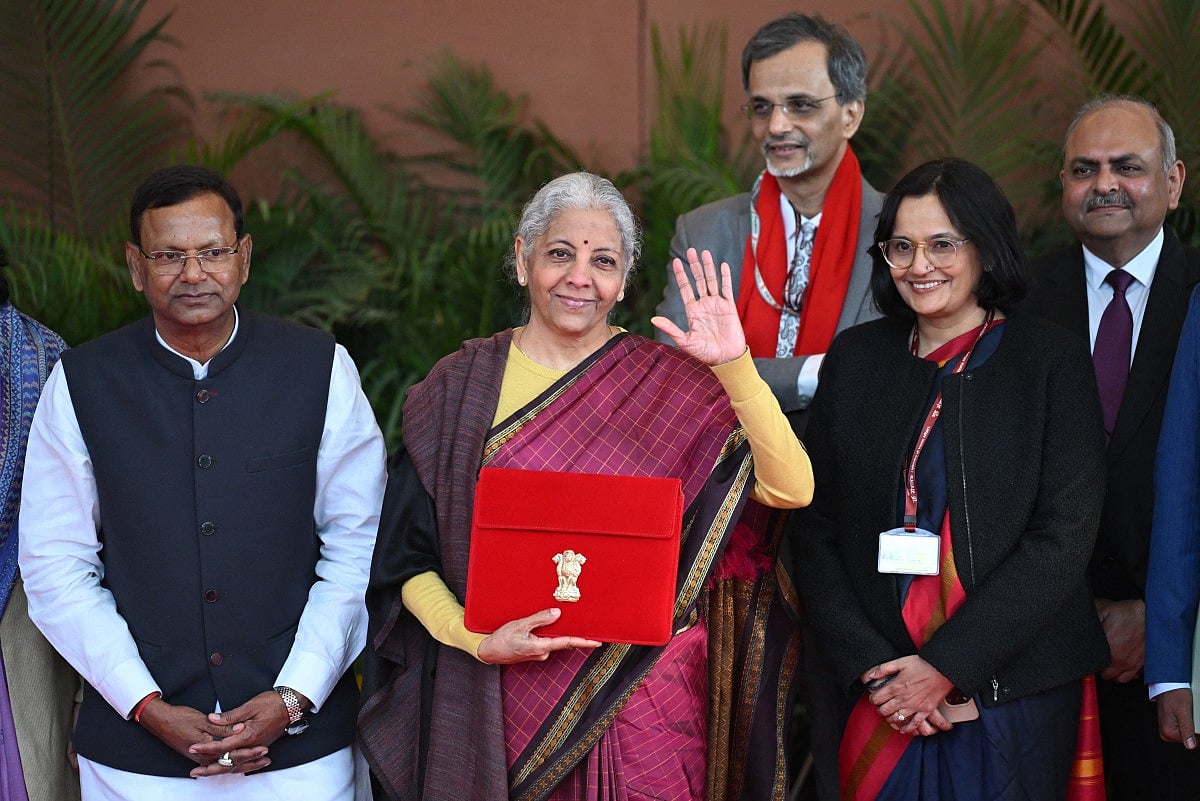
Dubai: Indian expatriate business leaders based in the UAE broadly welcomed India’s Union Budget 2026, describing it as stable, continuity-driven, and strategically aligned with long-term growth.
Their reactions underline support for NRI-focused reforms, infrastructure-led expansion, manufacturing incentives, and technology investments, while also pointing to missed opportunities in sectors such as affordable housing, tourism scale-up, and financial services depth.
Across sectors ranging from retail and finance to healthcare, electronics, real estate, and FMCG, the common thread was confidence in India’s medium-term trajectory, coupled with expectations of sharper execution and more targeted interventions.
Confidence in growth
For Yusuffali M.A., Chairman of LuLu Group, the Budget signals continuity with a long-term vision and a clearer role for overseas Indians.
“The third budget presented by the finance minister focuses on tax simplification, economic growth, and long-term investment-driven development, with an emphasis on youth empowerment, NRI supports and fiscal stability,” he said. “It reflects confidence in India’s growth in the coming years making it one of the largest economies of the world.”
He highlighted the intent to draw global Indians deeper into India’s capital markets. “Government’s push to expand NRI participation is both timely and strategic,” Yusuffali said, pointing to proposals “to ease rules under the Portfolio Investment Scheme and raises overall foreign holding limits, enabling more global Indians to invest directly in India’s growth story.”
Technology and manufacturing also featured prominently in his assessment. He noted that the Budget “strategically invests in India’s future-ready workforce by focusing on high-growth sectors such as Artificial Intelligence,” calling it a signal of “long term commitment to technology driven inclusion.”
From an infrastructure and real assets perspective, Yusuffali pointed to measures such as “dedicated REITs to accelerate the monetisation and recycling of CPSE real estate assets,” and the proposed “Infrastructure Risk Guarantee Fund to provide partial credit guarantees and improve lender confidence.” He added that the focus on “Tier-2 and Tier-3 growth corridors and better urban connectivity” is likely to support residential and logistics demand over time.
NRI compliance relief
Several UAE-based professionals said the Budget stops short of major tax restructuring for overseas Indians, but meaningfully improves transaction ease.
Jai Prakash Agarwal, Chairman of the ICAI Dubai Chapter, said there were “no major tax overhauls for NRI but glimpses of ease of doing business seen in this budget.” He pointed to specific measures including “investment limits doubled to 10% in listed firms,” “TCS reduced to 2% on foreign remittance for education and overseas spends,” and the move where “TAN requirements scrapped for TDS on property sales by resident buyers.”
“These are the indications that ‘ease of doing business’ is the focus and voices of NRIs are being heard,” Agarwal said, adding that these are “welcome steps and will help in boosting NRI investments in India.”
Naveen Sharma, Chairman of the Taxation Society UAE, described the Budget as one that “adopts a steady, growth-oriented approach.” He said that “with capital expenditure of about ₹11 trillion, the government has clearly signalled its continued focus on infrastructure, manufacturing, and long-term economic growth,” which he noted is “positive for NRIs looking at India as a long-term investment destination.”
For Gulf-based overseas Indians, Sharma said it is “reassuring that there are no new taxes on remittances or overseas income,” while the fiscal deficit target “of around 5% of GDP reflects discipline and stability.” He added that expectations around “relief on capital gains or clearer guidance on residency-linked taxation were not fully addressed.”
“Overall, this is a pragmatic budget—supportive of growth and investor confidence, but one where NRIs will still need careful and proactive tax planning,” Sharma said.
Process reforms
Adeeb Ahamed, Managing Director of LuLu Financial Holdings, described Budget 2026 as one that “reflects a clear preference for stability and continuity, particularly in the face of persistent global volatility.”
From a financial services and NRI compliance standpoint, he pointed to specific procedural improvements. Among these was “the rationalisation of foreign portfolio participation by individuals resident outside India,” including the increase in “the individual investment limit for Persons Resident Outside India (PROIs)… from 5% to 10%,” and the aggregate cap raised to 24%.
He also highlighted transaction-level simplification for property sellers. “The proposal to allow TDS on the sale of immovable property by non-residents to be deposited using the resident buyer’s PAN-based challan, instead of requiring a separate TAN, further simplifies compliance and reduces transaction friction for NRI property sellers,” Ahamed said.
Another liquidity-related relief he flagged was the reduction of “TCS on overseas tour packages and on remittances for education and medical purposes… from 5% to 2%.”
At the same time, he described the approach to growth sectors as cautious. “From the perspective of India’s financial services ecosystem, the Budget remains measured,” he said, noting that while reviews and committees were announced, “greater clarity on sequencing, scale and medium-term growth priorities would have strengthened the sector’s outlook.”
Fiscal credibility
Market-focused voices in the UAE highlighted the Budget’s emphasis on fiscal discipline and debt management as a critical shift.
Vijay Valecha, Chief Investment Officer at Century Financial, said, “India’s 2026-27 Budget strikes a smart balance between careful spending and strong growth.” He pointed to the fiscal deficit being “set at 4.3% of GDP for 2026-27,” and noted that the focus has moved toward “bringing down total debt relative to the size of the economy—expected to fall to around 55.6% next year, with a target of roughly 50% by 2030.”
According to Valecha, this trajectory “will ease future interest costs, free up money for useful projects, and build greater confidence in India’s economy.”
He described capital expenditure as the defining feature of the Budget. “The biggest highlight is the continued big push on government project spending, raised to ₹12.2 lakh crore for 2026-27,” he said, adding that sustained investment in “roads, cities, clean energy, and factories will create jobs, spark wider economic activity, improve efficiency, and encourage private companies to invest more.”
Aliasgar Tambawala, Co-CIO at Klay Group, framed the Budget as “a meaningful shift in India’s fiscal framework from deficit targeting toward public debt anchoring.” He cited the Centre’s objective of reducing the debt-to-GDP ratio “to 50±1% by FY2030,” from “56.1% in FY26 and a projected 55.6% in FY27,” calling it a move that reinforces fiscal credibility.
Tambawala said the “FY27 fiscal deficit is budgeted at 4.3% of GDP,” supported by “steady nominal GDP growth and expenditure discipline.” He added that “nominal GDP growth is projected at 10%,” with growth expected to remain driven by domestic demand and investment.
On the revenue side, he noted that “revenue assumptions are conservative,” with tax growth budgeted below nominal GDP growth. On borrowing, he pointed out that “net central government borrowing for FY27 is set at INR 11.7 trillion,” broadly in line with expectations, while the Reserve Bank of India is expected to offer “calibrated support via liquidity management and selective OMOs.”
Beyond individual changes, the broader economic direction of the Budget also matters for NRIs planning long-term ties with India.
James Mathew, CEO and Managing Partner at UHY James, said the Union Budget 2026 combines fiscal discipline with growth-focused spending. “With the Union Budget 2026, India has set a lower fiscal deficit target alongside a significantly higher capital expenditure outlay of ₹12.2 lakh crore for FY 2026–27, backed by a strong reform agenda,” he said.
Mathew pointed to measures aimed at sustaining growth, including “a tax holiday for new data centres until 2047 and the consolidation of all IT services under a single category with a uniform safe harbour margin of 15.5%.” He added that the Budget “underscores India’s commitment to driving high GDP growth while maintaining low inflation,” and places “a clear emphasis on long-term policy stability, strengthening infrastructure, and rationalising income tax expenditure.”
For UAE-based NRIs, this broader stability matters because it shapes the environment in which investments, property decisions, and business links with India play out over time.
Healthcare, skills focus
Healthcare drew strong support, with leaders pointing to scale, access, and workforce development.
Dr. Azad Moopen, Founder and Chairman of Aster DM Healthcare, said the Budget lays out “a thoughtful and forward-looking blueprint for India’s healthcare ecosystem—one that seamlessly integrates innovation, access, capacity expansion and global competitiveness.”
He highlighted the Biopharma Shakti initiative, “with an outlay of ₹10,000 crore over five years,” and the exemption of basic customs duty on “17 critical cancer drugs,” calling it a “timely and patient-centric measure.” Moopen also welcomed “the proposed 50 percent capacity expansion of district hospitals,” along with the expansion of NIMHANS 2.0 and three new AIIMS facilities, and pointed to workforce measures including “1,00,000 Allied Health Professionals (AHPs)” and the training of “1.5 lakh caregivers.”
Dr. Thumbay Moideen, Founder President of Thumbay Group, viewed the Budget through a healthcare and education lens, describing it as a signal of intent.
“The Union Budget 2026 sends a clear signal that India is serious about building a healthier, more skilled, and globally competitive nation,” he said.
He welcomed the emphasis on “healthcare infrastructure, medical education, skill development, and digital enablement,” while stressing that outcomes will depend on delivery. “What matters now is execution at scale—translating policy intent into accessible care, affordable education, and globally aligned training,” Moideen said.
Manufacturing funding
Electronics, semiconductors, and MSMEs emerged as a strong positive theme for Kamal Vachani, Deputy CEO and Group Director at Al Maya Group and Regional Director at the Electronics and Computer Software Export Promotion Council.
“Semiconductors are critical for electronics, telecom, automotive tech, defence systems, and AI,” Vachani said, noting that “historically, India imported a large share of chips.”
He welcomed the direction of ISM 2.0, saying it “aims to boost domestic production and reduce reliance on foreign supply chains, lowering strategic risk and import costs.”
On MSMEs, he pointed to the “Rs 10,000 crore SME Growth Fund,” describing it as support that will provide “much-needed capital and growth support.” He also highlighted the expansion of the Electronics Component Manufacturing Scheme, saying the increased outlay “to ₹40,000 crore will boost Domestic Manufacturing of Electronic Components and Encourage more companies to set up production units for components like PCBs, camera modules, display parts, batteries, etc.”
From an FMCG standpoint, Vachani said the industry “welcomes Union Budget 2026 as a progressive and growth-oriented budget,” citing measures to boost consumption, logistics efficiency, and ease of doing business. He added that the emphasis on inclusive growth and income support is “expected to enhance consumer confidence and drive volume-led growth.”
Jigar Sagar, Founder of Triliv Holdings, said Budget 2026 sends strong signals to the UAE–India trade corridor and the broader entrepreneurial ecosystem.
“India’s 2026–27 Union Budget sends strong signals to the UAE–India trade corridor and the broader entrepreneurial ecosystem,” Sagar said. “With a strategic emphasis on infrastructure, exports, and MSME scaling, the budget strengthens India’s position as an attractive partner for UAE investors and traders, boosting confidence for cross-border supply chains and trade linkages.”
He added that for UAE-based Indian entrepreneurs and investors, measures to simplify compliance, clarify tax treatment, and enhance digital integration improve capital flow and operational ease. Sagar highlighted targeted support through the “₹10,000 crore SME Growth Fund,” expanded access to risk capital, and liquidity enhancements, saying these would help startups and MSMEs scale more sustainably.
He also pointed to the push into “deep-tech, semiconductors, AI, and manufacturing-linked incentives,” saying it aligns closely with Gulf investment priorities in advanced sectors. By widening opportunity beyond major cities and strengthening export-oriented MSMEs, he said the Budget could deepen UAE–India business collaboration and position India’s startup ecosystem as a compelling destination for Gulf capital and talent.
Real estate support
Anuj Puri, Chairman of ANAROCK Group, described the Budget as “capex-driven, asset-centric, and structurally pro-investment,” but with limited immediate relief for housing.
“From a real estate perspective, it has delivered limited direct but various indirect benefits - acting more as a growth catalyst than an instant rescue cavalry,” Puri said.
He flagged the absence of affordable housing measures as a key concern. “One major disappointment for the real estate sector was that there were no major announcements for affordable housing, which has been in free fall since the pandemic,” he said, citing data showing that its sales share fell “from over 38% in 2019… to just around 18% in 2025.”
He argued that the segment “was in express need of direct intervention by way of interest stimulants for buyers and developers,” adding that it “needed high-impact measures.”
Still, Puri acknowledged that initiatives such as “REIT-led monetisation of CPSE commercial assets,” support for data centres, and “a clear push for Tier-2 and Tier-3 commercial growth” reinforce confidence in real assets, hospitality, and urban expansion.
Fiscal discipline
Navin Kapoor, Owner and Managing Director of Xpertize United, framed the Budget as cautious yet ambitious.
“The theme of the ninth consecutive budget… can be characterized as a step forward towards maintaining caution due to geopolitical tensions but being optimistic about making India the third largest economy of the world,” Kapoor said.
He highlighted “capital outlays in Rare earth mining, Semiconductors and Bio pharma,” saying these would “enable India to take lead in Ai and bio pharma products.” Kapoor also welcomed the “big push to tourism through establishment of 15 archeological sites,” and described the proposed fiscal deficit reduction “from 4.4% to 4.3% in 26-27” as commendable.
On overseas investors, he echoed other expat voices, noting that “NRIs can make direct investment in Indian stocks is commendable.”
Tourism, mobility gain
Building on the Budget’s tourism push, Zubin Karkaria, Founder and CEO of VFS Global, said, “The Union Budget charts a strong roadmap to Vision 2047, positioning tourism, mobility, and human capital as engines of long-term growth.”
He said the government’s recognition of tourism “as a catalyst for jobs, foreign exchange, and regional development” is helping build “a more competitive and resilient travel ecosystem.”
Karkaria highlighted execution-focused measures, saying the “emphasis on capacity building is encouraging with measures towards infrastructure development, skill enhancement, and institutional support that will help strengthen service quality, destination readiness, and ease of doing business.” He pointed to initiatives such as “the National Institute of Hospitality, upskilling of tourist guides, and the National Destination Digital Knowledge Grid,” which he said “will have an enduring impact in the long-term.”
He added that “sustainable, heritage, and experiential tourism, along with support for medical tourism hubs, will diversify India’s offerings,” while noting that reductions in “TCS on overseas tour packages and TDS under the Liberalised Remittance Scheme for education will ease financial pressure on Indian travellers and students, boosting global mobility and connectivity.”
Policy signalling
From an institutional and policy dialogue standpoint, Siddharth Balachandran, Chairman of IBPC Dubai, highlighted the global resonance of the Budget.
Speaking during the IBPC Dubai India Dialogue Series, he said, “In the words of the IMF, India sets the tone for the fiscal future of the world.” He described Budget 2026 as “reform-oriented,” adding that it “introduces bold and, in some cases, surprising changes to the tax regime.”
Balachandran noted that “the impact of these measures will be felt over the coming months as they begin to reshape investor sentiment, business confidence, and long-term economic growth.”
Expectations still high
Taken together, the reactions from UAE-based Indian business leaders portray Budget 2026 as one that reinforces macro stability, simplifies processes for NRIs, and channels capital toward infrastructure, manufacturing, technology, and skills.
At the same time, their comments suggest that expectations remain high for sharper sectoral focus, especially in affordable housing, tourism scale, and financial services depth, as India positions itself for its next phase of growth.

Sign up for the Daily Briefing
Get the latest news and updates straight to your inbox
Network Links
GN StoreDownload our app
© Al Nisr Publishing LLC 2026. All rights reserved.