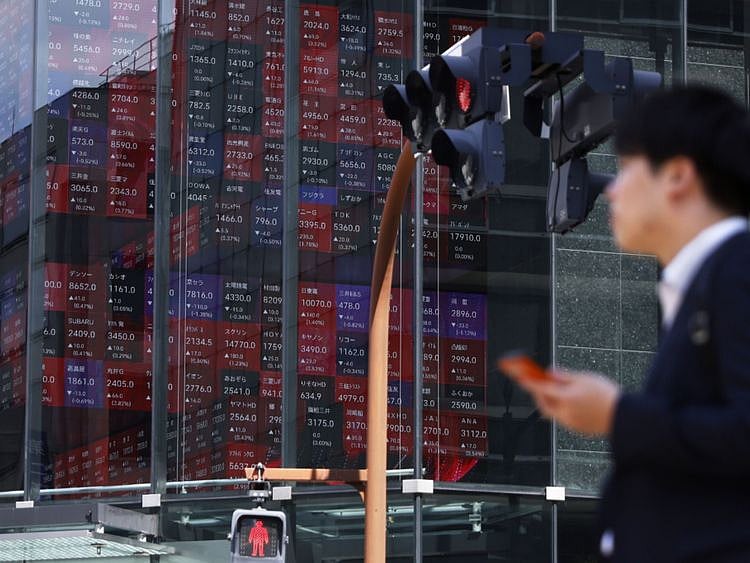
Dubai: Asian equities climbed on Friday, extending their first weekly gain since the Middle East conflict began, with investors leaning into optimism ahead of planned US-Iran talks this weekend.
The MSCI Asia Pacific Index rose 0.8%, while gains in South Korea of 1.7% highlighted continued demand for technology stocks seen as less exposed to geopolitical disruptions. US equity futures reversed earlier losses and pointed higher, alongside European contracts, signalling a broader recovery in sentiment.
President Donald Trump said he was “optimistic” about reaching a deal with Iran, even while warning Tehran over fees linked to shipping through the Strait of Hormuz, leaving markets balancing hope with caution.
Get updated faster and for FREE: Download the Gulf News app now - simply click here.
Oil slides, but supply concerns persist
Oil markets are reflecting easing near-term fears. Brent crude traded around $96.53 a barrel and is set for its biggest weekly loss in nine months, suggesting traders are pricing in lower immediate disruption risk.
Yet conditions on the ground tell a more constrained story. Shipping through the Strait of Hormuz remains sharply reduced, with activity running at less than 10% of typical levels and only a handful of vessels crossing daily compared to normal volumes of around 45 ships.
That gap between improving sentiment and restricted flows continues to feed uncertainty across energy markets and supply chains.
Relief, not resolution
The current market move is being viewed through the lens of temporary relief.
Lale Akoner, Global Market Analyst at eToro, said the ceasefire may ease panic but does not remove underlying risks. “Market prices adjust much faster than physical flows, and shipping firms may need time just to regain confidence, with port activity taking about two months to normalise.”
Recovery across inventories is expected to take longer. “Energy analysts estimate roughly four months to restore OECD stocks to a more comfortable level,” she said, adding that lower crude prices will not immediately translate into cheaper fuel for consumers due to lagging supply chains and higher insurance and routing costs.
She added that “today’s market euphoria is understandable, but it is more likely a relief rally than a durable all-clear.”
Gold steadies amid shifting signals
Gold is stabilising after a volatile stretch, reflecting a recalibration of geopolitical risk.
Ahmad Assiri, Research Strategist at Pepperstone, said price action has been driven largely by shifting perceptions of risk. “Gold is showing signs of stabilisation-like setup after a period of volatility with its recent price action largely reflecting a repricing of geopolitical risk more than any other factor.”
The metal briefly crossed $4,800 following the ceasefire before easing back and holding above $4,700. Key levels remain in focus, with resistance near $4,800 and support in the $4,700 to $4,720 range.
“Volatility has eased somewhat over the past two days potentially signaling a phase of accumulation,” he said, pointing to a market that is pausing rather than turning.
Dollar weakens as risk appetite improves
The US dollar is heading for its biggest weekly loss since January, reversing gains built during the height of the conflict. A softer dollar is lending support to commodities and equities, reinforcing the current risk-on mood.
Still, geopolitical signals remain mixed. Israel has agreed to hold talks with Lebanon, while reports of fresh drone attacks in Kuwait highlight the fragility of the ceasefire and the risk of renewed escalation.
What comes next
Attention now shifts to negotiations in Islamabad, which could set the tone for markets in the coming week.
Short-term gains in equities and easing oil prices reflect improving sentiment, but structural pressures tied to shipping constraints, inventory rebuilding and geopolitical uncertainty remain in place.
Markets may continue to react quickly to headlines, with energy flows and political developments likely to dictate the next move across asset classes.
- With inputs from Bloomberg.

Sign up for the Daily Briefing
Get the latest news and updates straight to your inbox
Network Links
GN StoreDownload our app
© Al Nisr Publishing LLC 2026. All rights reserved.