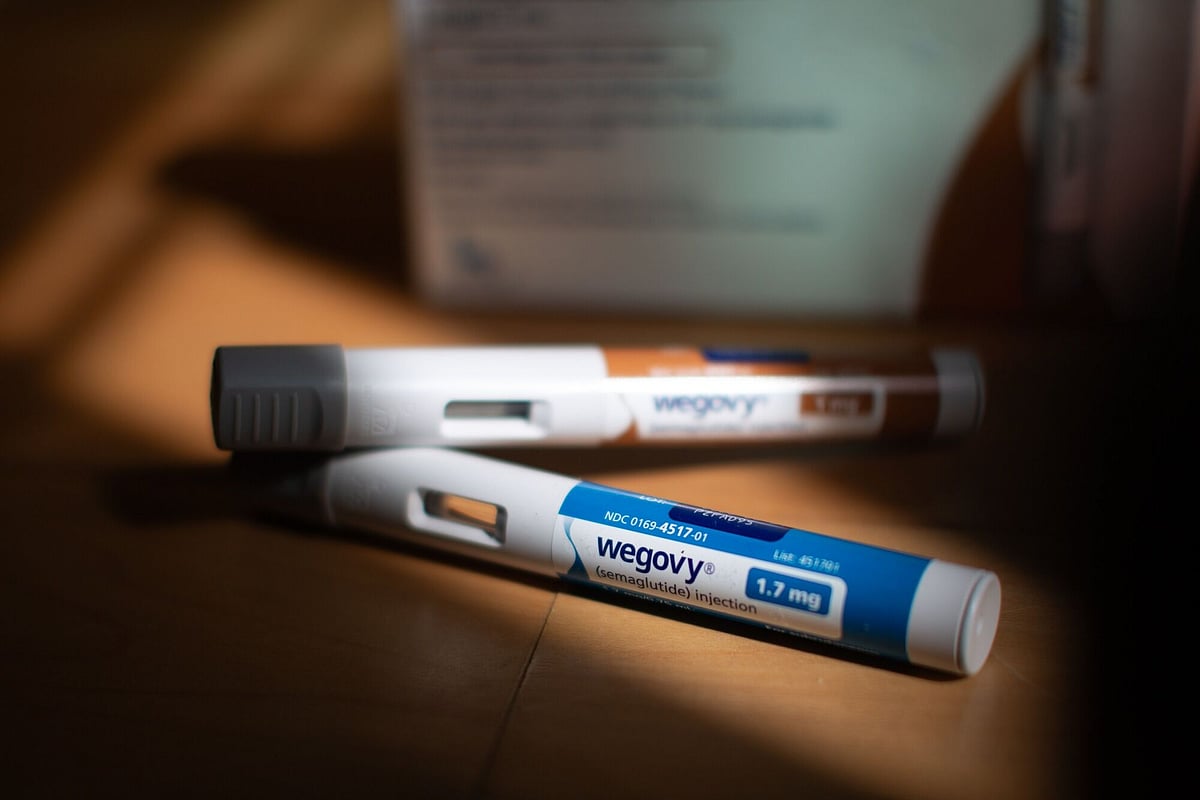
Dubai: The rapid fall in US prices for blockbuster anti-obesity drugs Ozempic and Wegovy is reshaping the obesity treatment market, expanding access for millions of patients while hitting manufacturers in sharply different ways.
Once priced at more than $1,000 (Dh3,670) a month for many Americans, GLP-1 weight-loss drugs are being pushed into a new era of affordability by political pressure, regulatory intervention and intensifying competition. The shift is broadening demand but also forcing drugmakers to rethink growth strategies in what has become the world’s most lucrative obesity market.
At the centre of the change are price-cutting agreements announced late last year by US President Donald Trump, under which manufacturers agreed to sharply lower prices in exchange for tariff certainty and expanded access through government programmes and a new direct-to-consumer platform.
US pricing plunge
Under the agreements, Medicare will begin covering obesity drugs for some patients from mid-2026, a major policy shift that opens the market to millions of older Americans for the first time. Eligible Medicare beneficiaries will pay a copay of $50 (Dh184) per month for approved injectable and oral GLP-1 drugs used for diabetes and obesity.
Starting doses of upcoming obesity pills from Novo Nordisk and Eli Lilly will be priced at $149 (Dh547) per month for patients accessing them through Medicare, Medicaid or the Trump administration’s TrumpRx.gov platform, according to senior US officials.
Existing injectable drugs such as Wegovy and Lilly’s Zepbound will initially be offered at about $350 (Dh1,285) per month on TrumpRx, with prices expected to decline toward $245 (Dh899) over a two-year period. Both companies also agreed to extend lower prices to Medicaid programmes that opt in and to apply “most favoured nation” pricing to future medicines.
“These drugs have often cost consumers more than $1,000 (Dh3,670) per month,” Trump said when unveiling the agreements. “That ends.”
Demand, access rises
The pricing reset is expected to dramatically increase access to GLP-1 drugs, which have surged in popularity for their ability to deliver sustained weight loss and reduce obesity-related conditions such as cardiovascular disease and sleep apnea.
US officials estimate that about 10% of Medicare beneficiaries could become eligible under the new coverage framework. With Medicare covering roughly 66 million people, the policy shift could significantly expand demand.
Yet while access is broadening, the financial impact on manufacturers is diverging.
Nordisk eye pressure
Novo Nordisk, the maker of Ozempic and Wegovy, has been hit hardest so far by the pricing reset. The company warned this week that it expects 2026 sales to fall by between 5% and 13% at constant exchange rates, citing “lower realised prices” in the US, the impact of the “Most Favoured Nations” agreement, patent expiries for semaglutide in some markets and rising competition.
In 2025, Novo reported sales of 309 billion kroner ($48.9 billion / Dh179.5 billion), up 6% year on year but well below the 8% to 11% growth range it had forecast just months earlier. Net profit rose only 1% to 102.4 billion kroner ($16.2 billion / Dh59.5 billion).
Shares in Novo Nordisk plunged as much as 18% in Copenhagen trading, wiping nearly $32 billion (Dh117.4 billion) off the company’s market value in two days. “Underlying guidance … was for sales and operating profit to fall 5–13 percent this year,” said Derren Nathan, an analyst at Hargreaves Lansdown, pointing to pricing pressure, patent expirations and competition.
Novo has acknowledged the trade-off. “We are creating affordability for the patients, millions of patients that are right now in need of GLP-1 products, but simply could not afford it,” CEO Mike Doustdar told media. “To do that short term, you have to take a headwind.”
Pills compress margins
Innovation has not insulated Novo from pricing pressure. In December, the US Food and Drug Administration approved Wegovy in pill form, offering a once-daily alternative to injections.
Early demand has exceeded expectations, with about 170,000 patients using the pill within four weeks of launch, according to the company. The pill entered the market at a starting price of $149 (Dh547), a fraction of what injectable versions commanded a year earlier.
“No matter how well it does in the initial period, the price hit on the existing business trumps … the great pill launch that we’ve had,” Doustdar said.
Lilly charts new course
Eli Lilly has delivered a sharply different response to the same pricing environment. On Wednesday, the US drugmaker forecast strong profit growth for 2026, citing surging demand for its obesity drug Zepbound and diabetes treatment Mounjaro.
Lilly reported fourth-quarter profit of $7.54 (Dh27.7) per share, beating analysts’ expectations of $6.67 (Dh24.5), with revenue of $19.3 billion (Dh70.8 billion) also ahead of forecasts of $17.96 billion (Dh65.9 billion).
The company expects adjusted earnings of $33.50 to $35 (Dh123 to Dh128.5) per share this year, above market estimates of $33.23 (Dh122), and sales of $80 billion to $83 billion (Dh293.6 billion to Dh304.6 billion), exceeding expectations of $77.62 billion (Dh284.9 billion).
Sales of Zepbound reached $4.3 billion (Dh15.8 billion) in the quarter, driven by higher volumes in the US, while Mounjaro sales climbed to $7.41 billion (Dh27.2 billion). Lilly said volume growth helped offset the impact of lower prices tied to its US government deal.
“The strong quarter and outlook reminds us that while Lilly and Novo play in the same markets, the pressures they face are not identical,” said Evan Seigerman, an analyst at BMO Capital.
Market reset, not slowdown
Attention is now turning to Lilly’s oral weight-loss pill, orforglipron, which is under FDA review with a decision expected in April. Analysts view the drug as a potential growth driver from 2026 onward.
Both companies are also pushing deeper into the cash-pay market. Novo is selling lower doses of its daily pill for $149 (Dh547) a month, rising to $199 (Dh731) from April. Lilly plans to cap higher doses of its pill, if approved, at $399 (Dh1,464) per month for repeat cash-paying patients.
The broader picture is a structural reset rather than a collapse in demand. GLP-1 drugs are transitioning from premium products into mass-market therapies shaped by policy, competition and affordability.
For patients, cheaper Ozempic and Wegovy promise wider access to life-changing treatment. For manufacturers, the new era rewards scale and execution — and exposes those less able to absorb price cuts.
- With inputs from Agencies

Sign up for the Daily Briefing
Get the latest news and updates straight to your inbox
Network Links
GN StoreDownload our app
© Al Nisr Publishing LLC 2026. All rights reserved.