Luxury retailing fails to take off in India
Wealthy go abroad for shopping lured by ambience, wider selection and lower prices
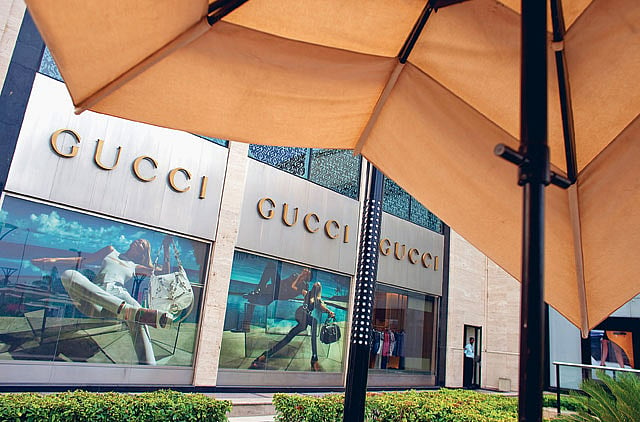
New Delhi: Vikram Baidyanath prefers to travel more than 4,000 miles to London to get suits from his favourite brand, Ermenegildo Zegna, than to drive half an hour to New Delhi's luxury mall.
"The feel-good factor and the whole experience of shopping abroad is better," said Baidyanath, 32, who also buys Burberry shirts and Gucci or Prada shoes on trips to London. The chief executive of traditional medicine and health-product maker Baidyanath Group said he's attracted to the ambience, wider selections and lower prices to be found overseas.
Luxury spending in India, the world's second-most populous nation, was less than a tenth of that in China last year, according to Bernstein Research.
Wealthy shoppers' penchant for the shopping centres of Paris, London and Milan pose a challenge for companies such as LVMH Moet Hennessy Louis Vuitton and Gucci parent PPR in a country where the biggest stock market rally in 18 years produced about 42,000 millionaires last year.
"Indian consumers are buying a lot of luxury, but they aren't buying it here," said Mohan Murjani, a retailer who gave up selling the Gucci and Jimmy Choo labels two years after opening his first store in Mumbai, India's financial centre, in 2007.
"I don't see luxury taking off for at least another decade."
Murjani, 64, garnered sales of less than $500 (Dh1,835) per square foot in his stores, half of what he had projected in 2005, when he began planning to bring luxury goods to a country where more than half of the population survives on less than $2 a day. India has a population of 1.2 billion people.
Takashimaya Co, Japan's third-largest department store company, has sales of about 1.6 million yen ($18,000) per square foot at its stores in Tokyo and other cities, according to investment relations documents. Takashimaya's stores carry more than 100 brands, including Bulgari, Cartier, Louis Vuitton, Gucci and Armani.
Worldwide stores of Tiffany & Co, the world's second-largest luxury jewellery retailer, generated sales of $2,400 per gross square foot last year, Chief Financial Officer James Fernandez told investors on June 30.
India's spending on luxury clothes, watches, jewellery and cosmetics was about 600 million euros ($777 million) last year, according to a Bernstein Research report. That compared with 6.6 billion euros for China excluding Hong Kong, Macau and Taiwan, and 3.4 billion euros in South Korea, a country with a population of about 49 million.
Asia excluding Japan is the fastest-growing market for LVMH, the largest maker of luxury goods. Sales in the region for the maker of Marc Jacobs, Kenzo and Fendi fashions, Hublot watches and Dom Perignon champagne rose 13 per cent to 3.85 billion euros last year.
Growth accelerates
India's economic growth accelerated to 8.6 per cent in the three months ended March. China's economy expanded 11.9 per cent in the same period, the fastest pace in almost three years, before easing to 10.3 per cent in the second quarter.
The absence of the ambience usually associated with luxury shopping is an impediment, said Narayanan Ramaswamy, executive director at KPMG in India.
"A buyer of a Cartier watch doesn't want to buy from a store that has pushcarts selling bananas on the sidewalk," he said.
Murjani's Murjani Group paid 60 per cent more than expected in rent, because of a lack of suitable locations. Murjani now focuses on selling relatively lower-priced brands like Tommy Hilfiger and Calvin Klein.
Suitable retail space for stores selling Louis Vuitton products or Bulgari SpA's watches is rare in a country which got its first mall in 1999, Murjani said.
Murjani Group built the Galleria in Mumbai, which it says was the first Indian shopping centre where most tenants sold high-end products targeted at the rich. Before that, luxury stores were mainly located in five-star hotels in New Delhi, Mumbai and Bangalore.
The DLF Emporio mall in New Delhi, where common areas resemble a five-star hotel lobby with fountains and potted plants, is one of the few locations in the capital city of 14 million people where brands such as those of Giorgio Armani SpA, LVMH, Jimmy Choo and Ermenegildo Zegna can set up shop.
Luxury outlets in India also have to fight the perception that their collection is dated.
"In India we're probably one season behind," said Baidyanath, whose company had about Rs3 billion ($64 million) in sales last year. "Last summer, when I was in London, I noticed that a lot of the things they had were slightly different."
Still, a growing economy, increasing incomes and urbanisation will boost the prospects for luxury retailers in the long term, Bernstein Research analysts Luca Solca, Andrea Rosso and Matt Wing said in the report.
Economic growth may accelerate to more than 8.5 per cent in the financial year ending March, from 7.4 per cent in the previous 12 months. Prime Minister Manmohan Singh wants to boost economic growth to 10 per cent to help improve the lives of the country's poor.
The number of millionaires in India rose 51 per cent to 126,700 last year, according to the 2010 World Wealth Report by Bank of America Corp's Merrill Lynch & Co and Cap Gemini SA.
The Indian luxury market, including cars and jets, is forecast to reach about $14 billion by 2010 end and then double to $30 billion by 2015, consultant AT Kearney predicted in 2007.
For now though, shoppers including 22-year-old Nazuk Bardeja, a jewellery designer setting up a design studio in New Delhi, still go overseas.
"The decor is the same in India, the attention from the sales people is the same," she said. "It's just that the feel of walking on a Milan street, the whole environment, is so amazing."
Do you think international brands use relatively new markets as dumping grounds for leftover merchandise? Do you think they target areas where consumer rights are not as developed?
Sign up for the Daily Briefing
Get the latest news and updates straight to your inbox
Network Links
GN StoreDownload our app
© Al Nisr Publishing LLC 2026. All rights reserved.