How regulations tie up small businesses
Local produce growers are a textbook example of regulatory fatigue
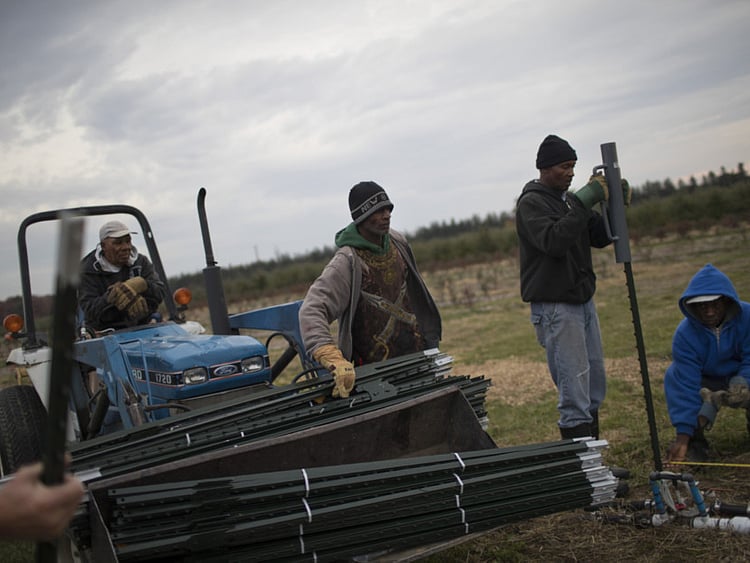
ALTAMONT, NEW YORK: For eight weeks every fall, Indian Ladder Farms, a fifth-generation family operation near Albany, kicks into peak season.
The farm sells homemade apple pies, fresh cider and warm doughnuts. Schoolchildren arrive by the busload to learn about growing apples. And as customers pick fruit from trees, workers fill bins with apples, destined for the farm’s shop and grocery stores.
This fall, amid the rush of commerce — the apple harvest season accounts for about half of Indian Ladder’s annual revenue — federal investigators showed up. They wanted to check the farm’s compliance with migrant labour rules and the Fair Labor Standards Act, which sets pay and other requirements for workers.
Suddenly, the small office staff turned its focus away from making money to placating a government regulator.
The investigators arrived on a Friday in late September and interviewed the farm’s management and a group of labourers from Jamaica, who have special work visas. The investigators hand-delivered a notice and said they would be back the following week, when they asked to have 22 types of records available. The request included vehicle registrations, insurance documents and time sheets — reams of paper in all.
Over the next several days, the Ten Eyck family, which owns the farm, along with the staff devoted about 40 hours to serving the investigators, who visited three times before closing the books.
“It is terribly disruptive,” said Peter G. Ten Eyck II, 79, who runs the farm along with a daughter and son. “And the dimension that doesn’t get mentioned is the psychological hit: They are there to find something wrong with you. And then they are going to fine you.”
This is life on the farm — and at businesses of all sorts. With thick rule books laying out food safety procedures, compliance costs in the tens of thousands of dollars and ever-changing standards from the government and industry groups, local produce growers are a textbook example of what many business owners describe as regulatory fatigue.
Over the past five decades, Ten Eyck said, there has been an unending layering of new rules and regulations on his farm of over 300 acres, as more government agencies have taken an interest in nearly every aspect of growing food, and those agencies already involved have become even more so.
Now, a new rule is going into effect that will significantly expand the oversight of one regulator, the Food and Drug Administration, at the farm. And aside from the government, major retailers like Costco and Walmart mandate extensive food-safety planning and audits for their suppliers, all at a cost.
“If it isn’t pest poisons and pesticides, then it is food safety,” said Ten Eyck, describing how one rule-maker seemingly tries to outdo the next. “And they come in waves.”
On a back wall in the apple packinghouse, there are 13 clipboards with various logs — first-aid monitoring, pest control, visitor sign-in sheets and more — required for food safety audits. There are about another dozen thick binders and manuals in the farm office for navigating rules and regulations on such things as migrant and seasonal worker protections.
Researchers at the Mercatus Center, a conservative-leaning economic think tank at George Mason University, say apple orchards are facing a growing federal regulatory burden. Quantifying that burden is difficult, but using a computer algorithm that analyses regulations through keyword searches, researchers from the center’s RegData Project estimated the federal regulatory code contains 12,000 restrictions and rules on orchards, up from about 9,500, or an increase of 26 per cent, from a decade ago.
Many of those rules apply to other businesses as well, and some restrict the actions of government regulators, not the orchard owners. Using the Mercatus Center data, and screening for such exceptions, The New York Times identified at least 17 federal regulations with about 5,000 restrictions and rules that were relevant to orchards.
More than any president since Ronald Reagan, President Donald Trump has publicly seized on frustration toward a regulatory pile-on and pledged to trim, consolidate and eliminate rules. “Much more regulation ‘busting’ to come,” he tweeted in August.
Ten Eyck, a Republican, did not vote for Trump, but regulation streamlining is a winning message across the political spectrum when it comes to making life easier for small businesses, according to more than 20 interviews with business owners and others in the produce industry.
Industry by industry, small businesses have been lobbying governments — from town health departments to federal Cabinet agencies — to simplify rules and eradicate redundancy.
Many farmers, including Ten Eyck, acknowledge that not all regulations are bad. They often have led to ample benefits, including a safer food supply and better working conditions. Last year, an official with the Environmental Protection Agency was welcomed at Indian Ladder Farms where she promoted new standards to protect farmworkers.
The grievances relate largely to the sheer amount of time and money that it takes to comply, and what farmers see as a disconnect between them — the rule followers — and the rule-makers, who Ten Eyck describes as “people looking at a computer screen dreaming up stuff.”
“The intentions are not bad,” he said. “It is just that one layer after another gets to be — trying to top the people before them.”
“So many of the farmers I’ve spoken with tell me that stricter and stricter regulations have put many of their neighbours and friends out of business, and in doing so cost them their homes, land and livelihoods,” said Baylen Linnekin, a libertarian-leaning expert in food law and policy, in an email. “For many farmers, rolling back regulations is the only way they can survive.”
After a lifetime of navigating his family’s agricultural business, Ten Eyck has a firm appreciation for the rules and regulations that are good and helpful, as well as those that are excessive and ill-advised.
He fluently speaks the language of government compliance, rattling off acronyms that consume his time and resources, including EPA (Environmental Protection Agency), OSHA (Occupational Safety and Health Administration), USDA (United States Department of Agriculture) and state and local offices, too, like ACDOH (Albany County Department of Health).
During the Obama administration, food and worker safety were particular priorities among regulators, Ten Eyck said. OSHA, pairing with its New York state counterpart, took an interest in a range of workplace issues.
One persistent concern is the use of ladders. “The number of rules on ladders alone!” said Ten Eyck, explaining there is an assortment of rules, guidances, standards and training requirements associated with ladders, including how to achieve proper angling and how to prevent falling when filling produce bags.
Ladders fall toward the excessive end of Ten Eyck’s sliding scale of regulatory cumbrance; on the more helpful end are procedures required to track produce when there is a disease or illness outbreak. Most rules fall somewhere in between.
One of Ten Eyck’s daughters, Laura Ten Eyck, said there were good reasons for workforce oversight and that the labour investigators were “professional and fair,”- but their surprise visit amounted to “overkill.” Ultimately, she said, the investigators identified a couple of minor infractions, including a farmworker performing a task related more to retail than agriculture. They waived fines and required corrective steps. (As Peter Ten Eyck transitions into retirement, two of his children, Laura Ten Eyck and Peter G. Ten Eyck III, are assuming leadership of the farm.
One of the objectives of the investigator was to verify compliance with the H2A visa program, which farmers use to hire foreign workers. Farmers complain that compliance is onerous because the program is especially complicated to administer. Many farms have faced labour shortages and have resorted to hiring illegal workers to fill gaps, though Peter Ten Eyck said Indian Ladder has not experienced those problems.
To keep up with the panoply of changing rules, farmers are left with little choice but to seek schooling. “You can’t just hunker down in the bushes and look out to see what’s going,” said Ten Eyck, who has served on many agricultural boards and commissions, including on the New York Farm Bureau Foundation. “You have to go to meetings and attend workshops. You are responsible to know what the hell is going on. It’s a business.”
Bill Hlubik, the director of the Rutgers Cooperative Extension office in Middlesex County, New Jersey, puts on programs for farmers and meets with them to talk over challenges. “Regulatory issues seem to get more complex as time goes on,” he said.
Retailers like Whole Foods, Walmart and Costco serve as some of the most demanding regulators of produce growers. The widest-reaching requirement is that their suppliers have detailed food safety and handling plans, which are customised by the farms, usually with the help of consultants. The plans are based on FDA guidelines, but are entirely voluntary.
A spokeswoman for Whole Foods said that the company worked closely with its suppliers and was proud of its high-quality standards. The retailer declined to comment on Indian Ladder Farms.
Farmers to some extent have gotten used to the requirements and see the benefit for their businesses of creating a culture of food safety. But they complain that the rules are onerous, particularly the tediousness of documenting virtually anything that happens on the farm. Much of that documentation at Indian Ladder goes in the 13 logs kept in the packinghouse.
If something is not logged, the saying on the farm goes, it did not happen.
Ten Eyck says some of the requirements are impractical. The safety plan at Indian Ladder, for example, calls for someone to check the orchard each morning for mouse and deer droppings and address the problem before picking begins. The worry is that the droppings could get attached to a worker’s shoe, get tracked onto a rung of a ladder, end up on a worker’s hands and then on the apples.
Ten Eyck says the requirement was “ridiculous” in practice — the equivalent of finding an earring in the orchard — so Indian Ladder Farms came up with an alternative to scouring the orchard every morning. “We have trained the guys only to grab the rails of the ladder,” he said.
Whole Foods may not be selling apples from Indian Ladder Farms, but the grocery chain’s rigorous oversight is acting as a dry run for the next big thing coming in government farm regulation: the produce safety rule.
The rule is part of the Food Safety Modernization Act, a 2011 law that followed a wave of incidents involving food-borne illnesses. It imposes stricter controls across the board on food production and gives the FDA a bigger presence on the farm.
The FDA’s deputy commissioner for foods, Stephen Ostroff, said the agency gained extensive input from farmers and it planned to continue working with them. “Our goal is not to add to their burden,” Ostroff said. “Our goal is to help them produce safe food.”
Sitting behind her desk in the office in the attic above the Indian Ladder Farms cafe and store, Laura Ten Eyck said she longed for a clearinghouse that would simplify the regulatory labyrinth for farmers. She said a farming representative working with government officials could sort through the various regulations at all levels of government and eliminate the overlap and conflicts.
“I’m not necessarily in favour of rolling back a lot of federal regulations,” said Ten Eyck, a Democrat who serves on her local town board. “I’m in favour of applying them intelligently.”
Sign up for the Daily Briefing
Get the latest news and updates straight to your inbox
Network Links
GN StoreDownload our app
© Al Nisr Publishing LLC 2026. All rights reserved.