Warning to oil giants: Trump names Exxon, Chevron, Shell and BP in gas price crackdown, accuses oil majors of ‘gouging’ Americans
Trump orders DOJ probe into oil majors over stubbornly high gas prices
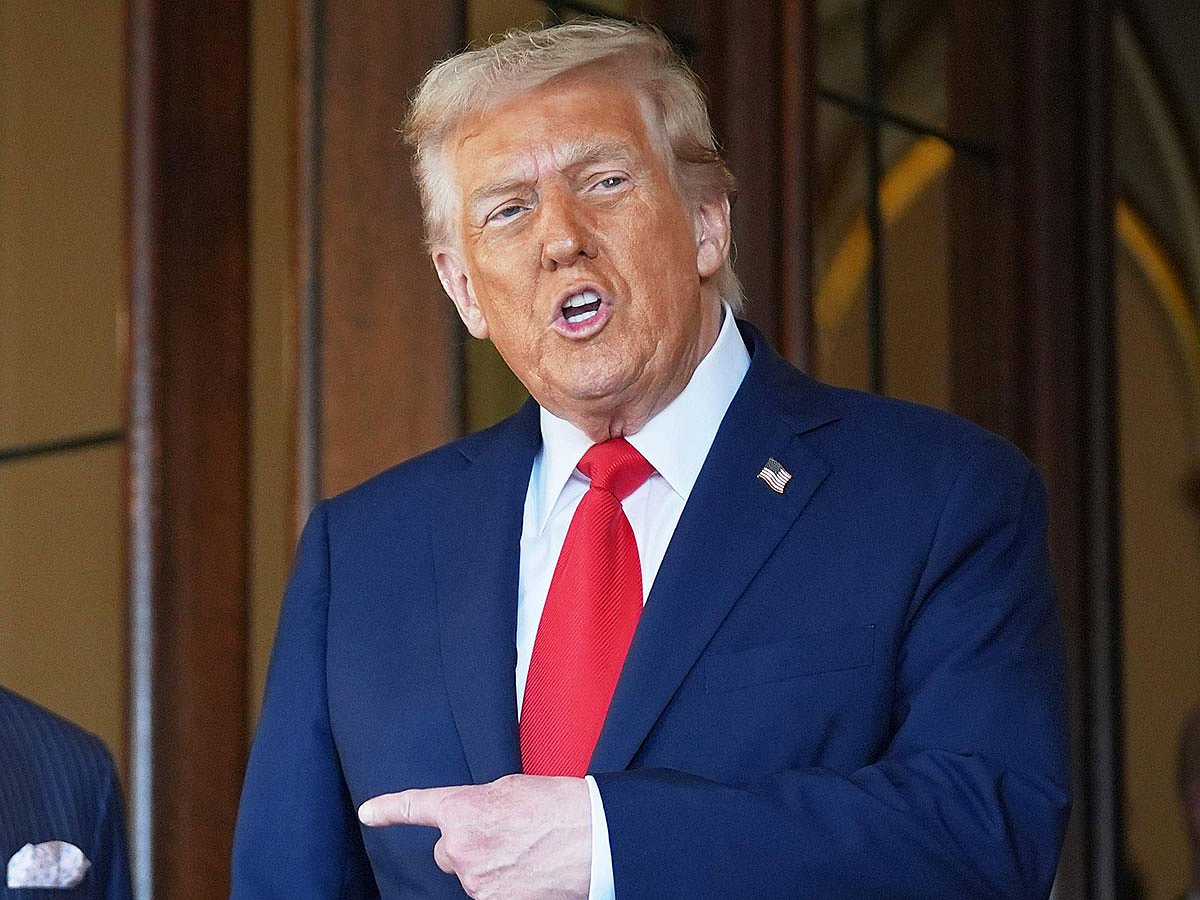
President Donald Trump publicly singled out some of the world's largest oil companies on Thursday, accusing them of failing to pass lower crude oil prices on to consumers.
He warned that his administration is investigating potential "price gouging" at the petrol pump.
Speaking to reporters, Trump named several major energy firms, including ExxonMobil, Chevron, Shell and BP, arguing that gasoline prices should be significantly lower given the recent decline in oil prices.
"It's ExxonMobil, it's Chevron, it's Shell, it's BP, it's a lot of them," Trump said.
The president claimed Americans are not seeing the full benefit of falling energy costs despite a drop in crude prices in recent weeks, according to a video reposted by Financial Press.
Get updated faster and for FREE: Download the Gulf News app now - simply click here
"The oil prices have been coming down so much, and we are NOT seeing anything at the pump by comparison to what it should be," Trump said.
"We should be, in my opinion, at $2.25 right now at the pump. And we're higher than that."
Trump also revealed that the Department of Justice (DoJ) has launched an investigation into whether oil companies are keeping gasoline prices artificially high even as their own costs decline.
"And we are doing a big investigation on it, you know," Trump said. "They're not reducing the prices commensurate with what's happening."
Public confrontation with oil majors
The remarks mark one of Trump's most direct public confrontations with major oil producers since returning to office.
While presidents from both parties have frequently criticised high gasoline prices, it is relatively rare for a sitting president to call out specific companies by name while a federal investigation is underway.
The issue carries significant political weight because gasoline prices are among the most visible economic indicators for American consumers.
Even modest changes at the pump can affect household budgets, inflation expectations and public perceptions of the economy.
Closer scrutiny: Oil supplies ramped up
Trump suggested that recent government actions have helped increase oil supplies and ease pressure on energy markets, arguing that consumers should already be seeing larger price reductions.
"Look, we are sending out, think of it, 19 million barrels came out of it," he said, referring to efforts that he said boosted oil availability.
The president ended his remarks with a direct warning to the industry: "Don’t gouge our people."
The comments are likely to intensify scrutiny of the relationship between crude oil prices and retail gasoline prices, a topic that has long been debated by economists, consumer advocates and energy companies.
How oil retail prices are set in the US
Oil producers typically argue that pump prices are influenced by multiple factors beyond crude costs, including refining capacity, transportation expenses, regional regulations and taxes.
Still, consumer groups have frequently accused the industry of allowing gasoline prices to rise quickly when oil becomes more expensive while lowering prices more slowly when crude costs fall — a phenomenon sometimes referred to as "rockets and feathers."
Whether federal investigators ultimately find evidence of wrongdoing remains unclear.
Trump's decision to publicly target some of the world's biggest energy companies signals that gasoline prices could become a major battleground between the White House and the oil industry in the months ahead.
Is 'price gouging’ happening?
Claims of widespread "price gouging" by major oil companies oversimplify complex gasoline market dynamics.
President Trump’s order for a DOJ investigation into whether refiners and others are passing along lower crude costs quickly enough could focus public attention on the mechanisms involved in retail fuel pricing.
In general, gasoline prices at the pump are determined by a combination of crude oil costs (the largest but not sole component), refining margins, distribution and transportation, retailer markups, state and federal taxes, and seasonal/regional supply-demand factors.
Crude oil prices have fallen sharply from May 2026 peaks tied to Iran.
The national average regular gasoline price stood around $3.93 per gallon as of late June 2026, down from higher levels but still elevated compared to earlier 2026 or Trump's cited target of roughly $2.25.
Why prices don't drop instantly
Refining and supply chain lags: Refineries buy crude, process it into gasoline (with varying crack spreads/margins), and move product. Summer driving season demand, maintenance, or regional bottlenecks can keep retail prices sticky.
Taxes and distribution: Federal and especially state/local fuel taxes (often 30-60+ cents/gallon or more) don't fluctuate with crude. Retailers and wholesalers add margins.
Market structure: While "Big Oil" (integrated majors) produces and refines much crude, many stations are independently owned franchises. Wholesale gasoline prices influence pumps more directly than spot crude.
Relief at the pump? Post-tension easing, crude dropped significantly (~36% from May peak in one report), but pump relief has been gradual. Prediction markets have eyed further declines toward $3 by year-end.
'Illegal collusion?'
Evidence of illegal collusion or classic "gouging" (selling well above competitive levels during shortages) would require antitrust scrutiny; broad margin expansion after cost drops is common in commodities but can draw political heat.
Past Democratic-led calls for similar probes have yielded limited results on systemic gouging.
Trump's move puts pressure on the industry amid midterm considerations and voter frustration over costs, similar to prior administrations' responses.
Any DOJ findings could lead to enforcement if violations are proven, but gasoline pricing remains inherently volatile and influenced by global factors beyond any single company's control.
Consumers may see further relief if crude stays low and summer demand eases, though taxes and local conditions vary widely (e.g., higher in California or certain states).
In short, while frustration at the pump is real and lags invite scrutiny, the situation reflects market mechanics more than proven coordinated gouging.
Sign up for the Daily Briefing
Get the latest news and updates straight to your inbox
Network Links
GN StoreDownload our app
© Al Nisr Publishing LLC 2026. All rights reserved.