Mohammed Juma Al Bawardi, Chief Executive Officer- EMDAD
UAE OPEC exit set to create more jobs, EMDAD chief says
Higher oil capacity plans could lift demand for workers, equipment and field services
Last updated:
4 MIN READ
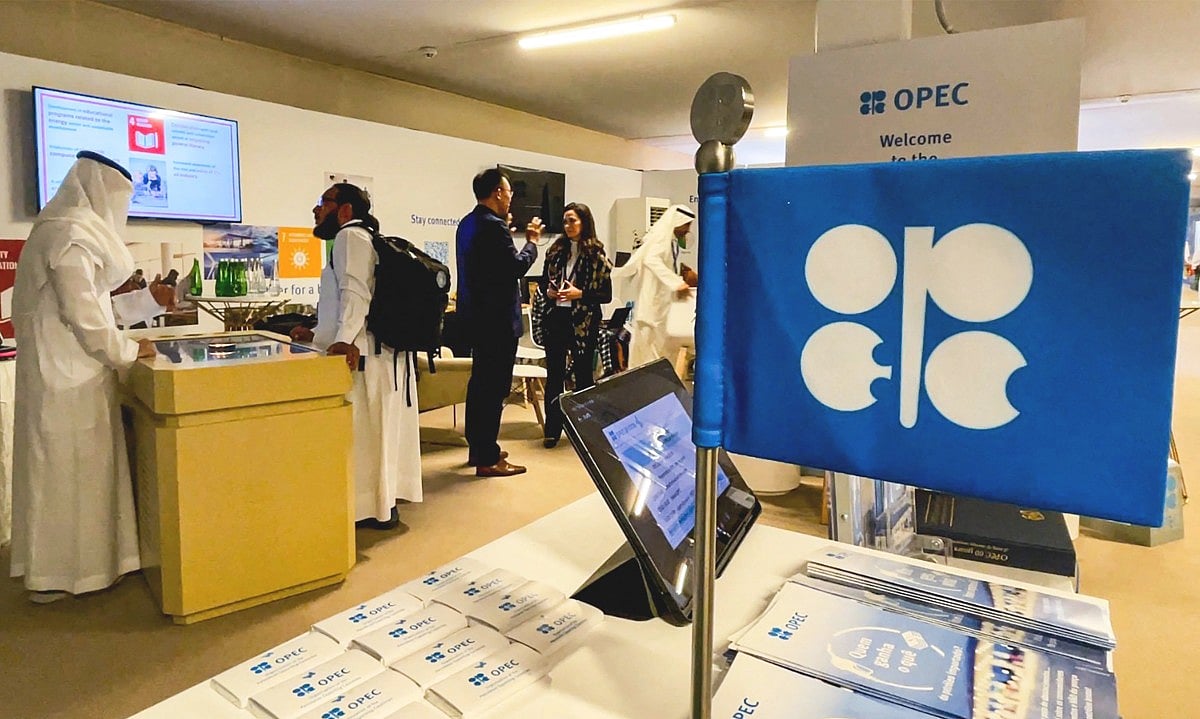
This picture taken on December 10, 2023 shows the OPEC pavilion at the United Nations climate summit in Dubai.
AFP
Dubai: The UAE’s exit from OPEC is expected to create more jobs and business opportunities for local energy service companies, with demand likely to grow across blue-collar and white-collar roles as the country pushes toward higher production capacity, according to Mohammed Juma Al Bawardi, Group CEO of EMDAD.
Al Bawardi said UAE-based contractors and service providers will have a larger role to play as the country moves to support its target of raising oil production capacity to 5 million barrels per day by 2027.
“Yes, for sure,” Al Bawardi said in an exclusive interview with Gulf News. “Definitely given the size of an amount of work coming up, that's needed for specialised companies such as ours. Yes, moving forward, we will be able to attract a lot of workers from blue-collar to white collar.”
Get updated faster and for FREE: Download the Gulf News app now - simply click here.
EMDAD is a UAE-based integrated services provider for the energy, petrochemical and power sectors. The Abu Dhabi company, now part of NMDC Group LTS, works across trading, upstream services, downstream services and refinery-related shutdown work for clients including ADNOC.
More work for local contractors
The UAE’s decision to leave OPEC gives the country more room to produce beyond quota constraints, Al Bawardi said, creating a larger pipeline of work for companies that support both upstream and downstream energy operations.
“In the UAE we have been making investments historically to be able to accommodate that capacity,” he said. “For us, we reached the 3.4 million barrel per day mark and hopefully within the future, with the exit from OPEC, we're not tied to the quota constraint from the group itself and we're able to produce more, up to 5 million barrels.”
The impact for contractors is direct, he added, because higher production capacity requires more support across field services, equipment, maintenance and technical operations.
“That is the ideal scenario as well for the contractor themselves,” Al Bawardi said. “More work ahead within the upstream and downstream verticals.”
Capacity needs manpower and equipment
He said the investments needed to reach the milestone have already been made, giving the UAE a stronger base to increase capacity when required.
“With that specifically, we're able to reach that milestone, because the investments have already been made, and the capacity is already there,” he said. “For us as a single contractor we're able to facilitate and be able to complement the initiative of the country in order for us to be able to push that into 5 million barrels per day.”
Still, higher production brings operational requirements for companies in the sector.
“Along with it comes prerequisites to where, as a local company, we need to man up in terms of workers, in terms of equipment, to be able to facilitate the increase in work capacity moving forward,” Al Bawardi said.
Local suppliers gain importance
Al Bawardi said UAE energy companies have been investing in local suppliers, technology and maintenance support to handle faster decision-making and a larger workload after the OPEC exit.
“For us, we have been investing heavily to enable localisation, as well as to be able to have the capabilities in order for us to serve our clients in a turnkey solution type of approach,” he said.
EMDAD’s model spans three verticals. The trading division works with global partners to supply products to clients in the region, while its upstream services cover multiple disciplines in the oil and gas sector. Its downstream business supports shutdown services and refinery facilities.
The company is also showcasing technology capabilities, including patents for downhole tools registered in Abu Dhabi.
“We have patents available for downhole tools,” Al Bawardi said. “We have two specific patents registered in Abu Dhabi, one being the whipstock tool and then the other being the dual section mill.”
Also Read
UAE OPEC exit part of wider economic reset, says Al JaberUAE gains freedom to produce what industries need after OPEC exit, says Al MazroueiUAE eyes 5 million bpd target after exit from OPEC+, Minister saysShort to medium-term opportunity
The biggest impact for companies such as EMDAD will be in the short to medium term, Al Bawardi said, as the country works toward its production capacity target.
“With that, what it means to us is looking at it from a short to medium term, there's a lot of work ahead for us, to be able to aid within this national initiative,” he said. “There is a lot of work to be done to be able to reach that capacity, and we're ready and capable to do so.”
Supply chain resilience tested
Energy operations in the UAE have also had to deal with pressure around the Strait of Hormuz, but Al Bawardi said recent disruption showed the strength of the country’s industrial base.
“With the blockage within the Strait of Hormuz, it showed the resilience within the industrial sector in the UAE,” he said.
He pointed to petrochemicals, fertilisers and aluminium as examples of sectors where the UAE’s manufacturing and export capacity remains significant.
“You saw a lot of commodities within the petrochemical industry, as well as the fertilising industry, even aluminium, where we're a major exporter of aluminium,” Al Bawardi said. “The UAE's capability in manufacturing and industrialisation is very robust.”
Areeba Hashmi contributed to this report.
Nivetha Dayanand is Assistant Business Editor at Gulf News, covering aviation, financial markets and commodities. A business and financial journalist with a strong interest in multimedia storytelling, she regularly takes complex financial and economic subjects beyond the written word, producing explainer videos that make them easier for a wider audience to understand. Nivetha has interviewed senior policymakers, business leaders and global financial figures both on and off camera. Her past guests include UAE Minister of Economy and Tourism Abdulla bin Touq Al Marri, Khaled bin Alwaleed Al Saud, a member of the House of Saud and the founder and CEO of KBW Ventures, Jihad Azour, Director of the Middle East and Central Asia Department at the International Monetary Fund and Indian ministers Hardeep Singh Puri and N. Chandrababu Naidu. She has also hosted and moderated panels, conferences and awards shows, bringing her newsroom experience to live conversations on business, finance and the economy. An Erasmus Mundus journalism alum, Nivetha is drawn to stories that affect people directly and to reporting that gives a platform to voices that might otherwise go unheard. She was among the first journalists to speak to Petrofac employees in the UAE about unpaid salaries, broke the news of the planned demolition of Dubai’s well-known “Toyota Building”, and helped set the record straight on widely circulated claims that a giant replica of the Moon was coming to Dubai. More recently, her exclusive interview with EDGE Group CEO Hamad Al Marar revealed how the UAE-based defence group deployed its systems along the country’s shore border and established a geofence around the UAE within 48 hours of the February 28 escalation. Prior to joining Gulf News, Nivetha worked at ITP Media, where she helped launch Finance Middle East, a new publication covering the region’s financial sector. Her role spanned reporting and editing, video production, interviews and events. Across print, digital, and video, she focuses on finding the people behind business stories and explaining why those stories matter to the audience reading or watching them.
Sign up for the Daily Briefing
Get the latest news and updates straight to your inbox
Network Links
GN StoreAbout Gulf NewsTerms & ConditionsReach by GNSitemapContact usPrivacy PolicyGN FocusHave your sayWork with usAdvertise with usGulf News epaperPrinting Services
Download our app
© Al Nisr Publishing LLC 2026. All rights reserved.