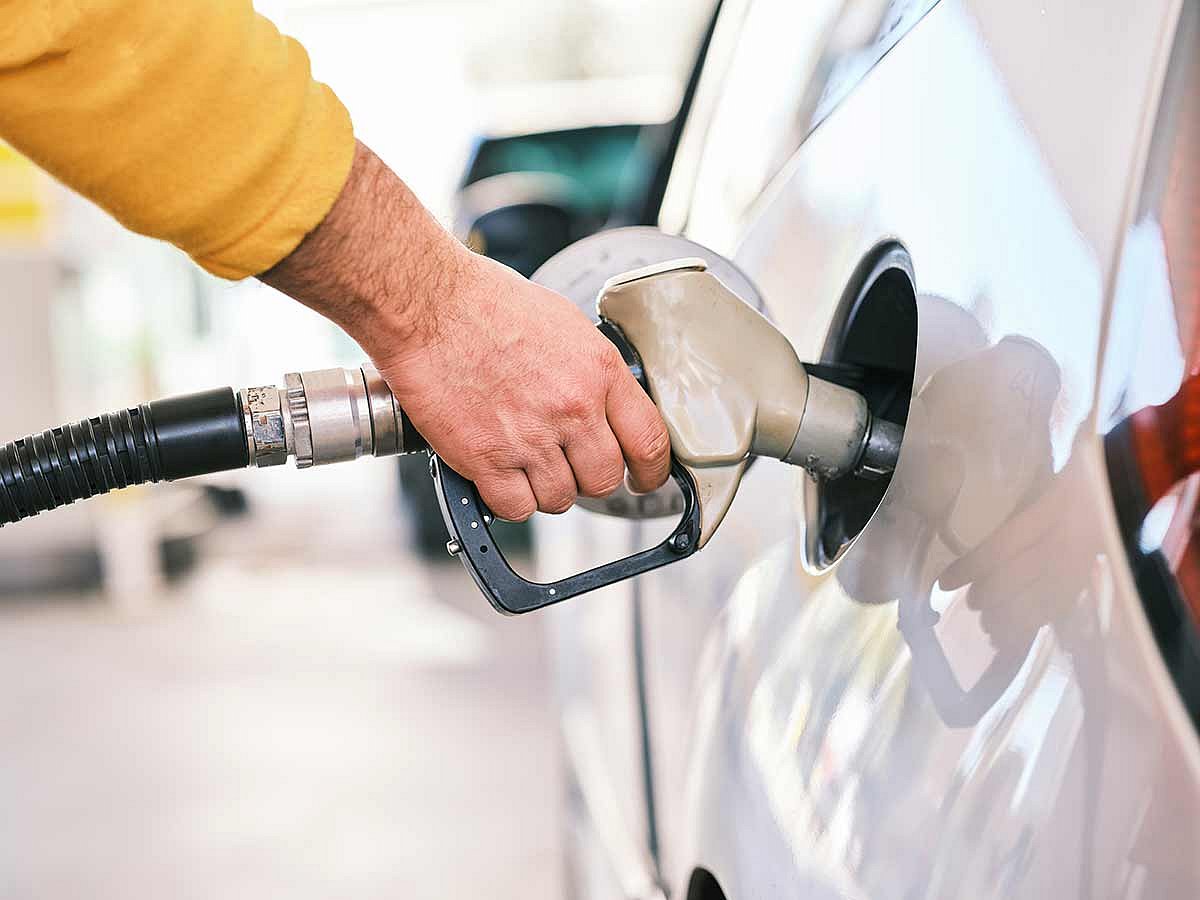
Dubai: UAE motorists head into April’s fuel price announcement after a year of falling pump costs, a recent rebound, and renewed global volatility that could shape the next move.
Over the past 12 months, UAE fuel prices have clearly dropped, with steady monthly declines through 2025 reflecting softer global crude benchmarks. Prices reached their lowest levels in early 2026 before edging higher in March, signalling a modest rebound and a shift towards stabilisation.
Get updated faster and for FREE: Download the Gulf News app now - simply click here.
How fuel prices are set in UAE
Fuel prices in the UAE are directly linked to global markets. Since deregulation in 2015, pump rates have been adjusted monthly rather than fixed by the government.
Each month, the UAE Fuel Price Committee sets prices based on average international crude and refined fuel costs. Benchmarks such as Murban feed into the calculation, but only as part of broader global pricing trends rather than as a standalone driver.
For motorists, this means local prices move in line with global oil cycles, often with a short lag depending on monthly averages.
Where global oil stands now
Global markets have turned volatile again. The conflict involving Iran and the closure of the Strait of Hormuz in early March triggered a sharp supply shock, pushing Brent crude up more than 50% in a single month to near $120 per barrel.
That surge has since eased in parts of the market. Murban crude, a key UAE benchmark, has stabilised around $115 per barrel after spiking to as much as $152 per barrel, broadly aligning with global prices and reducing immediate upward pressure.
Still, supply risks remain worldwide. The International Energy Agency has described the disruption as the largest in history, with emergency reserves being released to stabilise markets.
How UAE compares globally
The UAE’s pricing model places it among “liberalised” markets where retail fuel prices adjust quickly to global changes. That contrasts with countries that regulate prices or use subsidies:
Sharp increases seen globally:
Philippines: diesel up over 80%
Nigeria: nearly 80% rise with shortages
Australia: diesel up over 50%
US: diesel above $5 per gallon
More stable markets:
Saudi Arabia: prices unchanged due to regulation
India: no increase after tax cuts and state intervention
China: limited rises through export controls
These differences reflect how quickly global price shocks pass through to consumers. In the UAE, adjustments tend to be more immediate than in heavily subsidised markets.
How much will fuel prices rise?
The direction for April depends on one factor: the global average price window used by the UAE Fuel Price Committee.
Current signals point to mixed pressure:
The earlier surge in global oil prices could push prices higher
Stabilisation around $115 per barrel may limit the increase
Recent volatility introduces uncertainty into the final calculation
For motorists, that creates a narrow range of outcomes. Prices could rise modestly, continue stabilising, or hold close to March levels depending on how late-month averages settle.
The final rates, expected to be out today morning, will reflect how those competing trends balance out.

Sign up for the Daily Briefing
Get the latest news and updates straight to your inbox
Network Links
GN StoreDownload our app
© Al Nisr Publishing LLC 2026. All rights reserved.