The state-owned pension fund Government Service Insurance System (GSIS) had a total of 2,736,710 members and pensioners as of March 2025. Photo shows the GSIS headquarters in Pasay City, Metro Manila.
Manila: The Government Service Insurance System (GSIS), the $32.4-billion pension fund for state workers, has introduced the "Ginhawa Solar Energy Loan" (GSEL), which could potentially rewire how millions of Filipinos think about paying for electricity.
Under this loan programme, GSIS extends the means — lending directly to members — so that they may generate power up on their own roofs.
Following are the details we know so far about the programme:
What is the GSIS Solar Loan (GSEL)?
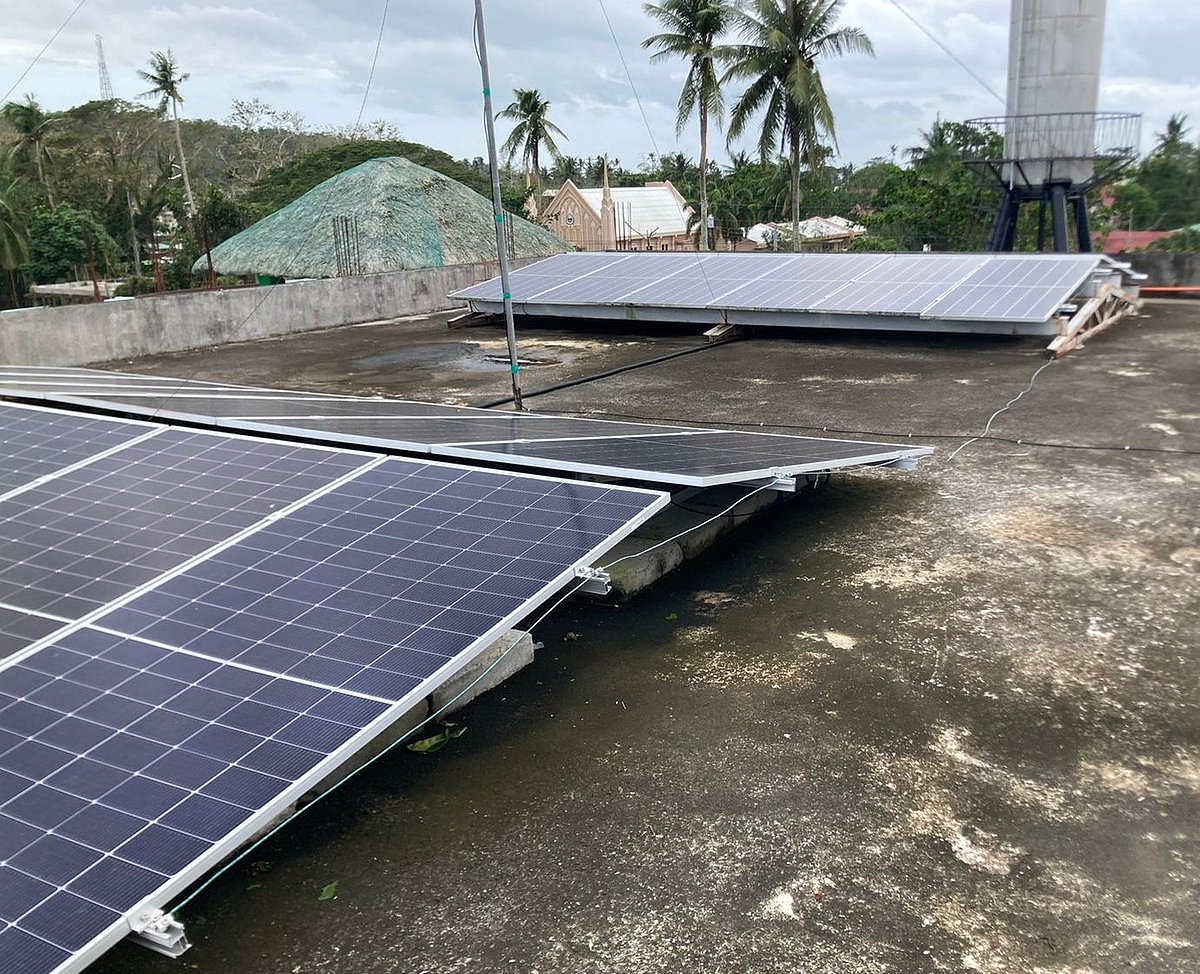
The Ginhawa Solar Energy Loan (GSEL) is a dedicated solar financing program that lets government employees install rooftop solar without paying a single peso upfront.
Instead of cash, GSIS:
Lends money directly to the member
The member uses it to install a home solar system
Repayment is spread out via monthly salary deduction
How to apply?
Applications are handled digitally through the GSIS Touch app, and borrowers must submit supplier quotations before approval, keeping the process streamlined and paper‑light.
How much can you borrow?
Under the GSEL, members can borrow:
Up to ₱500,000 per member
Typically enough to cover a 3–10 kW residential solar system, which can power most households.
Who is eligibille?
Must be an active government employee
Many cases require at least 3 years of service
The loan is tailored for public‑sector workers who want to cut bills but can’t afford the usual ₱200,000–₱500,000 cash outlay.
What about interest and payment terms?
The program is designed to be low‑cost and predictable:
Interest rate: 5% per year (well below many consumer and bank solar‑linked loans)
Repayment term: up to 5 years (60 months)
Example monthly amortization:
A ₱500,000 loan → roughly ₱10,416 per month over 5 years
Key perks:
No service fee
Payments are auto‑deducted from the member’s salary, following GSIS’ standard payroll structure—no extra banking hassle.
Is there any insurance or protection?
Yes—and it’s built in at no extra cost:
3 years of free insurance coverage for the solar system
Covers fire, earthquake, lightning, typhoon, and other common climate‑related risks
In the Philippines, where storms, quakes, and typhoons are frequent, this protection is not a luxury; it’s a safety net for a major household investment.
Why does this matter in real life?
Slashing electricity bills
Rooftop solar can cut household power costs by 30–70%, depending on system size and usage.
Loan payments can be at least partly offset by energy savings, meaning many households may see their net monthly power‑plus‑loan cost drop rather than rise.
Shielding from fuel‑price shocks
The program was launched when global tensions pushed oil and power prices higher.
Solar lets households lock in long‑term, stable energy costs, reducing vulnerability to geopolitical and fuel‑price swings.
No huge upfront cash
Traditionally, solar required ₱200,000–₱500,000 in cash—a big barrier for many.
GSIS turns that lump sum into a manageable monthly deduction, making solar feel more like a utility upgrade than a one‑time gamble.
Faster renewable adoption
Government workers become early adopters of rooftop solar, normalizing panels on more homes.
As more households sign up, it helps scale the rooftop solar market nationwide, creating a ripple effect across contractors, suppliers, and installers.
What change does this bring?
The measure is both practical and forward-looking. It offers to the public servant a simple proposition: that the light which powers his home need not come at the mercy of distant fuel, nor at the burden of great upfront expense. This isn’t just another loan product — it’s considered a structural shift in how Filipinos access energy:
Before GSIS Solar Loans:
Households depend on volatile grid electricity tied to fossil‑fuel prices.
Solar feels like a luxury investment for the wealthy or well‑connected.
Energy costs rise automatically when global crises hit.
After GSIS Solar Loans:
Households can generate their own power, reducing dependence on the grid.
Solar becomes a salary‑deducted “utility upgrade”—as routine as paying a monthly bill.
Energy becomes more predictable, locally produced, and climate‑resilient.
What's next
The GSEL turns rooftop solar from a high‑upfront expense into a monthly, predictable payment backed by low interest, insurance, and automatic salary deduction.
If this program scales across the public sector, it could quietly reshape:
Household economics (lower bills, more disposable income)
National energy demand (less strain on the grid during peak hours)
The speed of the Philippines’ energy transition (more rooftop solar, faster carbon reduction) to renewables.
It's a quiet shift.
From dependence to self-provision. From uncertainty to control. From burden to investment in one’s own renewable supply of energy.
The cost, once a barrier, is transformed into a steady and manageable obligation, repaid in modest portions through monthly salary deductions.
In times of strain, when the weight of rising electricity costs bears heavily upon the household, the state fund's GSEL drive brings not only relief — but renewal, helping transform a nation, from dependency to self generation, one roof at a time.
Sign up for the Daily Briefing
Get the latest news and updates straight to your inbox
Network Links
GN StoreAbout Gulf NewsTerms & ConditionsReach by GNSitemapContact usPrivacy PolicyGN FocusHave your sayWork with usAdvertise with usGulf News epaperPrinting Services
Download our app
© Al Nisr Publishing LLC 2026. All rights reserved.