UAE, Thailand conclude trade deal talks after non-oil trade jumps 75%
Bilateral non-oil trade reached $10.2 billion in the first half of 2026
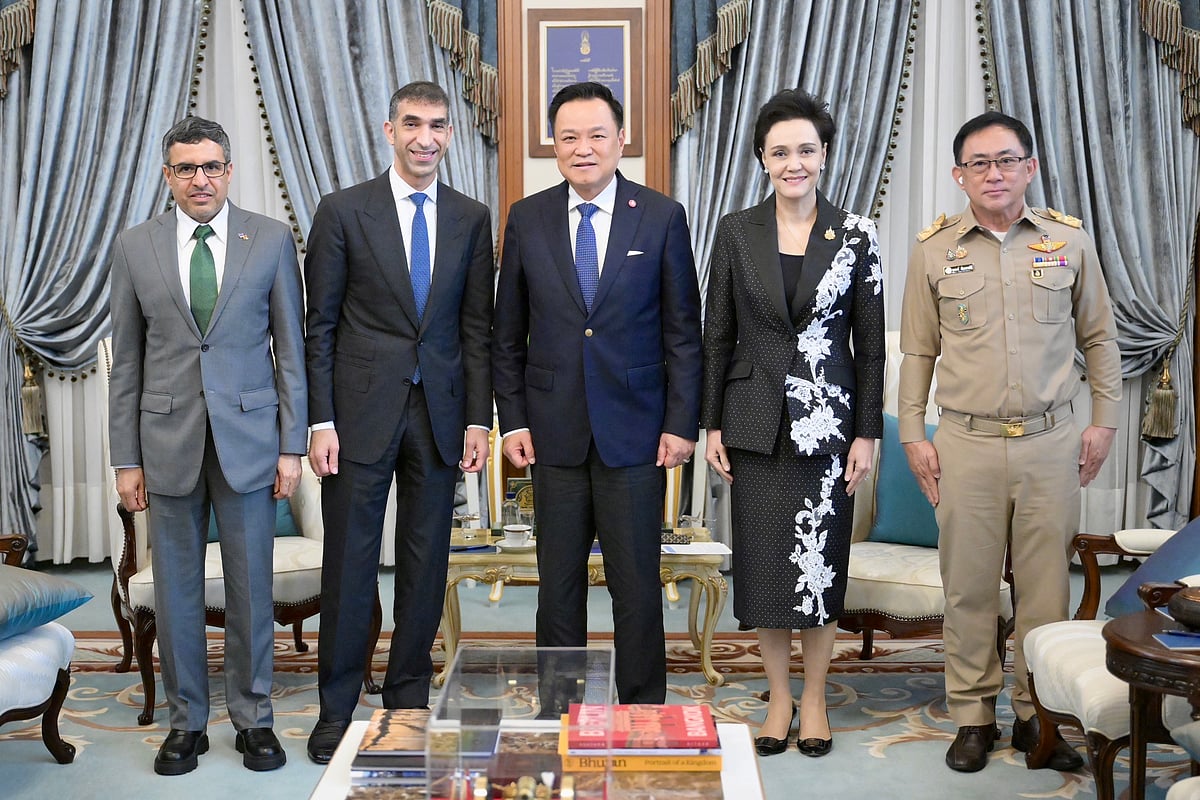
The conclusion of negotiations was announced in Bangkok during a meeting between Dr. Thani bin Ahmed Al Zeyoudi, UAE Minister of Foreign Trade; Anutin Charnvirakul, Prime Minister of the Kingdom of Thailand; and Suphajee Suthumpun, Deputy Prime Minister and Minister of Commerce of the Kingdom of Thailand, in the presence of Obaid Saeed Al Dhaheri, UAE Ambassador to the Kingdom of Thailand.
The agreement is expected to strengthen trade and investment ties between the two economies, with the two sides looking to expand cooperation between their business communities.
Trade growth
Bilateral non-oil trade reached $12.3 billion in 2025, an increase of 65.2 per cent from the previous year, according to the UAE government.
Trade continued to grow in the first half of 2026, reaching $10.2 billion, up 75.4 per cent from the same period in 2025.
UAE non-oil exports to Thailand reached US$4.5 billion in 2025, driven by growth in gold, aluminium products and other industrial goods, while imports from Thailand reached US$7.2 billion.
Dr Thani bin Ahmed Al Zeyoudi, UAE Minister of Foreign Trade, said the conclusion of negotiations reflected the two countries’ commitment to strengthening economic ties between Southeast Asia and the Middle East.
“The conclusion of negotiations on the UAE-Thailand CEPA embodies our shared commitment to building stronger economic bridges between Southeast Asia and the Middle East,” Al Zeyoudi said.
“Thailand is one of the most dynamic and diversified economies in the region, and this agreement will open new avenues for companies, investors and entrepreneurs in both countries to expand and access high-growth markets,” he added.
Investment opportunities
Al Zeyoudi said the agreement would reduce trade barriers, enhance market access and support investment flows.
“By reducing trade barriers, enhancing market access and stimulating investment flows, the CEPA will support our long-term economic objectives and generate new opportunities across a wide range of strategic sectors,” he said.
He added that the agreement would reinforce the UAE’s position as a global hub for trade and investment connecting markets across Asia, Africa and Europe.
Meanwhile, Anutin Charnvirakul, Prime Minister of the Kingdom of Thailand, said the agreement would take economic and trade relations between Thailand and the UAE to a new level.
He said the conclusion of negotiations demonstrated both countries’ commitment to expanding cooperation and creating mutual benefits.
The agreement is expected to create opportunities for private-sector companies and business communities in both countries, strengthen two-way investment and support economic growth, while improving the competitiveness of Emirati and Thai companies in each other’s markets and across the wider region.
Key sectors
Once signed, ratified and brought into force, the CEPA is expected to support trade and investment in sectors including advanced manufacturing, logistics, food security, digital trade, renewable energy and precious metals.
During his visit, Al Zeyoudi also held meetings with Thai companies and institutions operating across the trade, investment, industrial and services sectors.
Discussions focused on expanding partnerships and two-way investment, developing supply chains and increasing trade and investment flows between the two markets.
Negotiations on the UAE-Thailand CEPA began in May 2023, following the establishment of the first UAE-Thai Business Council in February that year.
The two countries will now complete the legal and technical procedures required for the agreement to be formally signed and enter into force.
The UAE government said the CEPA is expected to create a more stable and attractive business environment while opening further opportunities for companies and consumers in both countries.
Network Links
GN StoreDownload our app
© Al Nisr Publishing LLC 2026. All rights reserved.