Fahad Al Gergawi, Undersecretary of the Ministry of Foreign Trade of the UAE
Digital gold could unlock $700b in new demand: World Gold Council
Dubai Precious Metals Conference emphasizes on traceable gold and digital ownership
Last updated:
4 MIN READ
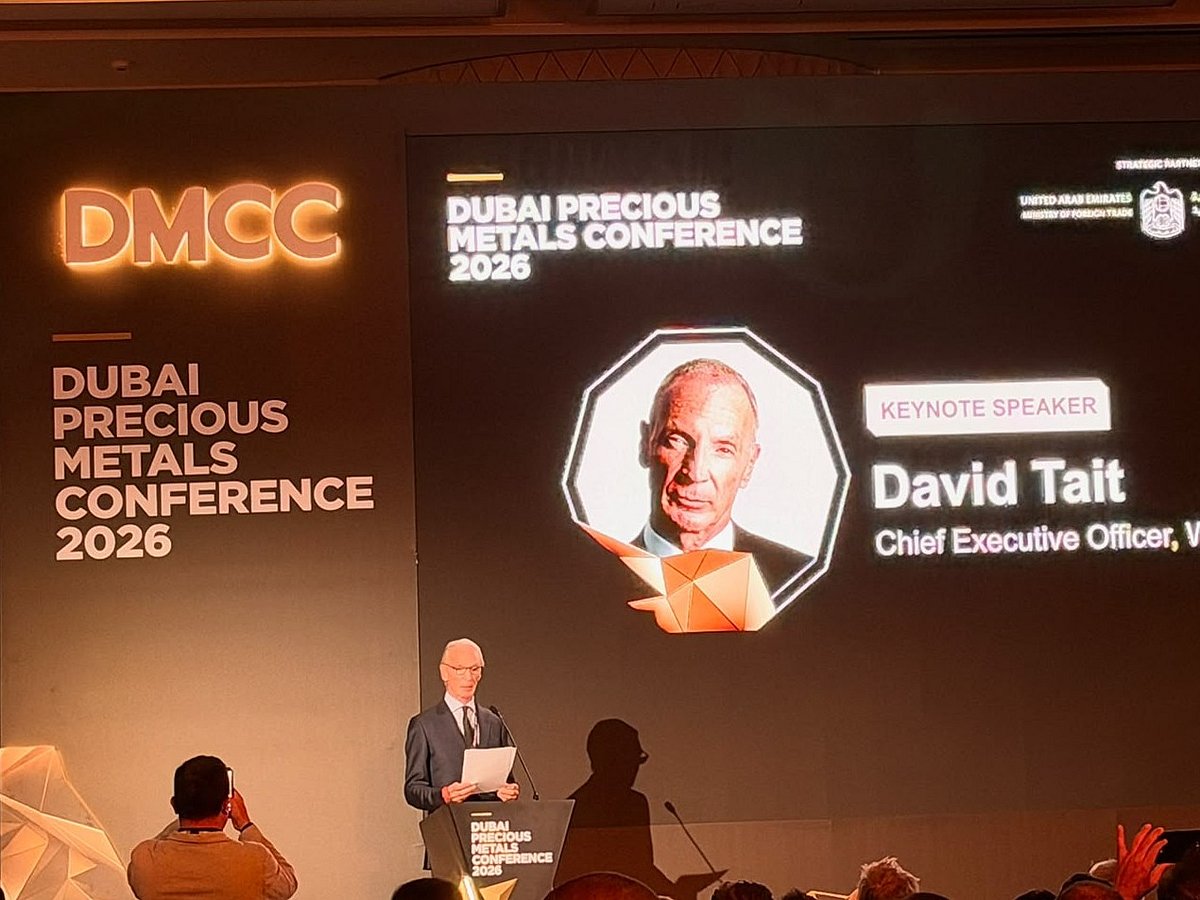
David Tait, CEO, World Gold Council
Dubai: Trust, not demand alone, will decide gold’s next chapter, World Gold Council chief executive David Tait told the 14th Dubai Precious Metals Conference on November 17. Nearly 800 delegates and 34 speakers gathered to discuss traceable sourcing, digital gold and open markets.
Tait acknowledged that gold has had an extraordinary year, touching about $5,500 an ounce in January to the recent volatility it has faced. But besides the price swings, he argued that the momentum would continue provided there is verifiable sourcing and modern ways to own the metal. “The future of gold will be defined not simply by demand, but by trust,” he said.
He named artisanal and small-scale mining as the industry’s biggest challenge. The segment supplies 20 to 25 per cent of global mine output, more than 1,000 tonnes a year, yet most of it operates outside formal legal structures. Between 20 million and 30 million people depend on it directly. Tait warned against criminalizing miners and blamed the missing structure instead. He urged governments to harmonize sourcing rules on OECD due diligence guidance.
The council is working on three fixes. A Swiss technology partner is developing X-ray scanning to check that gold matches its declared origin. A processing initiative backs central plants that remove mercury. Central banks in the Philippines, Mongolia, Ecuador and Colombia are running responsible purchasing programmes. “Our objective must be to make responsible artisanal gold visible, verifiable and valuable within the formal market,” he added.
A wholesale digital gold initiative is heading for an imminent pilot in Dubai, designed to let physically backed gold serve as collateral. Digital gold is worth an estimated $45 billion to $55 billion, under 1 per cent of the global market. Council's research indicated that removing barriers could unlock up to $700 billion of demand, with about 65 per cent from first-time buyers.
“It is an opportunity to bring new investors and new money into the gold market,” Tait said. He said all efforts were being put towards strengthening Gold as an asset class “If we can achieve that, we do more than strengthen gold’s supply chain. We strengthen gold as an asset class.”
Fahad Al Gergawi, Undersecretary of the Ministry of Foreign Trade, focused on trade flows. UAE non-oil foreign trade reached Dh2.95 trillion in the first nine months of the year, he said. Gold was the most traded commodity and gold jewellery the leading non-oil export.
The country’s comprehensive economic partnership agreements are strengthening supply links with mineral-rich nations, including Canada, Russia and states in Central and West Africa, Al Gergawi said. “Markets grow where confidence grows,” he said.
“Open markets deliver both growth and resilience, and precious metals sit at the heart of that equation for the UAE,” Al Gergawi said. “Governments have a responsibility to unlock this opportunity.”
He pointed to two signs of confidence. India’s Multi Commodity Exchange began accepting gold bars from UAE Good Delivery accredited refiners in April, and exports to Switzerland rose 75.8 per cent year on year. “The world has confidence in our process, our standards and our markets,” he said.
Ahmed Bin Sulayem, Executive Chairman and CEO, DMCC
DMCC Executive Chairman and CEO Ahmed Bin Sulayem supplied the scale. Dubai’s foreign gold trade rose 60 per cent to about Dh1 trillion in 2025. Physical trading across the UAE reached around 2,750 tonnes, making it the world’s second-largest hub.
“Scale of this kind bring a responsibility to uphold the highest standards of integrity, and to keep investing in the infrastructure, services, and relationships that give market participants confidence,” Bin Sulayem said.
He also addressed the UAE’s critics, pointing to its removal from the FATF grey list and the EU high-risk list. “Our job is to keep the door open for legitimate producers and firmly closed to the illegitimate trade,” he said. He argued that refiners in Europe and North America with their own sourcing scandals face less scrutiny. “You would expect the same standard and treatment to be applied to everyone,” he said. His invitation to critics was direct: “Meet our regulators, give us your feedback, and see the system for yourselves.”
Sulayem’s remarks come just days after Swissaid put out a controversial report on illicit gold imports.
Network Links
GN StoreAbout Gulf NewsTerms & ConditionsReach by GNSitemapContact usPrivacy PolicyGN FocusHave your sayWork with usAdvertise with usGulf News epaperPrinting Services
Download our app
© Al Nisr Publishing LLC 2026. All rights reserved.