Deutsche Bank leak: How 15m files put the bank on the spot
Hesse regulator reviews safeguards and disclosure timing after 15 million records surface
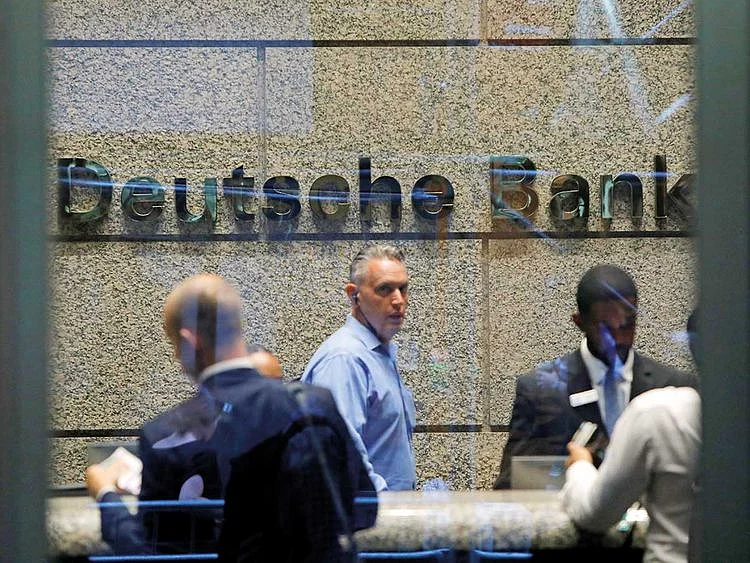
Dubai: A German data protection authority has launched an investigation into Deutsche Bank after a leak of 15 million internal records surfaced, a Reuters report showed.
Alexander Rossnagel, the data protection commissioner for Hesse, announced the probe on Wednesday, November 18. His office will examine whether the bank had adequate data protection measures in place. It will also check whether the lender reported the leak on time. “I am investigating whether Deutsche Bank promptly notified the affected individuals,” Rossnagel said. He has requested further information and documents from the bank.
Deutsche Bank told Reuters it proactively informed the appropriate authorities about the leak.
How the leak surfaced
The records emerged on November 17 under the banner “Inside Deutsche Bank”. Barracuda Media, a South African nonprofit, coordinated the project. More than 200 journalists have worked on the files since spring, and dozens of outlets published findings simultaneously. Journalists Josy Joseph and Khadija Sharife obtained the material from two whistleblowers.
The trove includes more than nine million emails, plus presentations, board minutes, compliance files and chat logs. The documents reach back to the early 2010s. Reuters notes it could not immediately verify the reports.
What the files reveal
Epstein: Deutsche Bank flagged payments linked to Jeffrey Epstein worth $582 million in 2019 suspicious activity reports. Senate investigators had earlier uncovered about $250 million.
Trump: On March 30, 2017, a relationship manager sent year-end tax statements for 1,586 private accounts to one client’s accountant. Donald Trump’s account was among them. The accountant alerted the bank and deleted the file. The bank informed the Federal Reserve Bank of New York but not the affected clients, according to the reporting.
Trump rejected the bank’s conduct during a trip to Manila. “They shouldn’t have done it. It’s illegal for them to do it,” he said. Deutsche Bank declined to comment on his reaction.
Russia: The documents show the bank planned to expand in Russia shortly before the invasion of Ukraine. Internal compliance staff raised warnings. Chief Executive Christian Sewing sat on the working group that developed the strategy, the files indicate. The Russian unit employed 162 people and earned €61 million ($67 million) before tax in the prior year. The files also detail tax-planning models built for wealthy clients.
The bank’s response
Deutsche Bank says the matters “date back many years, in some cases as much as two decades”. It reviewed them at the time, worked with regulators and has since strengthened controls. The bank calls itself a “different, stronger and safer bank” today. It expects no significant financial impact.
However, the German government has demanded transparency and said that an independent regulators and law enforcement must examine the material. A member of the European Parliament has urged Sewing to appear before the legislature.
Shares take the hit
The stock closed at €32.915 in Frankfurt on November 16. On November 17, it fell as much as 6.4% to €30.82. That marked the steepest one-day drop since March. At the low, roughly €2.8 billion vanished from market value.
New York-listed shares closed down 5.47%, or $1.96, at $33.88. Frankfurt trading on Wednesday extended the slide by another 1.9% in the early session.
The sell-off follows a strong run. Deutsche Bank shares nearly doubled in 2025 on record profits, and the bank has posted strong results in recent quarters. The stock touched €34.26 in January, then tumbled to €23.82 on March 22. It recovered to a 52-week high of €35.845 before this week’s drop.
Analysts see the shares as undervalued. The Street target sits near $40.50. The market’s attention now turns to the regulatory findings and any fallout for Sewing.
Sign up for the Daily Briefing
Get the latest news and updates straight to your inbox
Network Links
GN StoreDownload our app
© Al Nisr Publishing LLC 2026. All rights reserved.