Closer ties help boost trade relations between the UAE and Turkey
Steps to enhance the partnership between the two countries and create opportunities
The volume of foreign trade between Turkey and the UAE which stood at $2.78 billion (Dh10 billion) in 2010 still has potential for growth. This is because government officials from both countries have been committed to strengthening trade relations.
The volume of trade reached its peak in 2008 at almost $8 billion — with exports from the UAE representing $525 million of that amount.
In 2010, when the volume dropped to $2.78 billion, exports from the UAE to Turkey made up a larger percentage than in previous years at almost $302 million.
That same year, Turkey was ranked number 17 in foreign trade with the UAE, according to figures from the Ministry of Foreign Trade (MoFT). For exports, it is ranked number 20. It is ranked 41st in re-exports and 13th for imports.
Initiatives
In the past year a number of steps were taken at the government level to encourage foreign trade relations. In April last year, the UAE began enforcing an agreement with Ankara for temporary admission by customs to promote tourism trade fairs and conferences.
In February last year, a memorandum of understanding was signed between the Federation of the Chambers of Commerce in the UAE and the Chamber of Industry in Ankara to form a coordinating body that would help expand economic cooperation among trading companies and individuals in the two countries. In a report, the MoFT said the UAE has a trade deficit with Turkey with imports from the country "amounting to $2.1 billion and the value of total exports [from the UAE] at $1.05 billion during the first 10 months of 2011".
Macro-economic framework
Following a severe crisis in 2000 and 2001, Turkey reinforced its macro-economic framework through significant fiscal consolidation, an independent central bank and tighter banking regulations, said Philippe Dauba-Pantanacce, Senior Economist at Standard Chartered Bank in a special report on Turkey published last month.
"The country has reaped the benefits of this, accumulating strong fiscal primary surpluses, higher FX [foreign exchange] reserves and large capital inflows. It entered the global crisis of 2008 from a much stronger position than previous ones," he said.
"In 2010 and 2011, Turkey had the highest real GDP growth by far among OECD [Organisation for Economic Co-operation and Development] countries, after having experienced a recession in 2009.
"Turkey has shown exceptional resilience so far, despite the very challenging global economic environment," Dauba-Pantanacce said.
"We now expect the economy to slow significantly in 2012 but avoid a recession. The main risk facing the economy is the substantial current account (C/A) deficit. This makes Turkey dependent on foreign inflows and consequently vulnerable to changes in global risk appetite."
"While Turkey's C/A deficit is a key structural problem for its economy, it is performing very well on other fronts, with fiscal balances and government debt at healthy levels," he said.
The Turkish Business Council in Abu Dhabi, which was established in 2009, currently has about 48 members at the corporate and individual levels.
Membership
The Council expects to have over 65 members by the end of this year and possibly reach 100 members by 2013, with 30 per cent of them from the corporate sector, its chairman said.
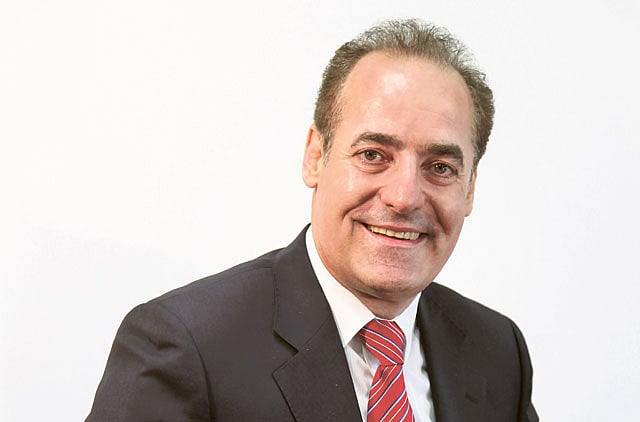
"We had quite a large number of delegations come down from Turkey," said Irfan Tansel, founding member and chairman of the Turkish Business Council. "At the ministerial level, we had four or five [delegations] last year and about seven or eight [delegations] participating in exhibitions in Dubai and Abu Dhabi."
"The relationship between Turkey and the UAE is at an all-time high. Every time there is a visit, it is accompanied with business talks setting targets on where they want to go next."
According to Tansel, who's lived in the Gulf region for almost 16 years, a lot of the reasons why Turkey has reached its current position today as "the 16th largest economy in the world" is primarily because of the change in the political scene almost ten years ago.
New strategy
"Since then, we have been looking at diversifying our economy," he said. "In the geographic area, it was usually Iraq which was the trade partner for Turkey," he said.
"However, the new strategy has allowed Turkey to open up its focus areas to Turkish speaking countries and also started coming to the Gulf region," he said, adding that the quality of the products is at par with standards in Europe which has also opened doors for other opportunities.
Tansel said that the opportunity for the UAE to work with Turkey creates "the perfect match".
"Turkey has got the raw materials, human resources, the know-how, the technology… and here you've got the funding, the capital, and the opportunity for it," he said.
He added that finding the right partner who knows the market is better than one that is new and needs time to get to know the market.
"Turkey has done extremely well. It is expecting 4 per cent growth this year — and this gives confidence for investors looking at banks and businesses," he said.
"It [the global crisis] was a survival test and we passed it."
Sign up for the Daily Briefing
Get the latest news and updates straight to your inbox
Network Links
GN StoreDownload our app
© Al Nisr Publishing LLC 2026. All rights reserved.