Why UAE residents shouldn't expect interest rates to be cut next week
Strong US economic data reduces chances of a June rate cut in UAE due to dirham-peg
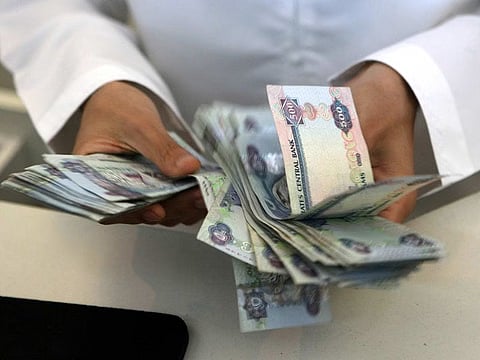
Dubai: Hopes for lower borrowing costs have taken another hit after a surprisingly strong US jobs report reduced expectations that the Federal Reserve and the UAE central bank will cut interest rates on June 17.
Get updated faster and for FREE: Download the Gulf News app now - simply click here.
For UAE residents, that matters because the UAE dirham is pegged to the US dollar, meaning interest rate decisions by the Federal Reserve are typically mirrored by the UAE Central Bank.
The latest economic data suggests any relief for mortgage holders, personal loan borrowers and businesses may have to wait longer.
What changed?
The US economy added 172,000 jobs in May, more than double market expectations and one of the strongest monthly employment gains recorded this year.
At the same time, the unemployment rate remained low at 4.3%. Those figures indicate that the world's largest economy continues to grow at a healthy pace despite higher borrowing costs.
For central bankers, a strong labour market reduces the urgency to lower interest rates. Nigel Green, chief executive of Dubai-based deVere Group, said the report effectively removed the case for a near-term rate cut.
"Today's jobs report gave policymakers a reason not to do so," he said. Financial markets quickly adjusted their expectations following the data release. According to CME FedWatch, traders increased the probability of a December rate cut while largely abandoning expectations of a June move.
Jobs are key?
The Federal Reserve has two primary goals: keeping inflation under control and supporting maximum employment. When unemployment is low and companies continue hiring workers, policymakers have more room to keep interest rates elevated.
A weaker jobs market often increases pressure on the Fed to cut rates because lower borrowing costs can help stimulate economic activity. That is not what current data is showing.
Employment growth remains solid, consumer spending has stayed resilient and economic growth has generally exceeded forecasts. For the Fed, that means there is little evidence that the economy needs immediate support through lower interest rates.
UAE impact?
Because the dirham is linked to the US dollar, interest rate decisions in the UAE tend to follow moves by the Federal Reserve. If the Fed leaves rates unchanged in June, UAE benchmark rates are also likely to remain at current levels. That affects:
Home loans and mortgages
Personal loans
Car financing
Business borrowing costs
Savings account returns
For borrowers hoping for lower monthly repayments, the latest US data suggests those expectations may need to be pushed back.
Rates stay up
Inflation has cooled significantly from the peaks seen in recent years, but policymakers remain cautious. Central banks worry that cutting rates too early could allow inflationary pressures to return.
The strong jobs report strengthens the Fed's argument that it can afford to wait for more evidence that inflation is moving sustainably towards its target. Green argues that investors have repeatedly expected rate cuts that economic data has failed to justify.
"Employment remains strong. Consumer spending remains resilient. Growth continues to outperform forecasts," he said.
How long?
Some analysts believe that risk cannot be ruled out. A separate debate is emerging among bond market participants over whether interest rates are already too low relative to the strength of the economy.
Some investors point to continued consumer spending, strong hiring and still-elevated inflation as signs that monetary policy may need to remain restrictive for longer than markets currently expect.
US Treasury yields moved higher after the jobs report, reflecting expectations that rate cuts could be delayed. The US dollar also strengthened as investors reassessed the likely path of monetary policy.
Rate pressure
While the broader economy remains resilient, not everyone is benefiting equally. Analysts are increasingly highlighting financial strain among lower-income households, younger workers and borrowers with weaker credit profiles.
In the United States, delinquencies on subprime auto loans have risen sharply in recent years as higher borrowing costs and inflation squeeze household budgets.
Economists note that many consumers continue to face pressure from housing costs, debt repayments and rising living expenses even as the wider economy performs strongly.
December cut?
Market expectations have shifted toward December as the most likely window for the next Federal Reserve rate cut. That does not mean a cut is guaranteed.
Future decisions will depend largely on inflation data, employment figures and broader economic conditions over the coming months.
For UAE residents, the key takeaway is straightforward: the strong US jobs report has significantly reduced the chances of an interest rate cut this month.
Unless economic data weakens materially, borrowing costs in both the US and UAE are likely to remain higher for longer than many borrowers had hoped.

Sign up for the Daily Briefing
Get the latest news and updates straight to your inbox
Network Links
GN StoreDownload our app
© Al Nisr Publishing LLC 2026. All rights reserved.