Saudi banks told to reschedule loans of clients hit by cuts
The Saudi central bank said the step was part of efforts to ‘reduce pressure on borrowers’ whose income was cut by government’s September 26 measures
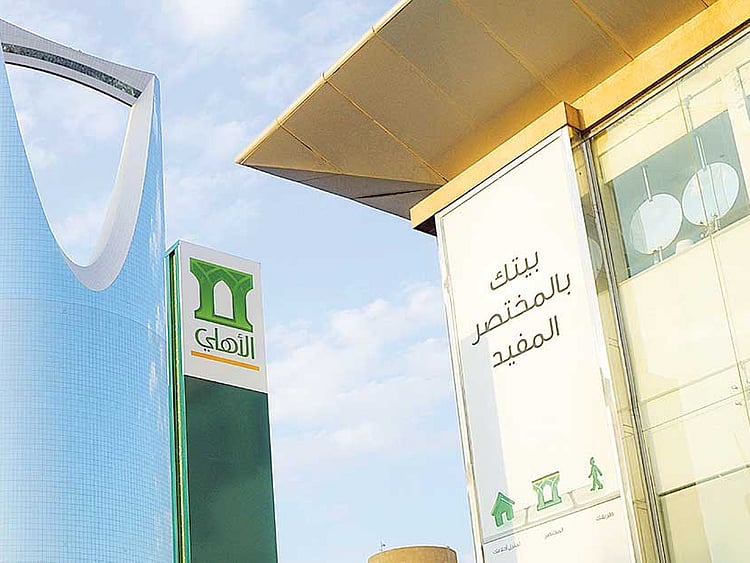
Riyadh: Saudi Arabia’s central bank directed local lenders to reschedule the consumer loans of clients affected by last week’s decision to scrap the bonuses and allowances of many state employees.
The Saudi Arabian Monetary Agency, as the central bank is known, said in a statement late on Sunday that the step was part of efforts to “reduce pressure on borrowers” whose income was cut by the government’s September 26 package of measures to further trim spending.
The agency said local banks must obtain the client’s approval before changing a loan. Borrowers should present proof that their income has been affected by the recent cuts to the nearest bank branch, the regulator said. Loans taken after the cabinet decision won’t be rescheduled.
Under Deputy Crown Prince Mohammad Bin Salman, the world’s biggest oil exporter has already delayed payments owed to contractors and started cutting fuel subsidies as it tries to manage the impact of lower oil prices. The measures may help narrow the budget deficit to 13 per cent of gross domestic product this year and below 10 per cent in 2017, according to International Monetary Fund estimates.
“Rescheduling bank loans is necessary as real incomes have fallen,” said John Sfakianakis, director of economic research at the Gulf Research Centre. “The measures buy citizens some time and allow banks to avoid exercising non-performing loan clauses. However, both would be impacted due to falling purchasing power.”
The cancellation of bonuses and allowances — and a simultaneous decision to lower ministers’ salaries by 20 per cent — further spread the burden of shoring up public finances to a population accustomed to years of government largesse. Yet analysts have warned the cuts risk deepening the kingdom’s economic slowdown by damaging consumer confidence.
The economy expanded at an annual rate of 1.4 per cent in the second quarter, the statistics agency said over the weekend. Non-oil industries grew 0.4 per cent, largely due to the government’s contribution, while private-sector activity was flat. In July, data released by the agency showed that the economy expanded 1.5 per cent.
The Tadawul All Share Banking Index dropped 2.6 per cent at the close on Sunday, compared with a 3.1 per cent decline in the benchmark measure.
Sign up for the Daily Briefing
Get the latest news and updates straight to your inbox
Network Links
GN StoreDownload our app
© Al Nisr Publishing LLC 2026. All rights reserved.