How is AI changing Dubai’s rental market?
Technology helps landlords improve services, respond faster to complaints, retain tenants
Dubai: From reporting a faulty air conditioner to requesting maintenance or renewing a lease, tenants in Dubai could soon find it easier to communicate with landlords as artificial intelligence (AI) takes on a bigger role in property management.
With Dubai’s rental market expanding rapidly, property managers are increasingly turning to digital platforms and AI-powered systems to handle tenant enquiries, maintenance complaints, rental payments and contract renewals.
The shift comes as landlords and property management companies face growing pressure to deliver faster services, improve communication and retain tenants across expanding residential portfolios.
According to the Dubai Land Department, registered tenancy contracts reached 1.38 million in 2025, an increase of 6 per cent over the previous year. Their combined value rose 17 per cent to Dh126.4 billion.
New tenancy contracts
More than 513,000 new tenancy contracts were registered during the year, while renewals exceeded 514,000, reflecting the scale of activity in Dubai’s residential rental market.
As Dubai’s residential communities expand, managing hundreds or thousands of apartments has become increasingly complex.
Property managers must coordinate leasing enquiries, viewing appointments, maintenance requests, rental payments, complaints and contract renewals, often involving different departments and service providers.
For tenants, this can sometimes mean contacting multiple teams to resolve a single issue or repeatedly explaining a maintenance problem.
Response time
Technology is increasingly being used to connect these services, allowing property managers to track requests, monitor response times and maintain communication records throughout a tenancy.
For example, a tenant reporting an air-conditioning problem through WhatsApp could receive an immediate acknowledgement, have the complaint registered automatically and receive updates as maintenance teams address the issue.
Such systems could reduce administrative work while helping property managers identify recurring problems within buildings.
AI responds around the clock
Artificial intelligence is emerging as a tool for handling routine enquiries, particularly outside conventional office hours.
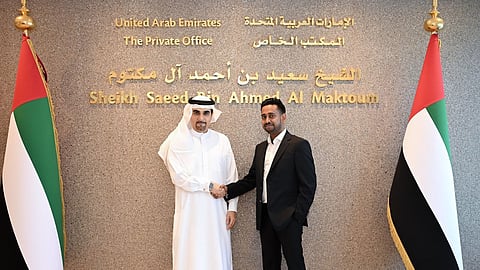
London-based property technology company VerbaFlo, which recently announced a strategic partnership with Seed Group, a company of The Private Office of Sheikh Saeed bin Ahmed Al Maktoum, is among the international providers seeking to expand into the UAE market.
The company says it works with more than 50 residential operators across 12 countries, supporting over 300,000 residential units.
Its platform manages communications through telephone, email, web chat and WhatsApp, with support for more than 200 languages.
According to VerbaFlo, more than 60 per cent of resident conversations take place outside traditional office hours.
The company also reports handling more than 10 million conversations, with an average AI response time of 3.7 seconds and a 90 per cent AI resolution rate.
The technology is designed to handle routine questions while transferring more complicated requests to property management staff.
Multilingual services
Dubai’s diverse international population presents another challenge for property managers serving residents from different nationalities and language backgrounds.
Sayantan Biswas, founder and chief executive of VerbaFlo, said multilingual communication was particularly important in the Gulf’s residential market. “A single tower in the Gulf can hold residents from dozens of nationalities, speaking as many languages, and a message has to land correctly whichever one a resident writes in,” he said.
Biswas said the company’s existing multilingual capabilities and partnership with Seed Group would support its UAE expansion and wider Gulf operations.
Keeping tenants
Beyond faster responses, technology could also help landlords retain existing tenants by improving everyday services.
For property owners, retaining tenants can reduce vacancies, marketing expenses and the costs associated with finding replacement occupants.
Maintenance standards, communication and the handling of complaints can influence whether residents choose to renew their leases.
Digital platforms can help property managers identify unresolved complaints, monitor maintenance performance and address recurring service problems before they escalate.
Dubai’s Real Estate Sector Strategy 2033 identifies digital transformation, operational efficiency and customer experience among its long-term priorities. As the rental market continues to expand, the focus is increasingly shifting beyond signing tenancy agreements towards delivering reliable services throughout the rental relationship.
For tenants, the potential benefits are straightforward: quicker responses, easier communication, faster complaint handling and a smoother rental experience. For landlords, the opportunity lies in improving operational efficiency while building stronger relationships with residents.


