India bank strike deferred: What changes for customers from September 28
Three-day bank shutdown called off; branches to function as usual from Monday
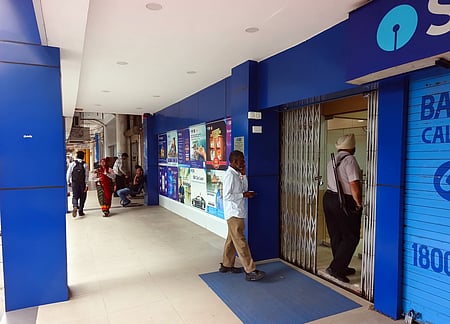
India’s three-day nationwide bank strike scheduled for September 28 to 30 has been deferred after the United Forum of Bank Unions (UFBU) reached an agreement with the Indian Banks’ Association (IBA) late on Sunday.
The decision came after a meeting between the two sides at 9.30pm (local time) on Sunday, just hours before the planned strike was due to begin.
Bank branches are therefore expected to open as usual on Monday, avoiding a major disruption that would have coincided with the half-yearly closing of accounts.
Get updated faster and for FREE: Download the Gulf News app now - simply click here.
Key highlights
September 28-30 bank strike deferred
Bank branches are expected to open normally from Monday
The UFBU and IBA will immediately form a joint high-level committee
The committee will examine the demand to make all Saturdays bank holidays
Banks currently remain closed on the second and fourth Saturdays
The agreement does not introduce a five-day banking week yet
No deadline has been set for the committee to reach a decision
Talks will also begin on changes to the performance-linked incentive (PLI) scheme for Scale IV and above officers
Other pending issues from the March 8, 2024 discussions will also be taken up
The UFBU has deferred its other planned agitation, including the proposed indefinite strike
What was agreed on five-day banking?
The main issue at the centre of the dispute is the unions’ demand for a five-day banking week, which would mean closing banks on all Saturdays.
The new joint committee will examine the proposal to make the remaining Saturdays bank holidays. It will consider different options and consult stakeholders, including customers, before working towards a solution.
However, all-Saturday holidays have not been approved yet.
The agreement also does not specify when the committee must complete its work.
Banks currently remain closed on the second and fourth Saturdays of every month.
Why were bank unions planning a strike?
The UFBU had called the September 28-30 strike primarily to push for the implementation of a five-day banking week.
Bank unions have argued that employees work longer hours and that the five-day week has been under discussion for more than two years.
The unions have also pointed to a March 2024 agreement in principle under which banks would close on all Saturdays, with employees working additional time from Monday to Friday.
According to the unions, the proposal was sent to the government for approval but has remained pending.
Government sources, however, have maintained that a five-day banking week was not finally agreed upon or included in earlier wage negotiations.
PLI scheme is another point of dispute
The second major issue concerns the performance-linked incentive (PLI) scheme for senior bank officers.
Under the existing arrangement, officers at Scale IV and above can receive performance-linked benefits of up to 365 days of basic pay, while other employees and officers up to Scale III can receive a maximum equivalent to 15 days of basic pay plus dearness allowance.
Bank unions have objected to the difference in the incentive structure, arguing that it does not reflect their earlier understanding that incentives should be linked to the overall performance of the bank.
Under Sunday’s agreement, the IBA will discuss possible changes to the scheme and take the matter forward with the government.
What does this mean for bank customers?
For customers, the immediate impact is that the planned three-day shutdown has been deferred.
Customers can expect:
Bank branches to open on Monday, September 28
No nationwide branch shutdown from September 28-30 as originally planned
Regular branch services to resume, subject to individual bank timings
The five-day banking proposal remains under discussion
Further changes will depend on the outcome of negotiations between the IBA, UFBU and government
Why Sunday banking had been arranged
Ahead of the proposed strike, public sector banks and Regional Rural Banks had been asked to remain open on Sunday, September 27.
The additional working day was intended to allow customers to complete essential branch transactions before the planned three-day strike, particularly because the industrial action coincided with the half-yearly closing of bank accounts.
With the strike now deferred, that additional Sunday opening has helped minimise the risk of disruption, while normal banking is expected to continue from Monday.
What happens next?
The UFBU has deferred the strike and other planned agitation following Sunday’s agreement.
The immediate next step is the formation of the joint IBA-UFBU committee to examine the proposal for all Saturdays to become bank holidays.
The unions had previously threatened an indefinite strike from October 26 if their demands remained unresolved. Sunday’s decision defers the agitation, but no new strike date has been announced.
With inputs from IANS
Network Links
GN StoreDownload our app
© Al Nisr Publishing LLC 2026. All rights reserved.