US President Donald Trump is joined by the new Chair of the Federal Reserve Kevin Warsh (L) as they walk to the East Room of the White House during a swearing in ceremony for Warsh, in Washington, DC on May 22, 2026.
UPDATE
Fed raises rates by 25 basis points, signals one more hike this year
Fed signals one more hike this year after unanimous 25-basis-point increase
Last updated:
3 MIN READ
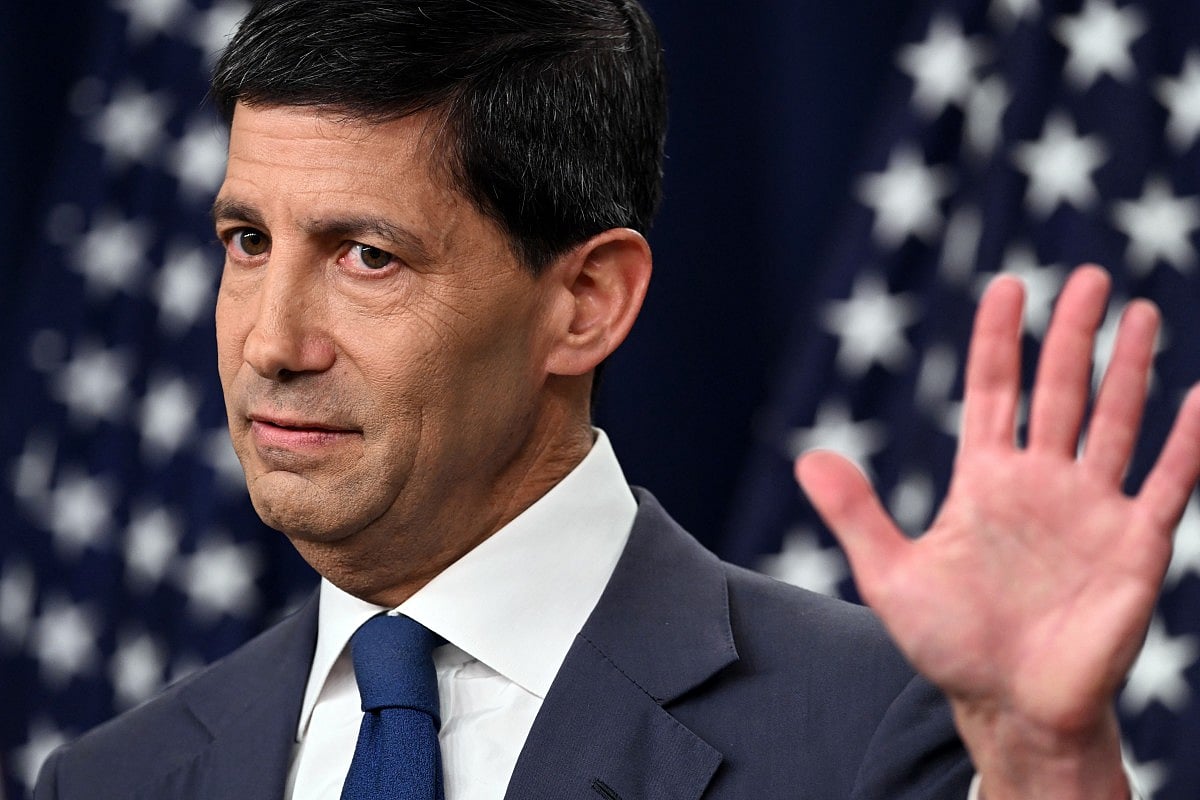
Chair of the Federal Reserve Kevin Warsh
AFP-BRENDAN SMIALOWSKI
Dubai: The US Federal Reserve raised interest rates by 25 basis points on Wednesday, delivering its first increase since 2023 as policymakers moved to tackle inflation that remains well above the central bank’s target.
Get updated faster and for FREE: Download the Gulf News app now - simply click here.
The Federal Open Market Committee voted unanimously to lift its benchmark rate to a range of 3.75% to 4.00%, putting the key rate at about 3.9%.
The increase could feed through over time into higher borrowing costs for households and businesses, including mortgages, auto loans and credit cards, at a time when American consumers are already dealing with elevated costs for groceries, fuel and housing.
Fed officials also signalled that another increase could follow before the end of the year, according to the central bank’s latest Summary of Economic Projections.
At least 12 of the 18 policymakers who participated in the projections expect one more rate increase to be required before the end of 2026, while four expect two additional increases.
Inflation remains above target
The Fed said inflation remained elevated and that Wednesday’s increase would support a timelier return to its long-term 2% target.
Consumer prices rose 3.4% in August from a year earlier, unchanged from the previous month and still well above the level the central bank is seeking.
The Fed also raised its year-end forecast for its preferred inflation measure, the Personal Consumption Expenditures price index, by 0.1 percentage point to 3.7%.
Price pressures have remained persistent after increases linked to higher energy costs, US tariff policies and continued economic demand.
The central bank had kept interest rates unchanged since January while waiting to assess how energy price shocks and tariffs were feeding through to prices and the wider economy.
Pressure for tighter policy had already become visible at the Fed’s previous meeting in July, when a quarter of voting members dissented from the decision to keep rates unchanged and called for an immediate increase.
Wednesday’s decision marks a significant change in direction after the Fed spent much of the year keeping borrowing costs steady while monitoring inflation.
First increase since 2023
The Fed last raised interest rates in 2023 during its campaign to bring down the surge in inflation that followed the pandemic.
That tightening cycle was followed by a period in which policymakers moved away from further increases, making Wednesday’s quarter-point rise the first rate hike in three years.
The latest projections also indicate that policymakers do not expect Wednesday’s move necessarily to be the final increase of 2026.
The median projection points to one additional hike this year, which would take the benchmark rate to about 4.1% if delivered.
The Fed typically uses interest rates to influence demand across the economy. Higher rates tend to make borrowing more expensive for households and companies, which can cool spending and investment and help ease price pressures.
Lower rates generally work in the opposite direction by reducing borrowing costs and supporting economic activity.
Growth forecast also rises
The Fed raised its projection for US economic growth this year alongside its higher inflation forecast.
Policymakers now expect gross domestic product to grow 2.3% by the end of the year, an increase of 0.1 percentage point from the previous projection.
The decision comes after financial markets had largely priced in a quarter-point increase following recent inflation readings and signals from Fed officials that rates could need to rise if price pressures failed to ease.
Fed Chair Kevin Warsh had also indicated before the meeting that persistent inflation could require intervention from the central bank, although he has resisted giving markets explicit guidance on the future path of interest rates.
- With inputs from AFP and AP.
Nivetha Dayanand is Assistant Business Editor at Gulf News, covering aviation, financial markets and commodities. A business and financial journalist with a strong interest in multimedia storytelling, she regularly takes complex financial and economic subjects beyond the written word, producing explainer videos that make them easier for a wider audience to understand. Nivetha has interviewed senior policymakers, business leaders and global financial figures both on and off camera. Her past guests include UAE Minister of Economy and Tourism Abdulla bin Touq Al Marri, Khaled bin Alwaleed Al Saud, a member of the House of Saud and the founder and CEO of KBW Ventures, Jihad Azour, Director of the Middle East and Central Asia Department at the International Monetary Fund and Indian ministers Hardeep Singh Puri and N. Chandrababu Naidu. She has also hosted and moderated panels, conferences and awards shows, bringing her newsroom experience to live conversations on business, finance and the economy. An Erasmus Mundus journalism alum, Nivetha is drawn to stories that affect people directly and to reporting that gives a platform to voices that might otherwise go unheard. She was among the first journalists to speak to Petrofac employees in the UAE about unpaid salaries, broke the news of the planned demolition of Dubai’s well-known “Toyota Building”, and helped set the record straight on widely circulated claims that a giant replica of the Moon was coming to Dubai. More recently, her exclusive interview with EDGE Group CEO Hamad Al Marar revealed how the UAE-based defence group deployed its systems along the country’s shore border and established a geofence around the UAE within 48 hours of the February 28 escalation. Prior to joining Gulf News, Nivetha worked at ITP Media, where she helped launch Finance Middle East, a new publication covering the region’s financial sector. Her role spanned reporting and editing, video production, interviews and events. Across print, digital, and video, she focuses on finding the people behind business stories and explaining why those stories matter to the audience reading or watching them.
Sign up for the Daily Briefing
Get the latest news and updates straight to your inbox
Network Links
GN StoreAbout Gulf NewsTerms & ConditionsReach by GNSitemapContact usPrivacy PolicyGN FocusHave your sayWork with usAdvertise with usGulf News epaperPrinting Services
Download our app
© Al Nisr Publishing LLC 2026. All rights reserved.