UPS and Copa Airlines planes collide at Miami International Airport
Two people were treated after the aircraft collided at the intersection of two taxiways
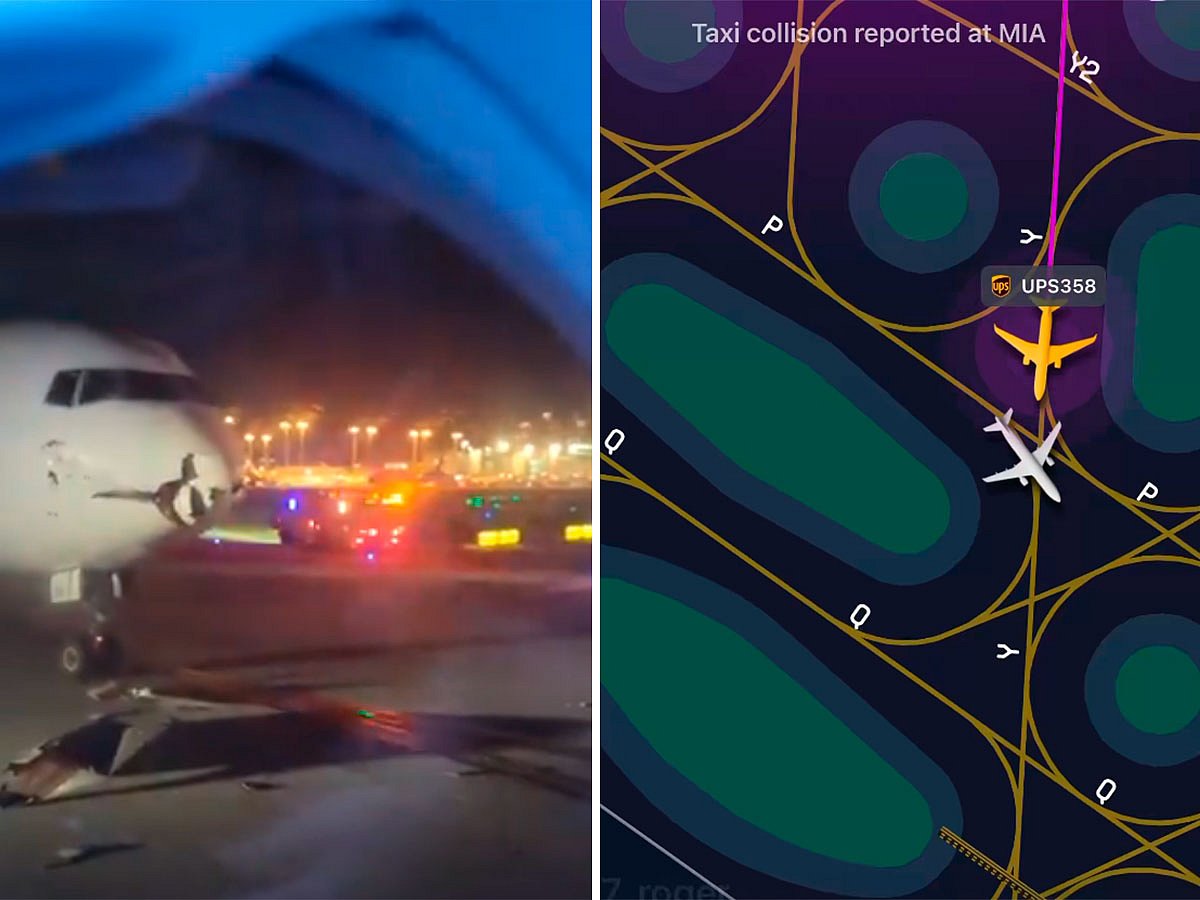
A Copa Airlines passenger jet and a UPS cargo plane made contact on a taxiway at Miami International Airport on Saturday night, leaving two people with minor injuries, according to airport officials.
The incident happened at about 9.15pm local time. The Federal Aviation Administration (FAA) said the wingtip of the Copa Boeing 737 struck the nose of a UPS Boeing 767, ABC News reported. The airport said the aircraft made contact at the intersection of two taxiways, according to CBS News Miami.
Get updated faster and for FREE: Download the Gulf News app now - simply click here.
The Copa jet, arriving from Panama City, Panama, was taxiing towards its gate, while the UPS aircraft was preparing for departure to Bogota, Colombia. The FAA said air traffic controllers had instructed the UPS crew to give way to the Copa flight.
Two treated for minor injuries
Miami-Dade Aviation said two people were treated at the scene by Miami-Dade Fire Rescue but did not require hospital transport, ABC News reported.
Greg Chin, the airport's communications director, told CBS News Miami that flights were being directed to other taxiways and that airport operations were not affected.
Photographs from the scene showed damage to the nose of one of the aircraft.
UPS says crew is safe
UPS confirmed that one of its aircraft was involved in the incident and said its crew was safe.
The company said it was working with authorities to determine what happened.
"The safety of our employees and the public is our highest priority," UPS said in a statement.
CBS News Miami identified the aircraft as UPS Flight 358, scheduled to fly to Bogota, and Copa Airlines Flight 427, arriving from Panama City.
Miami airport faces delays after FAA ground stop
The collision comes as Miami International Airport continues to experience delays and cancellations following a nationwide ground stop issued by the Federal Aviation Administration (FAA) on Friday.
The Trump administration attributed Friday's disruption to problems during maintenance work on the country's air traffic control communications infrastructure, which affected systems used to coordinate aircraft movements.
Transportation Secretary Sean Duffy said an upgrade involving the replacement of ageing copper communication wires with high-speed fibre-optic cables had caused problems with communications involving aircraft and radar feeds.
He said a contractor error or faulty equipment may have triggered the issue, causing other routers within the air traffic control system to become overloaded.
The nationwide ground stop temporarily disrupted US departures for more than four hours, adding to operational challenges for airports and airlines.

Sign up for the Daily Briefing
Get the latest news and updates straight to your inbox
Network Links
GN StoreDownload our app
© Al Nisr Publishing LLC 2026. All rights reserved.