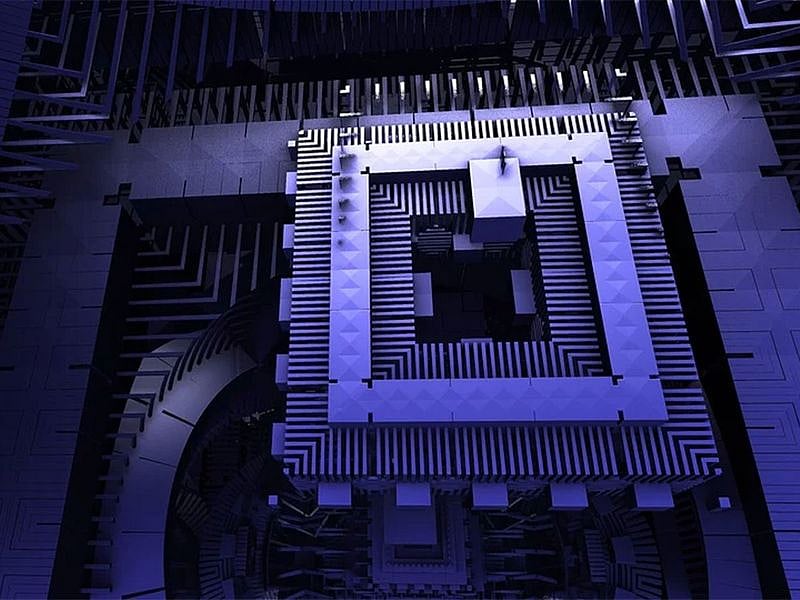
Did you know there’s a new market quietly emerging at the intersection of technology and real estate, and it is anticipated to redefine digital infrastructure as we know it?
JLL’s ‘Future of Quantum Real Estate’ report lays down a clear roadmap for quantum computing, and says it is accelerating toward commercial viability, with investments expected to reach $20 billion annually by 2030. For real estate developers, governments, and institutional investors in the GCC, this represents an untapped opportunity that demands foresight, speed, and mastery.
What is quantum real estate, and why $20 billion? Quantum startups raised about $2 billion in 2024, and global quantum revenues remained under $750 million, but that is poised to change precipitously. JLL forecasts that investment in quantum will accelerate dramatically, from today’s lower billions to about $10 billion a year by 2027, rising to $20 billion by 2030.
Why that leap? Because quantum computing requires specialized infrastructure, and environments with extreme temperature control, vibration isolation, shielding, ultra-clean power, proximity to research institutions, and ultra-high bandwidth. These real estate demands are unlike those for standard commercial real estate or even classical data centres. Hybrid quantum-classical facilities will be required. Here, we’re talking entirely new design, build, operations, and real estate investment models.
Tech enablement
The GCC has structural advantages that are often underappreciated in this discussion. If leveraged correctly, these advantages can convert future quantum flows into real jobs, real infrastructure, and enormous regional value. Many GCC governments are already investing heavily in tech, innovation, and diversification away from oil. Sovereign wealth funds, innovation funds, economic free zones, all of these exist. What’s needed is alignment toward quantum infrastructure, including policy incentives, dedicated funds, regulation, special zones for quantum and data infrastructure.
Attractive location
The GCC is roughly equidistant between Asia, Europe, Africa. It provides time-zone advantages for global operations, in addition to excellent air and subsea fibre connections. These make it an attractive location for distributed quantum networks and data redundancy. Also, for institutions in Europe or Asia looking for stable, politically secure hubs, GCC offers safe ground. When it comes to physical and environmental assets, land, energy, and cooling, they are all cheaper (or at least more controllable) here than in many Western or East Asian quantum hubs. Access to low-cost power (particularly with renewables), ability to build new purpose‐built facilities in deserts removed from electromagnetic clutter. All big pluses when you need pristine environmental stability.
Current gap
Quantum ecosystems demand strong academic institutions, R&D labs, and a pipeline of highly specialized engineers and physicists. GCC has made strides with global university campuses, research centers, but is not yet at the level of, e.g., parts of Europe, US, China. That gap is surmountable, but only if investment in education, partnerships, and incentives is scaled up.
What the GCC needs to do
If the GCC rests on its laurels, it risks being a passive consumer of quantum infrastructure rather than an active builder. In my opinion, five objectives must be taken into account for GCC countries not to miss out on this massive innovation.
1. Build quantum-ready centres
Current data centres won’t suffice. Quantum hardware is extremely sensitive and encompasses vibration, cooling, and electromagnetic shielding. New builds must be ‘quantum-ready’, or retrofitted. That means higher capital expenditure now, but huge premium return later.
2. Create, protect special quantum zones
Zoning, regulation, power tariffs, cooling infrastructure, and environmental regulation, all must be harmonized to enable quantum infrastructure. Governments must create zones or districts with fast regulatory approval, custom building codes, guaranteed power and water, and low-latency connectivity.
3. Invest in talent and R&D now
Without local scientists and engineers who understand quantum systems, the region will be dependent on imported expertise. Universities, scholarships, partnerships with quantum hardware companies, and research grants are essential.
4. Bring private, tech sector close to real estate actors
Quantum infrastructure will be built by consortia of tech firms, governments, real estate developers, and utilities. Real estate developers should cultivate partnerships with quantum hardware and cloud-computing companies, AI firms, and university labs to develop more quantum-ready structures.
5. Think sustainability as a core
Quantum facilities may require heavy cooling, clean power, and redundant infrastructure. In a region already under climate stress, sustainability (solar, waste heat reuse, efficient cooling, low environmental impact) will be a differentiator.
By 2030, quantum real estate will be a core component of global digital infrastructure. GCC stakeholders, whether rulers, regulators, developers, and investors are at a turning point to be pioneers in this industry globally and build quantum ecosystems that create value, jobs, and global competitiveness.
- The writer is founder of OSUS Properties
Sign up for the Daily Briefing
Get the latest news and updates straight to your inbox
Network Links
GN StoreDownload our app
© Al Nisr Publishing LLC 2026. All rights reserved.