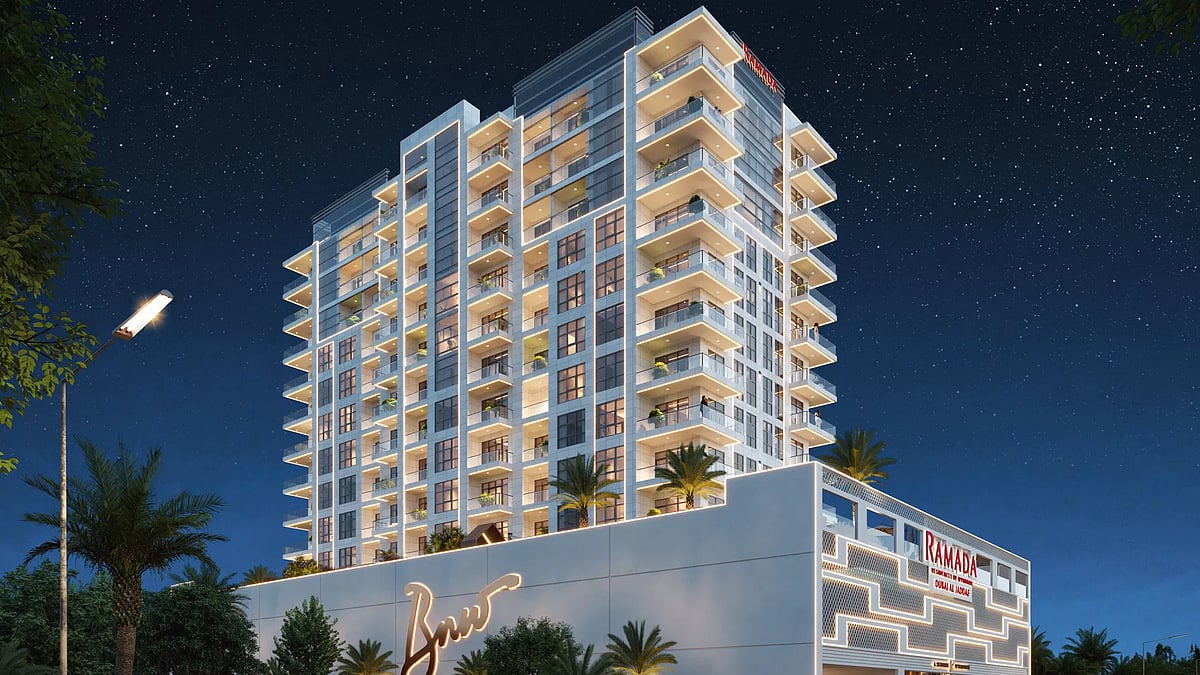
Branded residences are entering a more demanding phase of their evolution. What was once a model driven by brand association and sales velocity is now being tested on more fundamental terms: operational credibility, financial transparency and long-term performance.
Get updated faster and for FREE: Download the Gulf News app now - simply click here.
The question is no longer whether branded residences can sell. It is whether they can endure.
Nowhere is this shift more visible than in the Middle East. Across the UAE and Saudi Arabia, branded residences have moved beyond niche luxury offerings to become central to large-scale masterplans, waterfront developments and national tourism strategies. As the model scales, so too does the level of scrutiny applied to it.
The next phase will not be defined by launch announcements, but by how these assets perform over time.
Prestige to performance
The first generation of branded residences traded heavily on prestige. A recognised name offered immediate differentiation and accelerated absorption.
Today, investors and buyers are asking more rigorous questions: How transparent are rental programmes? How sustainable are service charges in a higher-cost environment? What government structures underpin operations? How is long-term maintenance funded?
Brand association remains important, but it is no longer sufficient. Value is increasingly defined by an asset’s ability to demonstrate operational resilience five, ten and twenty years into its lifecycle.
This is where systems, scale and execution begin to matter more than identity alone.
Reality vs. identity
The diversification of branding within residential real estate has accelerated. Automotive and fashion houses, such as Bugatti, Bentley, Armani and Elie Saab, now lend their identities to residential developments alongside traditional hotel operators. This reflects growing demand for differentiation.
However, residential real estate is ultimately an operational asset class. Service consistency, staffing models, procurement discipline and cost control determine long-term value. A hospitality brand brings embedded systems, training frameworks, global distribution networks and technology infrastructure.
A hospitality brand also carries a long-term operational commitment. The distinction becomes clearer as buildings mature. Identity drives initial pricing and awareness, while infrastructure sustains income and protects asset value. Over time, the importance of this operational infrastructure becomes increasingly evident, as the long-term success of branded residences depends less on the strength of the name and more on the consistency of execution.
Scaling at speed
The Middle East has embraced branded residences at scale, supported by regulatory reform, infrastructure investment and a more sophisticated investor base. Industry research shows this scaling demand, with branded residences in Dubai command an average premium of 64% over non-branded units, while in Abu Dhabi, this averages around 87%, driven by extreme scarcity and high demand.
With demand dynamics evolving, leisure travel has become a primary growth driver, supported by expanding global connectivity and younger, experience-focused travellers. In the UAE alone, national tourism strategies are targeting more than 40 million hotel guests annually by 2031, further accelerating interest in mixed-use developments, longer-stay formats and residential assets that offer flexibility alongside hospitality services.
In parallel, structurally resilient segments such as religious tourism in Saudi Arabia continue to provide consistent demand, with the Kingdom targeting 30 million Umrah pilgrims annually, reinforcing the need for reliable, well-operated accommodation across a range of price points.
This growth trajectory is not without risk. Service charge inflation, labour cost pressures and environmental performance are becoming critical factors in long-term viability. Developments that operate as isolated enclaves, disconnected from transport, healthcare and employment hubs, may struggle to remain relevant.
Integration with urban infrastructure is increasingly a prerequisite, not a differentiator.
ESG, employment, costs
As the model matures, environmental and social considerations are moving from the periphery to the core of decision-making.
Energy efficiency and water management are no longer marketing features; they are operational imperatives that directly influence cost structures and long-term competitiveness. In markets where regulatory frameworks are tightening, inefficient assets risk becoming financial liabilities.
Employment is another defining factor. Hospitality-led residences create ongoing roles in operations, maintenance and service delivery. The quality and sustainability of these roles contribute to the broader economic impact of development and, in turn, to the resilience of the asset itself.
Equally, cost discipline is critical. High service ambition without realistic financial modelling erodes owner confidence. Sustainable branded residences must strike a balance between experience and efficiency.
Mid-market opportunity
While much of the attention remains focused on ultra-luxury developments, the most significant structural opportunity lies elsewhere.
The midscale and upper-midscale segments represent the deepest and most underserved part of the market. While the Middle East now accounts for roughly a quarter of the global branded residences pipeline, new supply remains heavily skewed toward ultra-luxury developments. This creates a structural imbalance between demand for professionally managed, brand-backed residential living and the availability of product at more accessible price points.
As buyers become more value-conscious and operationally aware, demand is shifting toward professionally managed residential assets that offer reliability, efficiency and brand trust without the cost burden of ultra-luxury positioning. A growing number of projects across the Middle East and beyond illustrate this shift. Increasingly, developers are applying the model to projects that combine strong design, professionally managed services and robust operational frameworks with layouts and cost structures designed to remain commercially sustainable.
Rather than compromising on experience, this reflects a more disciplined approach to value creation prioritising liveability, consistency and long-term performance alongside brand standards and resident experience. As demand for branded living continues to expand, the focus is increasingly on delivering assets that are not only attractive at launch, but resilient and competitive over time.
This segment is less about statement developments and more about repeatable performance. It reflects a broader evolution in buyer expectations: from aspiration to practicality, from branding to functionality.
Regulation, transparency, view
As branded residences continue to expand, regulatory oversight is likely to increase. Greater scrutiny around rental frameworks, service charge structures and long-term maintenance provisions is inevitable.
Acting as a stabilising force, clearer governance and transparency will strengthen investor confidence and support the long-term credibility of the sector.
Branded residences are unlikely to retreat from the development landscape. They respond to fundamental shifts in how people live, work and invest particularly in regions defined by mobility and international capital flows.
However, their long-term success will depend on discipline.
Developments must integrate with cities, operate with financial transparency and manage environmental impact responsibly. The credibility of the model will not be determined at launch, but over decades of performance.
In the years ahead, branded residences will not be judged by how quickly they sell but by how well they operate.
- The writer is President, EMEA, Wyndham Hotels & Resorts
Sign up for the Daily Briefing
Get the latest news and updates straight to your inbox
Network Links
GN StoreDownload our app
© Al Nisr Publishing LLC 2026. All rights reserved.