What a watch winder actually does
Learn who benefits from a watch winder, and when a watch box is the smarter choice
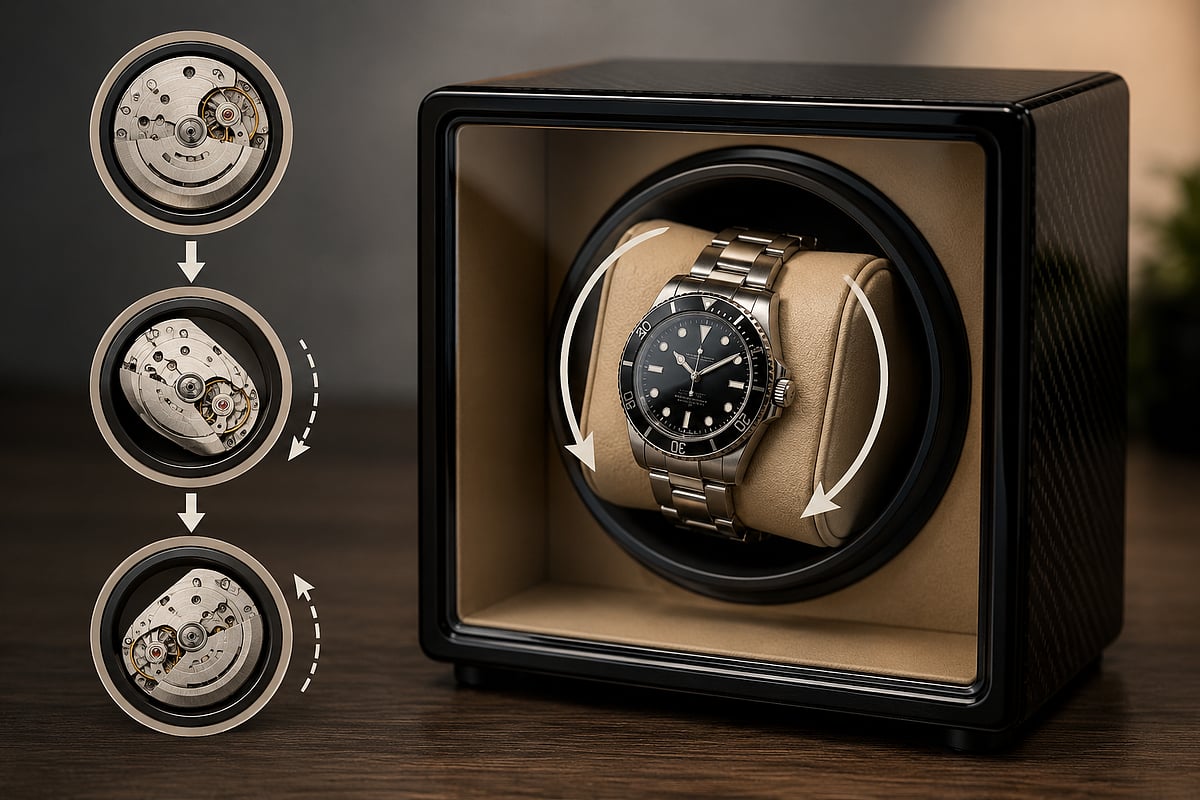
An automatic watch is powered by motion rather than a battery. As you move your wrist through the day, a weighted rotor inside the movement swings and winds the mainspring. Leave the watch on a shelf long enough and that stored energy runs out. For many modern mechanical watches, that happens after about 42 to 60 hours, although longer power reserves are becoming more common. A watch winder simply recreates gentle wrist movement while the watch is off your arm, so it stays running and, just as importantly, keeps any date or calendar display current.
A watch winder is a small motorised holder that slowly rotates an automatic watch according to programmed cycles. Good winders alternate between movement and rest, rather than spinning continuously, and many allow different turns per day, often called TPD, plus clockwise, anticlockwise or bidirectional rotation. Those settings matter because different watch movements have different winding requirements. Most modern automatic watches fall somewhere between 600 and 800 turns per day.
Not everyone needs one. If you own a single automatic watch and wear it almost every day, a winder adds little beyond display value. It becomes more useful if you rotate between several mechanical watches, especially those with date, day or moon phase complications that take time to reset after stopping. Travellers may also prefer a compact watch roll instead of a powered winder when away from home.
The most useful feature is adjustable winding programmes with rest periods instead of constant rotation. Bidirectional winding increases compatibility with different movements, while a quiet motor makes the winder suitable for a bedroom or study. Its purpose is convenience, not maintenance. A secure cushion that fits your watch comfortably is equally important, particularly for heavier sports watches.
A single watch winder suits someone with one favourite automatic watch that spends part of the week off the wrist. Its compact size makes it easy to place on a bedside table or shelf without taking over the room. The single watch format also keeps running costs and noise lower than larger display cabinets.
Collectors who alternate between work and weekend watches will appreciate a dual model. Two independent positions make it practical for keeping both watches ready without needing multiple units. Adjustable winding modes are especially valuable if the watches use different movements with different winding preferences.
A watch roll solves a different problem. It does not keep a movement running, but it protects watches during travel far better than loose storage in luggage. Removable cushions help accommodate different bracelet and strap sizes while reducing unnecessary movement inside the case. For many owners, especially those who wear one watch for several days at a time, this is a more sensible purchase than a powered winder.
Sometimes the simplest option is the right one. A dedicated watch box keeps dust away, separates watches to reduce scratches and provides organised storage without continuously running the movements. For quartz watches or automatic watches that are worn regularly enough to stay wound naturally, a storage box is often all that is required.
A watch winder is a convenience accessory rather than an essential one. It keeps automatic watches running between wears, saving time when a watch has a calendar or other complications that are tedious to reset. If you regularly rotate between several mechanical watches, the Mcbazel Dual Automatic Watch Winder is the strongest fit for everyday use.
Gulf News earns a commission on purchases made through links in this article, at no extra cost to you. Our editorial team selects products independently.
Sign up for the Daily Briefing
Get the latest news and updates straight to your inbox
Network Links
GN StoreDownload our app
© Al Nisr Publishing LLC 2026. All rights reserved.