How a self-cleaning UV water bottle actually works
What self-cleaning bottles actually do, and why you still need to wash them
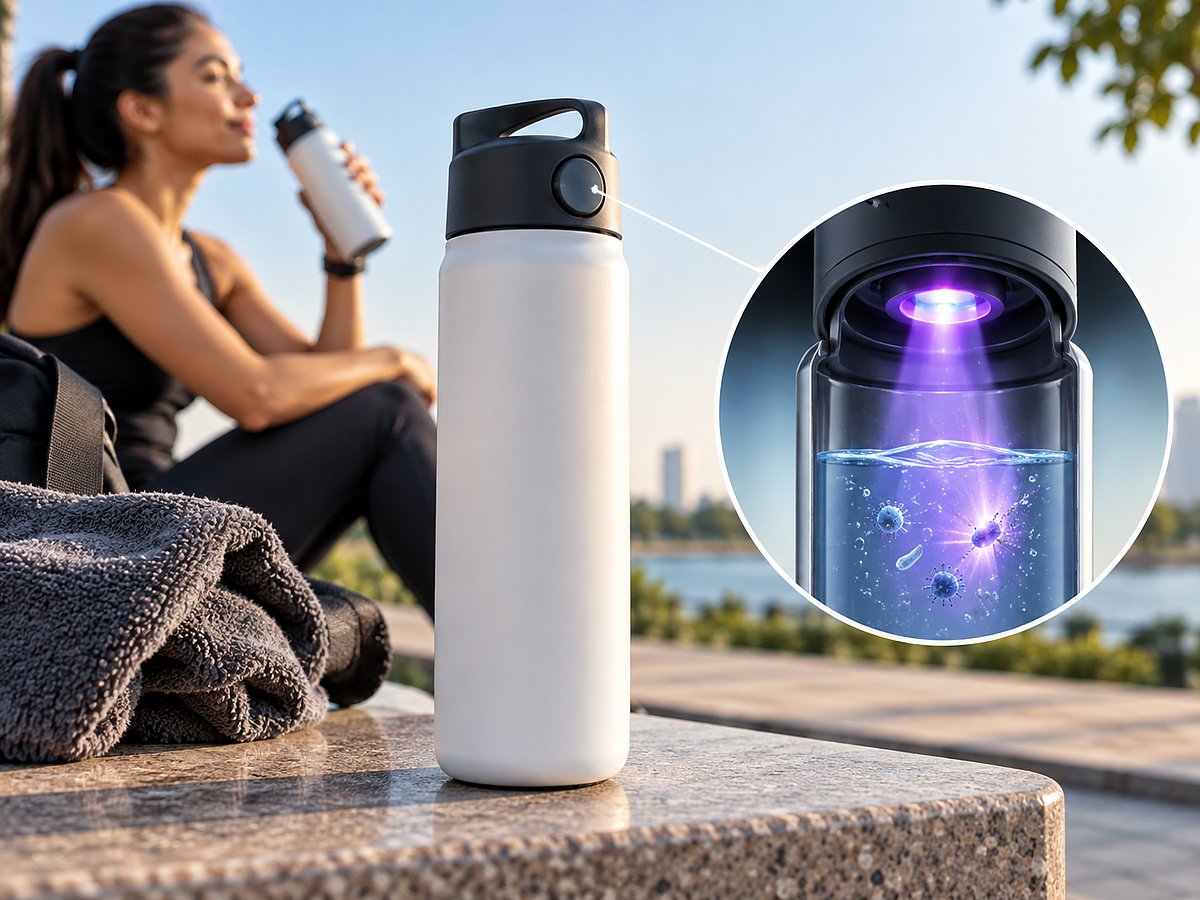
A self cleaning bottle does not scrub itself. The useful trick happens at a scale you cannot see. UV C LEDs in the cap expose the water and bottle interior to short wavelength ultraviolet light, which can damage the genetic material microorganisms need to reproduce. Research on UV LED water treatment shows that effectiveness depends on wavelength, dose and water quality, with wavelengths around 260 to 280 nanometres commonly studied for microbial inactivation. That makes the technology interesting for a reusable bottle, but the word "cleaning" needs some unpacking: light can act on susceptible microorganisms it reaches, while yesterday's coffee film still needs washing.
A UV C bottle places a small LED in its cap and runs a timed light cycle inside the closed bottle. LARQ, for example, says its original PureVis system operates at 280nm and automatically runs a short self cleaning cycle every two hours. Its manual cycles deliver a larger UV dose.
The important distinction is between microbial inactivation and physical cleaning. UV C does not filter particles, remove dissolved substances or lift residue from stainless steel. LARQ itself specifies clear water without physical sediment, while research shows UV C performance varies with water quality and UV transmission.
For UAE commuters, office workers and gym goers, the appeal is mainly convenience: an insulated bottle that can keep water cold while using an automated UV cycle between normal washes. It is not a substitute for an appropriate drinking water source or routine cleaning.
Check the UV wavelength and whether the manufacturer publishes a defined cycle rather than relying on a vague "UV" label. Then look at the bottle itself. Capacity, insulation, charging frequency and an opening that you can actually clean matter every day.
Avoid the idea that UV makes washing unnecessary. Light cannot scrub away residue, and shadows or cloudy water can reduce exposure. A bottle brush or cleaning tablet still has a job.
This is the option that demonstrates the UV C concept directly. LARQ specifies a 280nm UV C LED, with automatic self cleaning cycles every two hours and manual cleaning modes. The linked insulated model is 500ml, made from stainless steel and uses double wall vacuum insulation. LARQ says it keeps water cold for up to 24 hours or hot for up to 12 hours, with battery runtime of up to a month. Its value is reducing microbial build up between washes, not replacing washing. Residue around threads, the mouth and cap still needs physical attention.
A conventional bottle can be the more sensible answer if you are happy to wash it regularly. Owala's 24oz FreeSip uses triple layer insulated stainless steel and is rated by the manufacturer to keep drinks cold for up to 24 hours. Its lid combines a built in straw with a larger opening for drinking, while the wide bottle opening makes adding ice and reaching the interior easier. Owala says the lid is top rack dishwasher safe and recommends hand washing the stainless steel cup to preserve its finish. There is no UV system or battery here, so cleanliness depends on straightforward, regular washing.
Cleaning tablets solve the part UV C cannot: physical residue and lingering odours. Bottle Bright instructs users to fill the container with warm water, add one standard tablet per litre, leave it for 15 to 30 minutes, then empty and rinse thoroughly. Its ingredient list includes sodium carbonate peroxide, sodium bicarbonate and citric acid, among other components. They are particularly useful for narrow insulated bottles where reaching the base is awkward. A tablet is a periodic cleaning tool rather than a reason to ignore removable lids, straws and seals, which should also be cleaned according to their manufacturer's instructions.
Sometimes the simplest tool addresses the hardest part of bottle care. This AMERTEER set contains five brushes intended for different openings and components, including bottles, narrow necks, lids, spouts and straws. The product specifications identify stainless steel handles and multiple brush sizes. The useful distinction here is mechanical contact. A brush can reach visible deposits and edges that UV light does not remove, particularly around drinking mechanisms and threaded sections. For bottles used for anything other than plain water, that physical cleaning role becomes especially relevant.
UV C bottles make most sense when you understand the narrow job the light performs. It can help limit susceptible microorganisms exposed to an adequate UV dose, but it cannot remove particles, films or residue. For someone who wants that automated cycle alongside insulation, the LARQ Bottle PureVis is the top recommendation here. A standard Owala plus regular washing is the simpler alternative, while Bottle Bright tablets and the AMERTEER brush set tackle the physical cleaning that UV cannot.
Gulf News earns a commission on purchases made through links in this article, at no extra cost to you. Our editorial team selects products independently.
Sign up for the Daily Briefing
Get the latest news and updates straight to your inbox
Network Links
GN StoreDownload our app
© Al Nisr Publishing LLC 2026. All rights reserved.