Why a 1-inch sensor is a big deal for action cameras
What a larger sensor does for detail, noise and low-light action footage
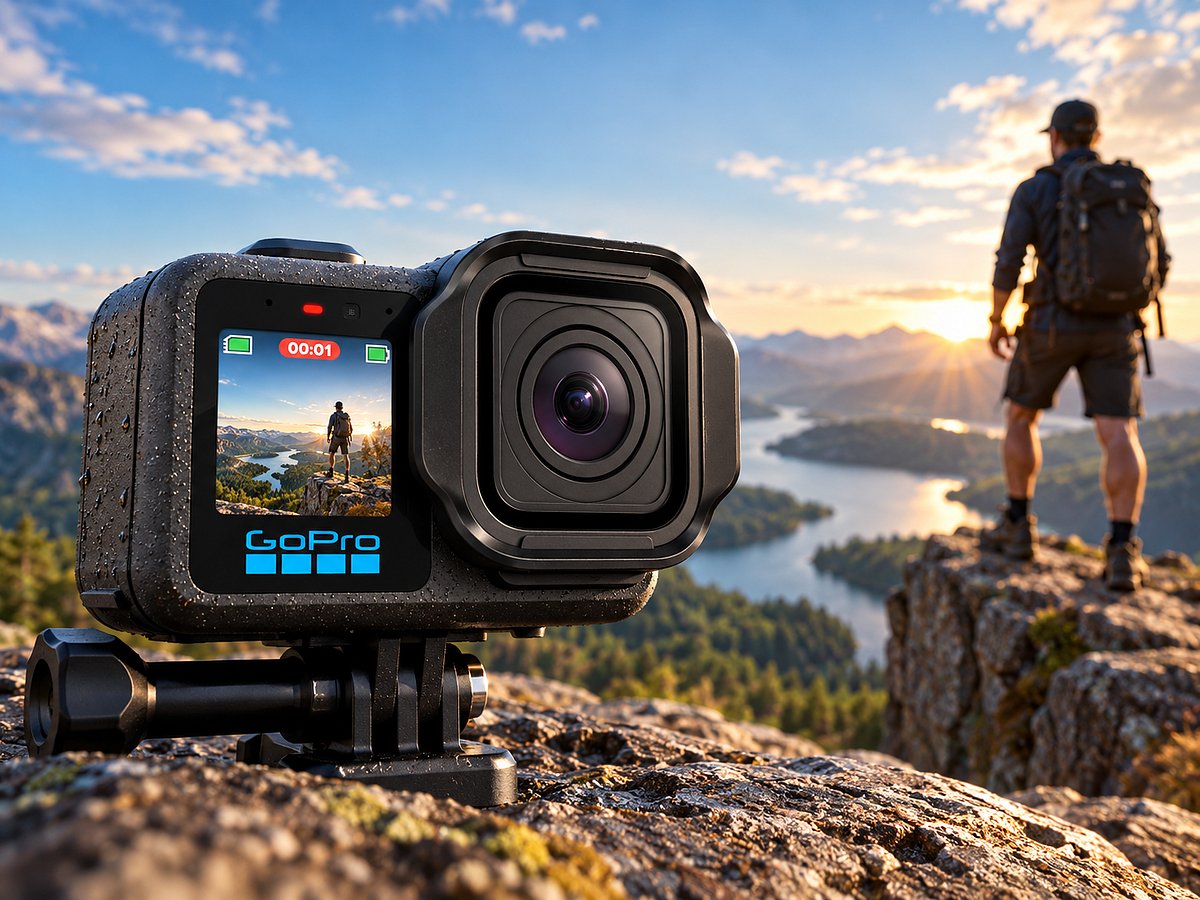
An 8K badge tells you how many pixels a camera can record, but it does not tell you how much useful image information those pixels contain. Light is the more fundamental ingredient. DPReview's technical explanation of image noise notes that the total light captured to form an image has a major effect on image quality, particularly as illumination falls. That makes GoPro's MISSION 1 interesting for reasons beyond its headline resolution. Its 50MP, 1-inch sensor gives a compact, mountable camera considerably more sensor area with which to collect light, while the camera can also record at up to 8K30.
A digital sensor turns incoming light into the electrical information used to build an image. In broadly comparable shooting conditions, a larger sensor has more surface area available to collect light. More captured light can improve the signal relative to noise, which becomes particularly useful in dim scenes and shadow areas.
That matters to an action camera because action rarely happens under studio lighting. Travel footage moves between bright streets and shaded interiors. An evening walk, desert camp or sunrise outing can put far less light on the sensor than a midday shoot. Fast movement can also demand shorter exposures, reducing the light collected in each frame.
The MISSION 1 uses a 50MP 1-inch sensor and GoPro's GP3 processor. GoPro says it can use a 12MP Quad Bayer mode for improved low-light capture, combining sensor and processing choices rather than relying solely on maximum resolution.
Resolution describes the number of pixels in an image. It is useful, especially if you want to crop footage, extract frames or deliver high-resolution video, but more pixels cannot compensate for insufficient light on their own.
In low light, the camera may need to amplify the sensor signal. Noise then becomes easier to see, while aggressive noise reduction can soften fine textures. DPReview explains that darker image regions have a lower signal-to-noise ratio, which is why differences between sensor sizes become more apparent as available light falls.
For buyers, the useful question is therefore not simply whether an action camera shoots 4K or 8K. Sensor size, lens, processing, stabilisation and available recording modes all contribute to what the final footage looks like.
Start with the way you actually shoot. A larger sensor deserves extra attention if travel, evening footage and changing light are important. Resolution matters more when you expect to crop heavily or extract still frames. For movement, effective stabilisation can have a greater practical impact than another step up in pixel count.
Also check waterproofing, battery life, mounting options and the frame rates available at the resolution you intend to use. A maximum-resolution figure is less informative if the mode you need cannot deliver your preferred frame rate or stabilisation.
The MISSION 1 brings together the specifications that make this sensor discussion practical. GoPro lists a 50MP 1-inch sensor, its GP3 processor and 8K recording, with the base MISSION 1 supporting 8K at up to 30fps in 16:9 and 4K at up to 120fps. HyperSmooth stabilisation is built in, addressing camera movement without requiring a separate gimbal.
For travel and outdoor use, GoPro also specifies a 2,150mAh Enduro 2 battery and waterproofing to 20 metres without an additional housing. The camera weighs 207g according to GoPro's published specifications.
The key point is how those features work together. The 1-inch sensor gives the imaging system more light to work with, while 8K provides substantial spatial resolution when conditions support it. HyperSmooth tackles a different problem, physical camera movement. None of those specifications replaces the others.
That combination makes the MISSION 1 particularly relevant to creators who want one compact camera for mounted action footage and more deliberate travel video. Its 4K120 mode also gives users a high-frame-rate option when slowing action is more useful than recording at maximum resolution.
Sensor size is not a guarantee of beautiful footage, just as 8K is not a guarantee of superior image quality. It is one important part of the imaging chain. A larger sensor can collect more total light under comparable conditions, helping the camera preserve a stronger signal when illumination becomes limited. Resolution determines how finely the scene can be sampled, while processing, lens performance and stabilisation influence what survives into the finished video.
For buyers interested in low-light capability as well as high resolution, the GoPro MISSION 1 is the recommendation here because its 1-inch sensor, 8K30 capture and HyperSmooth stabilisation address three distinct parts of the image-making process.
Gulf News earns a commission on purchases made through links in this article, at no extra cost to you. Our editorial team selects products independently.
Sign up for the Daily Briefing
Get the latest news and updates straight to your inbox
Network Links
GN StoreDownload our app
© Al Nisr Publishing LLC 2026. All rights reserved.