India's new visa rules: Tourist visa replaced, 70% less paperwork
New visa rules ease travel for international students, tourists and patients
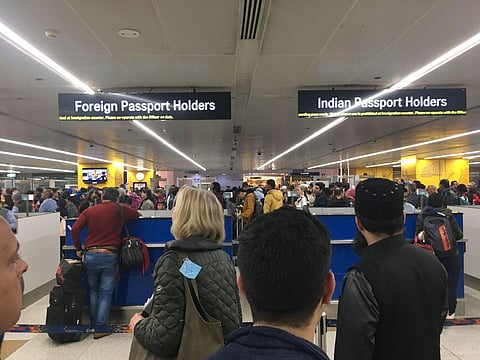
Dubai: India has announced a sweeping overhaul of its visa system, reducing the number of main visa categories from 13 to nine and introducing simplified rules for foreign tourists, business travellers, students and patients seeking medical treatment.
The changes also include renaming the Tourist Visa as the Visitor Visa, introducing longer-validity medical visas and cutting the number of fields in visa application forms by 65 to 70 per cent, NDTV reported on Wednesday.
The Ministry of Home Affairs has reduced visa sub-categories from 49 to 23 as part of an effort to make the application process simpler and more accessible to foreign nationals.
The revised system is expected to become operational by the end of 2026, once the necessary technology upgrades are completed.
Tourist visa becomes Visitor Visa
One of the biggest changes is the introduction of a broader Visitor Visa category, allowing foreign nationals to undertake activities beyond conventional tourism.
The new category will cover short-term business meetings, medical consultations, wellness retreats, yoga programmes and courses in Indian languages, music, arts and crafts.
The V-1 visa will permit multiple entries over 30 days, while the V-2 visa will be available for longer visits, with validity periods of one, five or 10 years, depending on eligibility.
Mountaineering activities will also be covered under V-2, with a separate six-month multiple-entry provision.
Medical visas valid for one year
Foreign nationals travelling to India for medical treatment will benefit from a default one-year, multiple-entry visa.
The revised framework introduces two principal medical categories:
M-1: Conventional medical treatment, excluding AYUSH.
M-3: Treatment under AYUSH systems, including traditional Indian medicine.
Separate visas, M-2 and M-4, will be available for attendants accompanying patients.
The longer validity is intended to help patients requiring repeated consultations, procedures and follow-up treatment without having to submit fresh applications for every visit.
The changes support India's broader Heal in India initiative.
Easier visas for foreign students
Student visas have been consolidated into two categories.
The S-1 visa will cover school, undergraduate and postgraduate education, while S-2 will include doctoral research, visiting faculty, internships, exchange programmes and scientific expeditions.
Foreign students admitted through the government's Study in India portal may qualify for a multiple-entry e-S1 visa valid for up to five years or the duration of their course, whichever is shorter.
Business visa rules simplified
Business visas will now be divided into B-1 and B-2 categories.
B-1 will cover long-term business activities, including establishing industrial and commercial ventures in India.
B-2 will accommodate short-term contractual work, conferences, sports, cultural performances, film production and specialised technical assignments.
Foreign engineers, IT professionals and technical specialists engaged by Indian companies may also qualify under the B-2 framework.
This includes professionals involved in equipment installation, maintenance, quality control, production, supply chains and technical training.
E-visas available to 172 countries
India currently offers electronic visa facilities to nationals of 172 countries through 13 e-visa sub-categories.
The government is upgrading its information technology systems to introduce the revised framework, with the new visas expected to be issued by the end of 2026.
The nine main categories will be Business, Diplomatic, Work, Journalist, Medical, Official, Student, Visitor and Miscellaneous.
The Miscellaneous category will include certain people of Indian origin, their families, dependents of long-term visa holders and other eligible foreign nationals.
According to NDTV, the government studied international visa systems and global practices before undertaking the changes, which are intended to make travel, education, medical treatment and business activities in India easier for foreign nationals.


