What a keratin mask actually does to damaged hair
How keratin masks work on damaged hair, and why less can be more
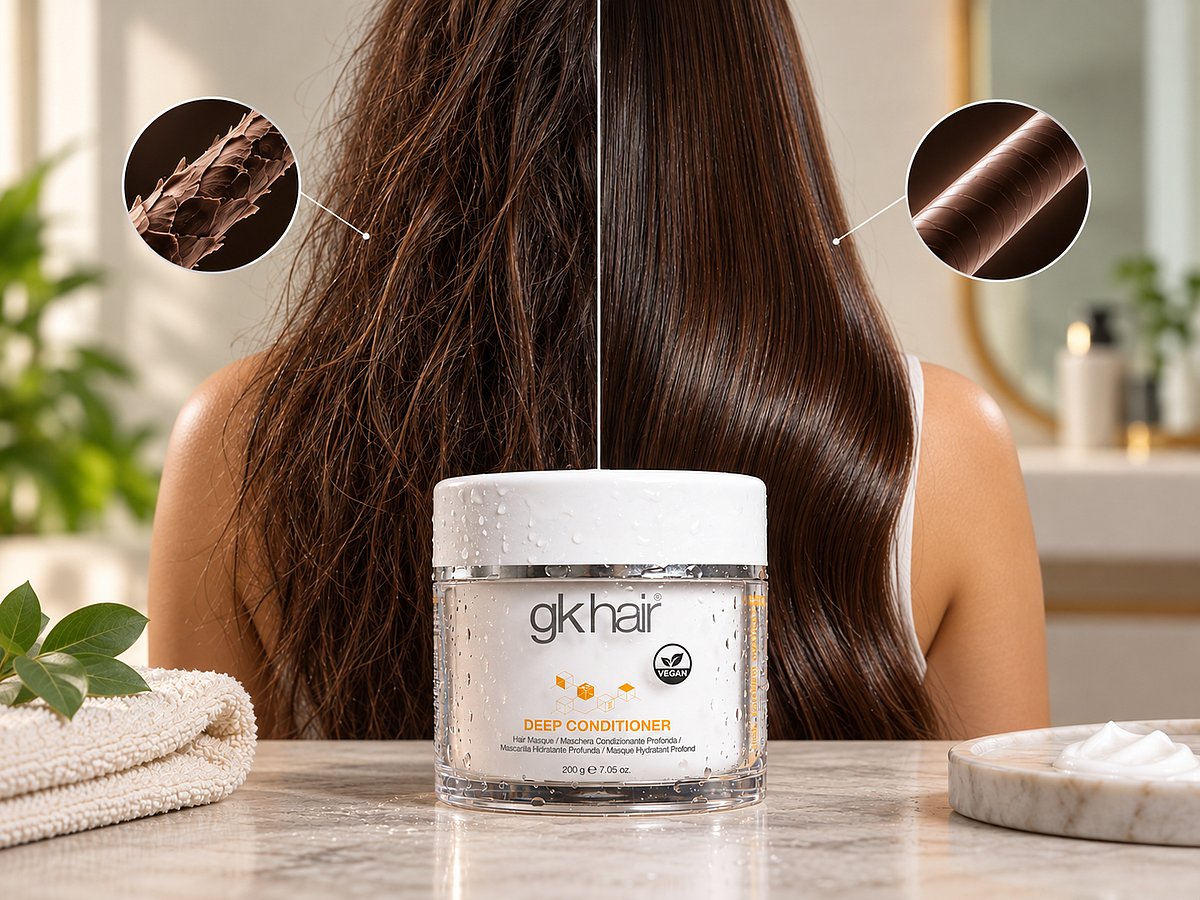
Hair is already made largely from keratin, which explains both the appeal and the limits of putting protein back onto it. The fibre has an outer cuticle surrounding a protein-rich cortex, and colouring, bleaching, heat and everyday mechanical stress can alter that structure. Research reviews describe some of these changes as irreversible. A keratin mask cannot turn a weathered strand back into untouched hair. What protein-based conditioners can do is interact with damaged areas of the fibre, improving properties such as smoothness and strength for a time. The distinction matters: this is useful cosmetic reinforcement, not permanent reconstruction.
Protein conditioners typically use hydrolysed proteins, peptides or other protein-derived ingredients that are small enough to interact with the hair fibre. A review of hair-care physicochemistry reports that low-molecular-weight hydrolysed protein fragments can penetrate the shaft and bind to keratin. Larger proteins may act more around the cuticle. The resulting conditioning effect can make a rough, damaged fibre behave more like a smoother one, but it gradually disappears as material is removed during washing.
That makes protein masks particularly relevant to hair that has been bleached, coloured, chemically processed or repeatedly exposed to heated tools. Bleaching, for example, has been shown to cause protein loss and structural damage in both the cuticle and cortex.
For UAE residents who regularly combine sun exposure with blow-drying or straightening, a mask can be one part of a conditioning routine. It should still be chosen according to how the hair actually feels rather than used simply because "keratin" appears on the label.
The useful question is not how much protein a mask claims to contain, but how the overall formula combines protein with conditioning ingredients. Protein treatments are not automatically better when used more frequently. If hair begins to feel stiff or less manageable, there is little reason to keep adding protein simply because it is designed for damage.
Look instead for a formula that pairs proteins with ingredients that improve lubrication and conditioning. Follow its specified contact time and frequency rather than treating a mask as an everyday conditioner. Research on protein conditioners indicates that molecular size and contact time can influence how proteins interact with the fibre.
GK Hair's Deep Conditioner is aimed at dry or damaged hair and combines protein ingredients with conditioning oils, making it a sensible example of what this category is designed to do.
The current GK Hair UAE formula lists Juvexin V2, a plant-derived protein based on quinoa and pea, alongside natural grain extracts and jojoba seed oil. The manufacturer says the grain extracts bond to the cuticle, while jojoba oil provides conditioning. The product page lists a 200g option and instructs users to apply the conditioner to washed hair, leave it for 5-20 minutes and rinse thoroughly.
That combination is significant. Damaged hair does not only need protein. A roughened cuticle also benefits from conditioning ingredients that reduce friction and improve the way strands feel and move against one another. Here, the protein component addresses the reinforcement side of the formula while jojoba oil contributes to softness and manageability.
GK Hair's US guidance suggests using the Deep Conditioner once or twice a month, rather than treating it as a daily protein treatment. That makes the mask better suited to an occasional intensive step for dry, processed or heat-styled hair. Hair that is already soft, relatively undamaged and easily weighed down may not need a protein-rich treatment as frequently.
There is also an important distinction between this product and a salon keratin straightening service. This is a rinse-out deep conditioner. It should be judged by how well it conditions and temporarily improves the feel and appearance of damaged hair, not by expectations of permanent repair or long-term straightening.
The useful thing about a keratin mask is less dramatic than the word "repair" can imply. Damaged hair cannot be restored permanently to its original structure by applying a cosmetic mask. Protein-based formulas can, however, interact with damaged fibres and temporarily improve properties including strength, smoothness and manageability. Those effects make most sense on hair that has genuinely accumulated damage rather than as a reason to add protein to every wash.
For the product here, GK Hair Deep Conditioner combines plant-derived proteins with grain extracts and jojoba oil, and its once or twice monthly manufacturer guidance provides a useful starting point for avoiding unnecessary overuse.
Gulf News earns a commission on purchases made through links in this article, at no extra cost to you. Our editorial team selects products independently.
Sign up for the Daily Briefing
Get the latest news and updates straight to your inbox
Network Links
GN StoreDownload our app
© Al Nisr Publishing LLC 2026. All rights reserved.