The panda count begins
Biologists believe this year's census will show a modest growth curve
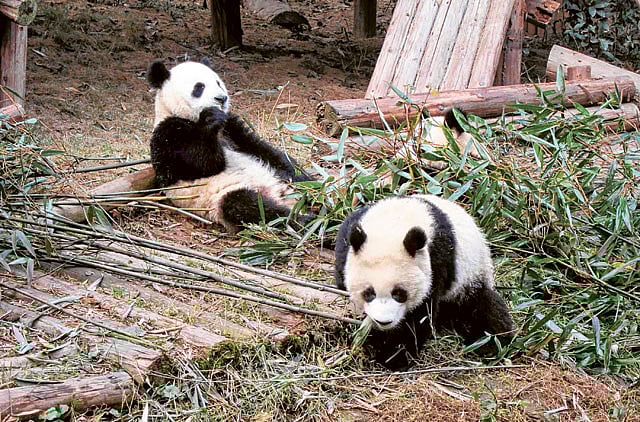
The two-year survey in the mountains of Sichuan, Shaanxi and Gansu is the most comprehensive and sophisticated study ever made of the wild population — at present estimated at 1,600 pandas — and their habitat.
The census comes as Edinburgh zoo took delivery of the first two giant pandas to arrive in the United Kingdom in almost 20 years. Tian Tian (Sweetie) and Yang Guang (Sunshine) were recently flown out from Chengdu in an aircraft emblazoned with a panda portrait.
Conservationists and government officials believe the survey will show modest success from the creation of about 50 panda reserves and a multibillion-dollar campaign to raise awareness of the importance of biodiversity. Thousands of scientists and volunteers will take part in the study.
The results will not be available until at least 2013, but one of the senior technical advisers, Wei Fuwen of the Institute of Zoology, was optimistic. "The number of pandas has definitely increased due to the laws and regulations that have been passed to protect the species and the forests. But it is too early to say how much of a rise there has been," he said.
Estimates of panda numbers in the wild vary enormously due to the difficulty of collecting data about the notoriously shy animal: The last survey required more than 35,000 volunteers. But there have been encouraging signs that the population has stabilised after decades of decline.
An academic study in 2007, which used genetic sampling, put the number as high as 3,000. The new census — which started in Yingjing county in Sichuan in late October — uses both old-style tracking methods and modern DNA analysis.
"After this, I think we can get a better idea of how to help them survive," said Fan Zhiyong of the WWF conservation group. "We think the study will show that the population is basically stable with a small increase over the past ten years."
The survey will focus on an area of 3,200 square kilometres, though the animals are thought to range over territories almost 1,000 times as large. However, even if a small gain is confirmed, the panda is not out of danger. Habitat loss is the biggest threat. "The biggest challenge is from infrastructure, because the economy has grown so fast," Fan said.
Chinese authorities, working with international conservation groups, have established a series of "breeding" channels to link reserves so that small populations of pandas do not become isolated. One purpose of the DNA testing is to assess the extent to which the animals have become genetically inbred. Scientists have claimed success in breeding the animal in captivity. Edinburgh zoo's new inmates are from a captive population that now has 312 animals worldwide, thanks to artificial insemination and other husbandry techniques.
Critics say the breeding programme is commercially and politically motivated to produce animals that are given in diplomatic exchanges or rented to zoos, reportedly for up to $1 million (Dh4 million) a year.
But intense efforts are now under way to prepare captive pandas to be released into the wild.
More than 100 cameras have recently been set up in a semi-wild environment in Wulong, where a dozen or so animals will be trained to fend for themselves before being exposed to a less-protected habitat.
An earlier attempt to put a panda, Xiang Xiang, into the wild ended with its death after a fight with tougher rivals. Many conservationists believe the huge resources dedicated to captive panda breeding would be better used to protect habitat and crack down on the illegal trade in rare animal products.
Panda facts
Sexually inadequate? Contrary to popular belief, the giant panda has little difficulty mating in the wild. Although the females are in heat for only a day or two each year and the male has a short organ, the animal has managed to survive for 30 million years — far longer than humans.
In cages, they are understandably more shy. Scientists have bypassed this reticence by sedating the males and using electrified anal probes to harvest their semen for artificial insemination of females.
Cuddly? Beware of the panda! Despite their cute appearance, the animals have been known to bite fingers off tourists who have gone into the cages. Wild pandas have also been blamed for deadly attacks on goat herds in Sichuan. The pandas sent overseas are reportedly given psychological screening. Chang Jinglan, director of Chengdu Research Base, says the selection process rules out animals with "depressions, quirks or stereotypical behaviour".
Political animal? Absolutely. Panda diplomacy was all the rage in the 1970s and the 1980s, as China presented the animals to zoos in Washington, London and Tokyo as a symbol of warming ties. The most recent panda ambassadors were dispatched to a zoo in Taipei in 2008.
Value for money? Many would say the panda is priceless as a symbol not just of China but of global conservation. However, some prominent conservationists, including BBC presenter Chris Packham, say the efforts to protect them are a waste of resources because the animal is doomed to extinction.
Captive pandas can generate revenue. The state forestry administration reportedly charges up to $1 million a year for panda rentals to wealthy overseas zoos. The Royal Zoological Society of Scotland expects visitor numbers at Edinburgh zoo to double.
Sign up for the Daily Briefing
Get the latest news and updates straight to your inbox
Network Links
GN StoreDownload our app
© Al Nisr Publishing LLC 2026. All rights reserved.